Penang Chinese Town Hall concluded its 2025 financial year with total income of RM12.61 million against expenditure of RM12.55 million, securing a narrow surplus of RM59,191 according to its annual report filed following the organization's annual general meeting. The financial outcome reflects the organization's ability to maintain operational stability despite inflationary pressures and competing demands on charitable giving in the community.
Donations represented the dominant revenue stream, accounting for RM11.24 million of the total intake—roughly 89 percent of all income. This heavy reliance on philanthropic contributions underscores the importance of PCTH's fundraising networks and community support base in sustaining its operations and mission. Beyond donations, the organization generated RM439,671 from rental and maintenance fees, RM361,245 from auditorium rental services, and RM222,498 from anniversary-related activities, demonstrating diversified income channels that buffer against fluctuations in any single source.
Expenditure patterns mirror the revenue composition, with donations disbursed to beneficiaries and causes comprising RM11.12 million, or approximately 88.6 percent of total spending. This represents a significant decline from the previous year's RM12.35 million in charitable distributions, suggesting either a recalibration of giving priorities or tighter oversight of philanthropic commitments. Conversely, the organization faced rising operational costs, with salaries and allowances increasing to RM502,625 from RM452,761 in 2024—a climb of roughly 11 percent that reflects wage pressures across Malaysian employment sectors.
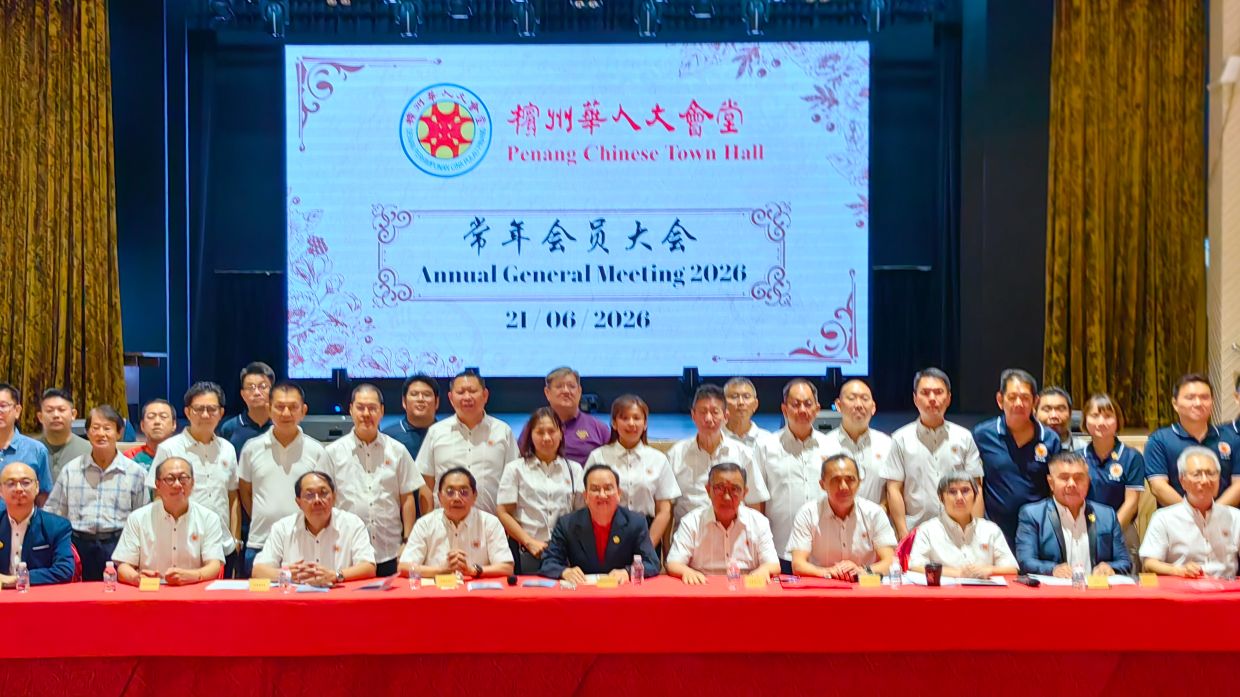
At the June 21 annual general meeting, attended by approximately 200 members, chairman Tan Sri Prof Tan Khoon Hai shifted focus from fiscal matters to civic engagement, exhorting Malaysians to exercise their voting rights responsibly in forthcoming electoral contests. With Johor and Negri Sembilan scheduled to conduct state elections during 2025, his remarks carried particular relevance for members in those states. Tan emphasized that voters bear responsibility for evaluating candidate credentials and party platforms with analytical rigor rather than emotional attachment, positioning electoral participation as a fundamental civic obligation rooted in rational assessment.
The chairman framed electoral choice as consequential not merely for parochial local development but for the nation's broader trajectory and character. He contended that voting represents an opportunity to select leaders genuinely committed to fostering national unity, catalyzing economic advancement, and safeguarding social cohesion—concerns that resonate across Malaysia's diverse communities. This rhetorical emphasis on unity and stability reflects long-standing priorities within the Chinese community and suggests PCTH's positioning as an institution concerned with harmonious multi-ethnic governance.
Beyond governance themes, Tan unveiled the completed renovation of Ping Zhang Hall, which underwent comprehensive modernization involving architectural improvements and technological upgrades. The refurbished venue now incorporates professional-grade sound systems, sophisticated lighting installations, and state-of-the-art LED displays, transforming the space into a multipurpose facility suitable for corporate banquets, community celebrations, charitable galas, and association gatherings. This investment in infrastructure reflects PCTH's strategy to enhance revenue generation through venue rental while elevating the quality of experiences available to members and the broader Penang community.
Among the organization's most significant announced initiatives is its collaboration with regional technology partners to host the 2026 China-Asean Artificial Intelligence Cooperation Forum in Penang during November. This undertaking signals PCTH's evolving role beyond traditional community services into the realm of high-level international business and technological discourse. The forum aims to convene artificial intelligence specialists, corporate executives, and industry practitioners from across China and Southeast Asia for substantive exchanges regarding emerging AI technologies, sector-specific applications, and transnational commercial partnerships.
Tan articulated a compelling rationale for hosting such an event in Penang, characterizing the state as the "Silicon Valley of the East" and emphasizing its established credentials as Malaysia's premier center for electrical and electronics manufacturing. Penang's three decades of industrial development in semiconductor fabrication, component assembly, and related sectors have created an ecosystem of technical expertise, supply-chain integration, and workforce capability that positions the state as a natural host for AI-sector dialogue. The forum thus represents an opportunity to leverage existing industrial foundations and pivot them toward emerging technologies with significant commercial and strategic importance.
The initiative also reflects recognition among PCTH's leadership that artificial intelligence represents a transformative force reshaping economic structures and competitive dynamics across the region. By positioning Penang as a convening point for AI-related cooperation between China and Asean nations, the organization seeks to elevate the state's profile while facilitating knowledge transfer and commercial relationships that might benefit local enterprises and talent. Tan explicitly encouraged members possessing relevant technical expertise or industry connections to participate actively, framing involvement as a contribution to Penang's broader ambitions in regional technological development.
The AI forum announcement carries particular significance for Malaysian stakeholders monitoring technological competitiveness and industrial positioning within Southeast Asia. China has emerged as a global leader in artificial intelligence investment and innovation, while Asean nations increasingly recognize AI adoption as essential for economic modernization and competitiveness. A structured dialogue platform bringing together these actors could yield substantive partnerships, knowledge-sharing arrangements, and investment opportunities that benefit participating jurisdictions. For Penang specifically, hosting such forums enhances its reputation as a serious participant in next-generation technology sectors beyond its traditional electronics manufacturing base.
The combination of solid financial performance, infrastructure upgrades, and strategic positioning in emerging technology sectors illustrates PCTH's multifaceted approach to organizational sustainability and community relevance. While the RM59,191 surplus may appear modest, it provides operational flexibility and signals prudent financial management. The renovation of Ping Zhang Hall demonstrates commitment to physical asset enhancement that supports revenue growth. The AI forum initiative, meanwhile, positions the organization at the intersection of traditional community services and forward-looking regional economic development.
For Malaysian readers, particularly those in Penang's business and technology communities, PCTH's trajectory offers insights into how heritage organizations are adapting to contemporary challenges and opportunities. The organization's willingness to venture into technology-sector convening suggests recognition that community institutions must evolve beyond parochial concerns to address broader economic transformation. This adaptive posture may serve as a model for other regional organizations seeking to maintain relevance and impact within rapidly changing commercial and technological landscapes.