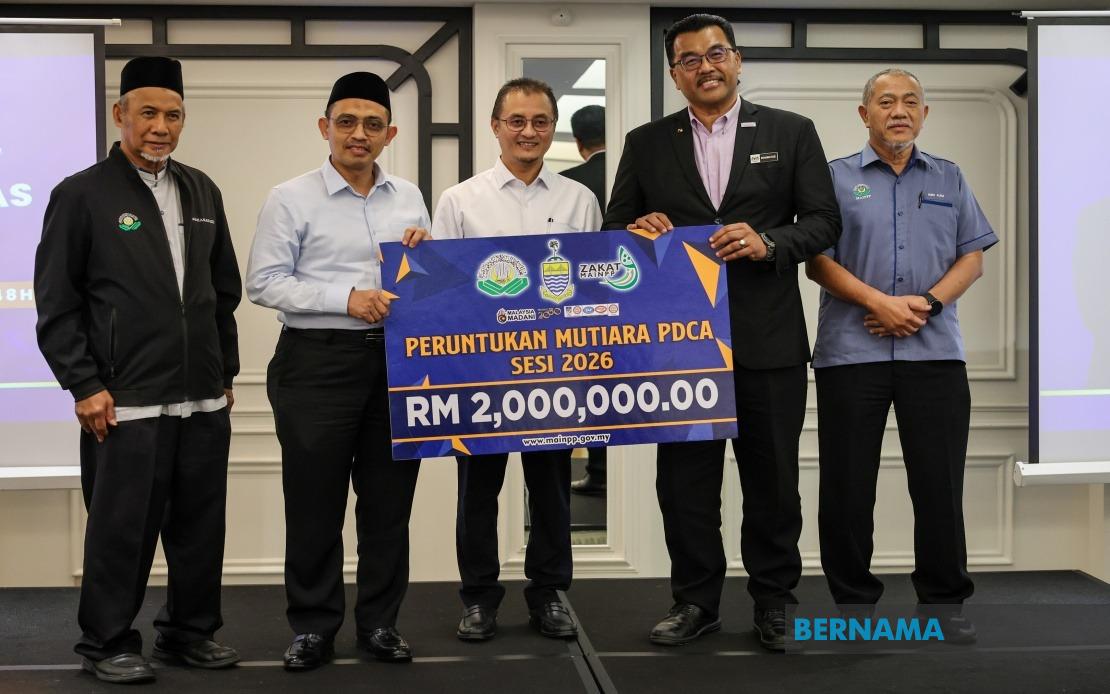
Penang's State Islamic Religious Council (MAINPP) is deepening its commitment to educational equity by dedicating RM2 million to the Mutiara Didik Cemerlang Akademik (MPDCA) Programme for 2026, marking a sustained investment in academic support for Bumiputera learners across the state. The initiative will reach 7,403 pupils and students through a network of 698 coordinating teachers operating in 71 primary and 38 secondary schools throughout Penang. Datuk Dr Mohamad Abdul Hamid, Penang's Deputy Chief Minister I and MAINPP president, outlined the allocation during a briefing for coordinating teachers, underscoring the programme's role in providing quality learning opportunities to students who might otherwise lack access to supplementary educational resources.
The funding stream channels resources toward multiple educational interventions designed to strengthen academic performance. Tuition classes form the core offering, complemented by purpose-designed learning modules, academic seminars tailored to student needs, and examination technique workshops that equip students with strategic test-taking skills. This multi-pronged approach recognises that improving student outcomes requires more than additional classroom time—it demands targeted skill development and confidence-building across multiple dimensions of academic preparation. The investment reflects growing awareness among educational policymakers that structured support systems can meaningfully bridge achievement gaps, particularly among students from economically disadvantaged backgrounds.
Established in 2006, the MPDCA Programme has evolved into a collaborative framework involving four institutional partners: MAINPP itself, the Penang State Education Department (JPNPP), the Penang Bumiputera Participation Coordination Division under the Prime Minister's Department Implementation Coordination Unit, and the Penang Regional Development Authority (PERDA). This multi-agency structure demonstrates how educational equity initiatives require cross-sector coordination, blending religious institutional resources with state education bureaucracy and federal development machinery. The sustained partnership over two decades suggests institutional commitment, though it also raises questions about whether such programmes adequately reach the most marginalised students or primarily benefit those already engaged with the formal education system.
At the primary level, the MPDCA tuition programme concentrates on four foundational subjects: Bahasa Melayu, English, Mathematics and Science. This subject selection reflects curriculum priorities while acknowledging that performance in these areas often determines overall academic trajectory. For secondary students preparing for the Sijil Pelajaran Malaysia (SPM) examination, the programme expands to cover 13 subjects, including humanities and sciences. Additionally, the curriculum extends to three specialised subjects for students in government-aided religious schools: Dini-Lughatul Arabiyyah Mu'asirah (Contemporary Arabic Language), Dini-As Syariah (Islamic Jurisprudence) and Dini-Usuluddin (Islamic Theology). This differentiated approach acknowledges diverse student pathways and the particular educational needs of students attending religious educational institutions.
The pedagogical framework underpinning MPDCA has evolved to emphasise interactive, skills-based learning rather than rote instruction. Hartina Arjan, a Bahasa Melayu teacher at Sekolah Kebangsaan Permai Indah in Bukit Minyak, notes that the programme's systematically developed learning modules help students master subjects while remaining accessible to learners with varying foundational capabilities. She highlights that the modules deliberately target development of speaking, reading and writing competencies—skills essential for success in the Classroom-Based Assessment (PBD) and academic session evaluations that increasingly characterise Malaysian secondary education. This focus on communication skills reflects broader shifts in educational assessment methodology away from purely examination-driven measures.
Beyond primary and secondary provision, MAINPP's broader educational portfolio demonstrates substantial institutional commitment to human capital development among Bumiputera communities. The council has allocated RM22.36 million for higher education bursaries, enabling qualified students to access tertiary study regardless of family economic circumstances. Additional commitments include RM6.3 million for the Permulaan IPT Scheme supporting early university engagement, RM3 million for early schooling assistance, and RM3 million for school uniform aid. Together, these allocations—totalling over RM36 million across education initiatives—suggest a systematic strategy to eliminate financial barriers to educational progression from early childhood through university completion.
For lower-income families, the MPDCA Programme provides particularly tangible benefits. Sadiah Roslan, educator at Sekolah Rendah Islam Al-Masriyah Halimatun in Bukit Mertajam, emphasises that students from economically constrained households cannot typically afford private tuition fees, making free access to structured academic support programmes transformative for educational opportunity. The programme's provision of learning modules and coordinated instruction effectively substitutes for expensive private tutoring while maintaining pedagogical quality. This democratisation of supplementary education represents significant policy value, particularly in a Malaysian context where private tuition markets have created substantial educational stratification between students whose families can afford additional coaching and those dependent on school provision alone.
The interactive methodology embedded within updated MPDCA materials and quiz-based learning activities appears to address common motivational challenges in supplementary education. Rather than replicating traditional classroom instruction in remedial settings, the programme deliberately employs engagement strategies including gamified assessment and collaborative problem-solving. Teachers report that these approaches generate stronger student participation and interest compared to conventional tuition-class formats, ultimately translating into measurable academic performance improvements. This pedagogical sophistication distinguishes MPDCA from merely extending classroom hours, instead offering supplementary education designed specifically to enhance learning quality and student agency.
Available institutional data indicates that the MPDCA Programme has delivered positive impacts across its eighteen-year implementation history. Performance improvements among participating students suggest that coordinated, structured supplementary education with adequate resourcing can meaningfully advance academic achievement, particularly when targeted toward students facing socioeconomic barriers to educational success. However, broader questions remain regarding programme reach and selection mechanisms. With 7,403 students participating across Penang's school system, programme access remains limited relative to the total Bumiputera student population, raising considerations about whether selection prioritises greatest need or occurs through school-level nomination patterns that might inadvertently favour already-engaged students.
The 2026 allocation reflects strategic continuity in Penang's education policy approach, maintaining supplementary provision while expanding resources allocated to human capital development. For Malaysian policymakers observing education equity challenges nationally, the MPDCA model offers relevant insights: that structured, well-resourced supplementary education can address achievement disparities; that inter-agency collaboration across religious, state education, and federal development institutions can function effectively; and that targeted support for disadvantaged learners requires sustained financial commitment and pedagogically sophisticated delivery. Whether similar frameworks might be scaled nationally or replicated in other states depends partly on resource availability and partly on maintaining focus on evidence-based programme design rather than expansion for its own sake.

