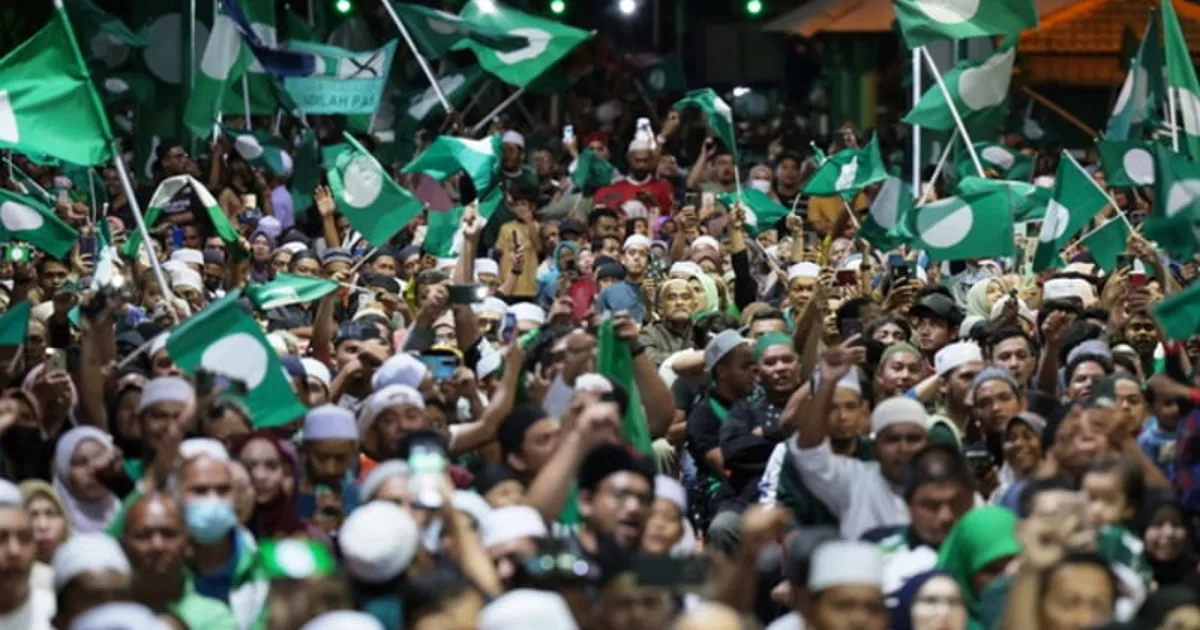
The Pan-Malaysian Islamic Party has made a strategic shift in resource allocation ahead of elections, moving campaign machinery and organisational support away from constituencies where Bersatu candidates are competing. Instead, the party is concentrating its electoral machinery on seats where PAS itself is fielding candidates alongside constituencies contested by other Perikatan Nasional component parties. This recalibration reflects evolving coalition dynamics within the Perikatan Nasional bloc and suggests a prioritisation of maximising the Islamic party's own electoral prospects.
The redeployment represents a notable tactical adjustment within Malaysia's complex political coalition system. Rather than spreading resources thinly across all Perikatan Nasional-aligned candidates regardless of party affiliation, PAS appears to be adopting a more focused approach that concentrates organisational muscle where it can directly benefit the Islamic party's electoral performance. This strategy recognises the reality that campaign machinery, volunteer networks, and ground-level mobilisation capacity are finite resources that deliver greater impact when concentrated rather than dispersed.
Bersatu, as the other major component within Perikatan Nasional, will now operate its election campaigns with reduced direct support from PAS machinery in many constituencies where both parties might previously have coordinated efforts. The practical implications include fewer joint rallies, reduced coordination of volunteer networks, and less cross-party campaign infrastructure in those contested seats. Whether Bersatu has made reciprocal arrangements or will operate independently in such constituencies remains a matter for coalition management discussions.
This development carries particular significance for understanding Perikatan Nasional's internal cohesion. Unlike monolithic parties that field candidates across all constituencies, coalition structures require ongoing negotiation about seat allocation, campaign support, and resource sharing among component parties. The willingness of PAS to reduce support in Bersatu-contested seats suggests either explicit agreement that each party will prioritise its own strongholds or a more competitive environment where component parties are increasingly treating elections as opportunities to advance individual party interests within the broader coalition framework.
For Malaysian voters in constituencies where Bersatu is running, the shift means reduced visibility of PAS campaign activities even though both parties nominally operate within the same coalition. This could result in different campaign intensities in different areas, with some constituencies experiencing robust Perikatan Nasional ground operations while others see more limited cross-party coordination. Voters accustomed to coordinated coalition campaigning may notice the reduced interlocking of party machinery in certain areas.
The strategic calculus appears centred on efficiency and electoral mathematics. PAS holds significant organisational capacity, particularly in rural areas and among its traditional voter base. By concentrating this machinery on constituencies where PAS candidates are competing, the party maximises the likelihood of converting organisational advantages into electoral wins. Resources directed toward Bersatu-contested seats where PAS has no candidate represent opportunity cost—effort that could instead be directed toward competitive PAS seats where the Islamic party's ground presence could prove decisive.
This approach also reflects longer-term positioning within Perikatan Nasional. Political coalitions are rarely permanent, and component parties must balance commitment to coalition partners against institutional self-preservation. By demonstrating willingness to protect PAS's own electoral interests, the party leadership signals to its membership and supporters that coalition participation will not come at the cost of the Islamic party's electoral viability. This matters because grassroots PAS members and supporters need reassurance that party leaders are fighting to defend the party's parliamentary representation.
The implications extend beyond campaign logistics. Electoral results influenced by differential resource allocation could reshape internal coalition balance. If PAS performs well in constituencies where it concentrated machinery while Bersatu underperforms in constituencies where it received reduced PAS support, the post-election internal negotiations over cabinet positions, portfolio allocation, and coalition leadership could reflect these divergent results. Coalition partners with stronger electoral mandates typically command greater influence in subsequent government formation.
Other Perikatan Nasional component parties must also navigate implications of this shift. Smaller coalition partners may question whether they too will receive concentrated support from larger partners in their contested constituencies or whether they should instead prepare for more autonomous campaigns. The precedent of PAS prioritising its own seats creates uncertainty about what level of mutual campaign support coalition members can expect.
From a voter perspective, this development underscores that even within formal coalitions, party interests often diverge from broader coalition interests. Malaysian voters who favour particular Perikatan Nasional component parties but are geographically located in constituencies contested by other coalition partners may find reduced campaign intensity from their preferred party. This could affect turnout among coalition supporters or result in tactical voting shifts where supporters of one coalition party vote for another party's candidate in their own constituency due to differing campaign presence.
The manoeuvre also suggests that Malaysian political coalitions increasingly operate on transactional rather than ideological bases. Perikatan Nasional partners cooperate on electoral strategy, but this cooperation becomes conditional and strategic rather than unconditional. PAS's reallocation signals that component parties view themselves as competitors within an alliance framework rather than unified movements sharing identical electoral interests across all constituencies.
This tactical adjustment will likely require management by senior Perikatan Nasional leadership to prevent escalation into deeper coalition friction. Coalition partners must maintain sufficient coordination to present unified messaging and campaign narratives while simultaneously allowing individual parties flexibility to prioritise their own electoral strongholds. The balance between these competing imperatives will test coalition cohesion throughout the election period and potentially beyond.

