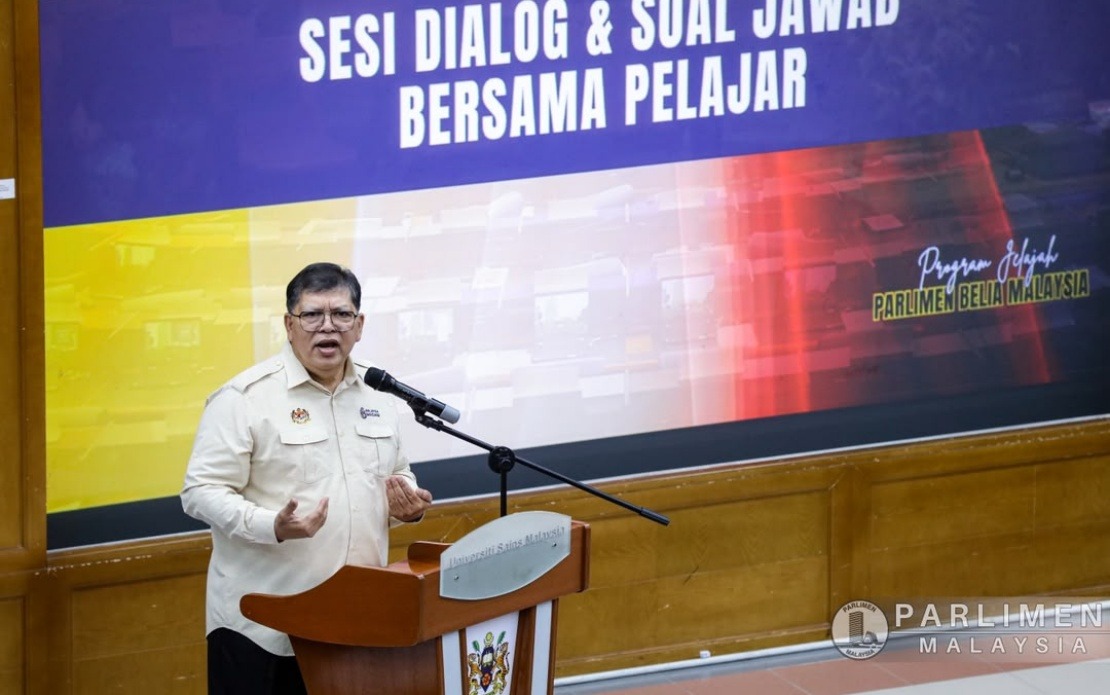
The Dewan Rakyat must evolve beyond a mere debating chamber into a respected national institution that young Malaysians can learn from and aspire to emulate. This is the core message from Speaker Tan Sri Johari Abdul as the country prepares to launch a reinvigorated Malaysian Youth Parliament programme in September. The initiative carries particular weight because it signals Parliament's commitment to nurturing democratic values among an entire generation of potential future leaders who will be observing how Malaysia's highest legislative body conducts itself.
Parliament's role extends far beyond the immediate work of legislators. It functions as the nation's foremost democratic institution and, implicitly, as a living classroom for citizens—especially the young. When Members of Parliament debate, deliberate, and make decisions, they are not performing solely for their peers or constituents in the traditional sense. In the digital age, every parliamentary utterance is scrutinised through social media channels and live-streamed broadcasts, creating an unprecedented transparency that transforms the chamber into a stage watched constantly by an attentive public. This reality demands that those elected to Parliament recognise their responsibility as custodians not just of legislative power, but of democratic culture itself.
Tan Sri Johari's call for dignity, orderliness, and integrity-driven proceedings strikes at the heart of a persistent challenge facing democracies worldwide: maintaining public confidence in institutions. For Malaysia, where political polarisation has intensified in recent years, Parliament's credibility depends on its ability to model the very behaviour it expects from citizens. Young people in particular are watching to see whether MPs can engage in substantive, fact-based debate centred on policy outcomes rather than personal attacks or partisan theatrics. The Speaker's emphasis on solutions-oriented discourse reflects an understanding that youth voters increasingly demand institutions focused on concrete results rather than grandstanding.
The Malaysian Youth Parliament itself represents an ambitious attempt to democratise civic participation among young Malaysians. Operating since 2015 under the Ministry of Youth and Sports, the programme has now transitioned to full management by Parliament Malaysia itself—a structural shift that underscores Parliament's ownership of the initiative. The model mirrors the national legislature closely, featuring 222 seats corresponding to parliamentary constituencies and encompassing more than ten non-partisan youth parties formed from registered youth organisations. This mirroring is intentional; it allows participants to experience parliamentary processes firsthand while remaining insulated from partisan politics, thereby maintaining the focus on democratic practice rather than political allegiance.
Registration targets are deliberately ambitious. Parliament Malaysia is conducting extensive outreach campaigns nationwide to attract 300,000 young Malaysians aged 18 to 30, far exceeding the actual number of seats available. This broad recruitment approach ensures that the Youth Parliament draws from a representative cross-section of Malaysian youth rather than self-selecting activists already invested in political institutions. The registration push reflects recognition that many young Malaysians remain disconnected from formal democratic channels, and that building participatory culture requires active engagement strategies rather than passive invitations.
The electoral timeline has been carefully structured to compress the process while maintaining proper procedural standards. Nomination day falls on July 8, with official candidates announced by July 11, creating a focused 27-day campaign period from July 12 through August 7. The voting process utilises an online e-PBMy system, acknowledging that digital voting mechanisms are native to this demographic. The 24-hour voting window spanning August 8–9 maintains accessibility while ensuring a defined electoral moment. These procedural details matter because they communicate to young participants that their involvement is treated with the same seriousness extended to adult elections, not as a tokenistic youth exercise.
September 11 will mark the formal commencement of Youth Parliament operations through an opening ceremony and appointment of Youth Assembly Members. The programme operates on a structured timetable that balances meaningful engagement with realistic time commitments. Three sittings annually, each lasting two days, create sufficient opportunity for substantive legislative work without overwhelming participants who juggle studies, careers, or other commitments. The two-year term length allows continuity of work while rotating fresh cohorts through the system, preventing entrenchment of internal power dynamics and ensuring generational turnover.
The transition of the Youth Parliament from the Ministry of Youth and Sports to Parliament Malaysia's direct management carries symbolic and practical significance. It repositions the programme as integral to Parliament's core mission rather than a peripheral youth initiative administered by a different portfolio. This shift suggests that Parliament views civic education and youth democratic participation not as supplementary activities but as central functions. For young Malaysians, it signals that the institution takes their engagement seriously enough to allocate parliamentary resources and institutional prestige to the programme.
The underlying challenge that Tan Sri Johari identifies—whether Parliament can exemplify democratic values sufficiently to inspire rather than cynically disenchant young observers—touches on a fragility inherent in democratic systems. When young people witness parliamentary proceedings characterised by dignity and substantive debate, they internalise democratic norms as realistic and achievable. Conversely, when Parliament devolves into spectacle or personal recrimination, it communicates that democracy itself is primarily a vehicle for individual advancement rather than collective problem-solving. For a nation with Malaysia's political history, this pedagogical function may ultimately prove as consequential as any legislation Parliament passes.
The success of the Malaysian Youth Parliament will ultimately reflect back on Parliament's own conduct. By making the programme work—by attracting genuine young participation, facilitating meaningful debate, and demonstrating that democratic processes can produce tangible outcomes—Parliament strengthens its own legitimacy and relevance. Conversely, if the Youth Parliament becomes a superficial exercise where young people perform democracy without substantive influence, it will deepen cynicism. The Speaker's emphasis on setting examples is therefore not merely inspirational rhetoric but a pragmatic recognition that Parliament's institutional health depends on cultivating the next generation's confidence in democratic institutions.

%22%2F%3E%3C%2Fpattern%3E%3C%2Fdefs%3E%3Crect%20width%3D%22100%25%22%20height%3D%22100%25%22%20fill%3D%22url(%23ph2dkjhg)%22%2F%3E%3Crect%20width%3D%22100%25%22%20height%3D%22100%25%22%20fill%3D%22url(%23ph2dkjhp)%22%2F%3E%3Ctext%20x%3D%2250%25%22%20y%3D%2250%25%22%20text-anchor%3D%22middle%22%20dominant-baseline%3D%22central%22%20fill%3D%22rgba(255%2C255%2C255%2C0.95)%22%20font-family%3D%22Georgia%2C%20'Times%20New%20Roman'%2C%20serif%22%20font-weight%3D%22700%22%20font-size%3D%22272%22%20letter-spacing%3D%22-0.02em%22%3EAnwar%3C%2Ftext%3E%3C%2Fsvg%3E)