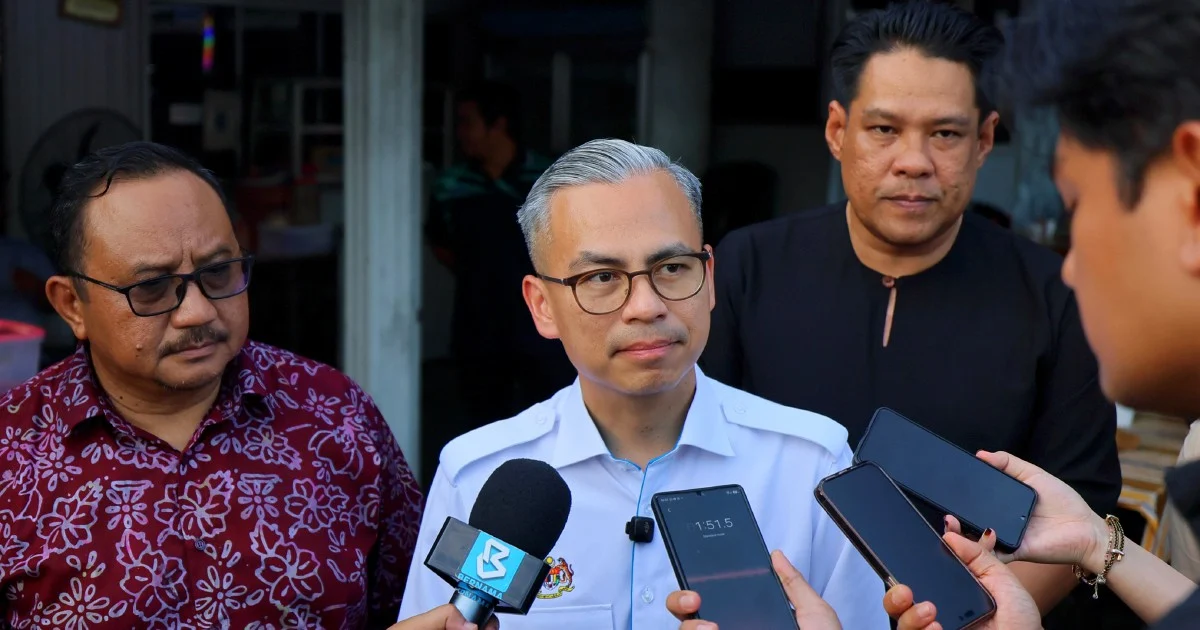
Pakatan Harapan intends to deploy a comprehensive two-pronged approach for the forthcoming Johor state election, according to a statement in Batu Pahat emphasising the coalition's commitment to modernising its electoral playbook. The strategy reflects growing recognition among opposition-aligned parties that electoral success increasingly depends on effectively navigating both the digital landscape and conventional voter engagement at the grassroots level.
The dual emphasis signals PH's acknowledgement that Malaysia's voting demographic has become increasingly fragmented in terms of media consumption habits. Younger voters, particularly those concentrated in urban centres and secondary towns, have gravitated towards social media platforms for political information and discourse, necessitating a sophisticated digital presence. Simultaneously, substantial portions of the electorate—including older voters and residents in less urbanised areas—remain responsive to direct community engagement, door-to-door canvassing, and local organising.
Online campaigning has become a cornerstone of modern electoral strategy across Southeast Asia and globally. For PH, this involves leveraging Facebook, Instagram, TikTok, and other platforms to disseminate messaging about party platforms, highlight candidate credentials, and mobilise supporters through shareable content. Digital campaigns offer measurable targeting capabilities, allowing parties to tailor messaging for specific demographic and geographic segments. The approach also enables rapid response to emerging political narratives and competitor attacks, a critical advantage in the compressed timeframe of state election campaigns.
Ground campaigning, conversely, remains the traditional mechanism through which political parties build trust and cultivate community relationships. Voter engagement through physical presence—manifested in town halls, community gatherings, neighbourhood meetings, and one-on-one interactions—generates personal connections that digital platforms alone cannot replicate. This dimension of PH's strategy likely encompasses candidate visibility in constituencies, volunteer mobilisation for door-to-door canvassing, and localised issue advocacy addressing community-specific concerns.
Johor presents particular tactical considerations for PH. As Malaysia's most southerly peninsula state, Johor encompasses both developed urban areas and less densely populated districts where connectivity and digital literacy may vary considerably. The state's demographics encompass significant Malay-Muslim, Chinese, and Indian populations with distinct electoral patterns and media consumption preferences. This heterogeneity necessitates a genuinely integrated campaign capable of reaching multiple constituencies through appropriate channels.
For Malaysian political observers, PH's integrated approach represents an evolution from earlier opposition campaigning models. When PH emerged as a viable electoral force in 2018, its capacity to coordinate digital outreach remained comparatively nascent compared to incumbent parties benefiting from state resources. Subsequent years have witnessed substantial professionalisation of the coalition's digital infrastructure, reflecting accumulated experience and improved funding mechanisms. However, the explicit articulation of a balanced dual-track strategy acknowledges that neither channel alone suffices for comprehensive electoral coverage.
The broader regional context matters significantly. Throughout Southeast Asia, political parties across ideological spectrums have increasingly recognised that elections are won through multi-channel engagement. Thailand's recent elections, Indonesia's expansive campaigns, and the Philippines' digital-heavy contests have all underscored the necessity of coordinated online and offline strategies. Malaysia's experience in state and federal elections over the past five years has reinforced this lesson for all major political coalitions.
Implementation challenges exist. Coordinating messaging across fundamentally different communication channels requires disciplined party organisation and clear strategic messaging. Social media campaigns can rapidly amplify unintended narratives if messaging discipline lapses, whilst ground campaigns depend on volunteer capacity and local party infrastructure that may vary across constituencies. Additionally, integrating genuine policy substance into both channels—rather than relying on inflammatory rhetoric or divisive messaging—represents an ongoing challenge for Malaysian political discourse generally.
The resource implications are substantial. Competitive digital campaigns demand investment in content creation, platform management, data analytics, and paid promotion. Ground campaigning requires funding for candidate support, volunteer coordination, transportation, and local event organisation. PH's dual commitment suggests the coalition has mobilised adequate financial resources for both dimensions, though the precise allocation between channels will likely remain strategically opaque.
For Johor voters across the political spectrum, this approach implies more intensive campaign exposure. Individuals scrolling social media feeds will encounter PH messaging; simultaneously, neighbourhoods will likely witness increased candidate presence and campaign activity. The cumulative effect aims to create multiple touchpoints where voters encounter PH communications and representatives, theoretically improving candidate recall and party messaging retention.
The strategy's effectiveness will be tested in actual electoral outcomes. Preliminary indicators—including voter registration patterns, demographic trends, and current sentiment analyses—will provide early guidance regarding campaign traction. However, only actual voting results will definitively reveal whether PH's integrated approach successfully translates digital and ground engagement into electoral gains in Johor's constituencies.
Ultimately, PH's articulated dual-track strategy reflects the maturation of Malaysian electoral politics in an increasingly digital era. The coalition has moved beyond viewing online and offline campaigning as competing modalities, instead embracing integration as necessary for contemporary political competitiveness. Whether this sophisticated approach yields the electoral results PH anticipates remains to be determined when Johor voters cast their ballots.

