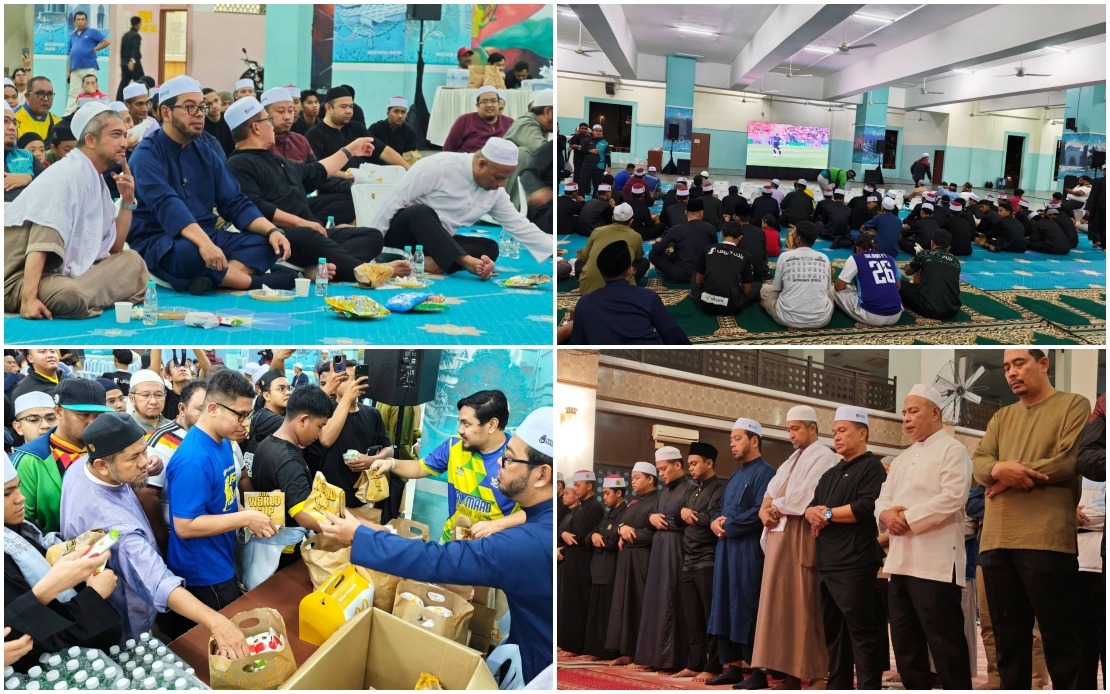
More than 300 young worshippers gathered at Masjid Usamah bin Zaid in Wangsa Maju early on June 21, assembling before dawn to participate in Qiyamullail prayers before transitioning to a 2026 World Cup screening. The initiative represented an unconventional approach to religious engagement, deliberately positioning evening and pre-dawn devotional practices alongside contemporary sporting entertainment to create an integrated experience that appeals to Malaysia's youth demographic.
The programme received official endorsement and active participation from Dr Zulkifli Hassan, the Minister in the Prime Minister's Department (Religious Affairs), who viewed the event as a practical demonstration of how young people's sporting enthusiasm could be channelled into meaningful spiritual development. His involvement underscored the government's recognition that traditional dakwah methods require modernisation to resonate with digitally-connected generations who might otherwise remain disengaged from religious community activities.
The football match itself featured Germany facing Ivory Coast in a Group E encounter of the 2026 World Cup competition, with the European side securing a 2-1 victory. The selection of this particular fixture provided compelling viewing material and served as the focal point around which the broader religious and social programming was structured, demonstrating how sporting events could function as a catalyst for community gathering rather than merely a secular distraction.
Enhancing the viewing experience beyond standard broadcast commentary, the mosque organisers arranged for football analysis during the half-time interval. National football legend Shahril Arsat and Khushairi Aizad, formerly associated with Selangor FA and its President's Cup participation, provided expert tactical breakdown of both teams' playing strategies and performance patterns, adding educational sporting value alongside the entertainment dimension.
The event's successful execution reflected substantial institutional coordination across Malaysia's Islamic establishment. Dr Zulkifli and the Federal Territories Mufti joined Datuk Nizam Yahya, chief executive of the Federal Territories Islamic Religious Council (MAIWP), and Datuk Ajib Ismail, deputy director-general of the Malaysian Islamic Development Department (JAKIM), in personally preparing roti canai breakfast for attending worshippers. This hands-on participation by senior officials signalled the event's importance within Malaysia's religious hierarchy and demonstrated genuine commitment to youth engagement rather than token gestures.
The logistical and organisational infrastructure supporting the initiative highlighted how multiple governmental and non-governmental bodies could align around common objectives. The Federal Territories Mufti Department, JAKIM, MAIWP, and the Federal Territories Islamic Religious Department (JAWI) provided institutional backing, while Malaysian Islamic Dakwah Foundation (YADIM) and Malaysian Islamic Economic Development Foundation (YAPEIM) contributed expertise and resources. Youth-focused organisations including Angkatan Belia Islam Malaysia (ABIM) and Persatuan Menembak Agama (PMA) helped mobilise participation, whilst commercial food sponsors ensured practical hospitality arrangements.
This layered approach to programme delivery reflected sophisticated understanding that successful youth engagement requires removing practical barriers to participation. By providing breakfast, securing skilled commentary, ensuring comfortable viewing facilities, and creating a spiritually-enriched framework around a sporting activity, organisers eliminated competing reasons for young worshippers to seek entertainment elsewhere.
The initiative also addresses a persistent challenge within Malaysian religious institutions regarding how to maintain youth interest and participation during an era of entertainment proliferation and shifting social priorities. By deliberately integrating rather than segregating spiritual and secular interests, the programme implicitly rejected a false dichotomy between religious observance and contemporary culture. This wisdom-based approach to dakwah, as referenced by official commentary, suggests theological framework acknowledging that young Muslims navigate plural identities and interests simultaneously.
The early morning timing of the Qiyamullail component carried particular significance. This pre-dawn prayer, typically performed during Ramadan but increasingly observed voluntarily throughout the year, requires sustained commitment and spiritual motivation. By positioning it as the entry point to an otherwise entertaining social gathering, organisers created positive incentive structures for religious participation rather than relying solely on obligation or exhortation.
For Malaysian religious authorities, this event represents a case study in how institutional resources can be deployed to create spiritually-meaningful experiences that simultaneously address youth engagement concerns. The model proved attractive enough to warrant senior official participation and cross-agency collaboration, suggesting it may inspire replication elsewhere within the Malaysian Islamic establishment.
The broader implications extend beyond the specific mosque and occasion. As Southeast Asian societies navigate rapid social change, religious institutions must demonstrate cultural relevance without compromising theological authenticity. This Wangsa Maju initiative illustrates one approach to that challenge, using contemporary sporting interest as a vehicle for spiritual community-building rather than treating football and faith as irreconcilable domains.
%22%2F%3E%3C%2Fpattern%3E%3C%2Fdefs%3E%3Crect%20width%3D%22100%25%22%20height%3D%22100%25%22%20fill%3D%22url(%23ph1q1qkg)%22%2F%3E%3Crect%20width%3D%22100%25%22%20height%3D%22100%25%22%20fill%3D%22url(%23ph1q1qkp)%22%2F%3E%3Ctext%20x%3D%2250%25%22%20y%3D%2250%25%22%20text-anchor%3D%22middle%22%20dominant-baseline%3D%22central%22%20fill%3D%22rgba(255%2C255%2C255%2C0.95)%22%20font-family%3D%22Georgia%2C%20'Times%20New%20Roman'%2C%20serif%22%20font-weight%3D%22700%22%20font-size%3D%22226%22%20letter-spacing%3D%22-0.02em%22%3EEnergy%3C%2Ftext%3E%3C%2Fsvg%3E)