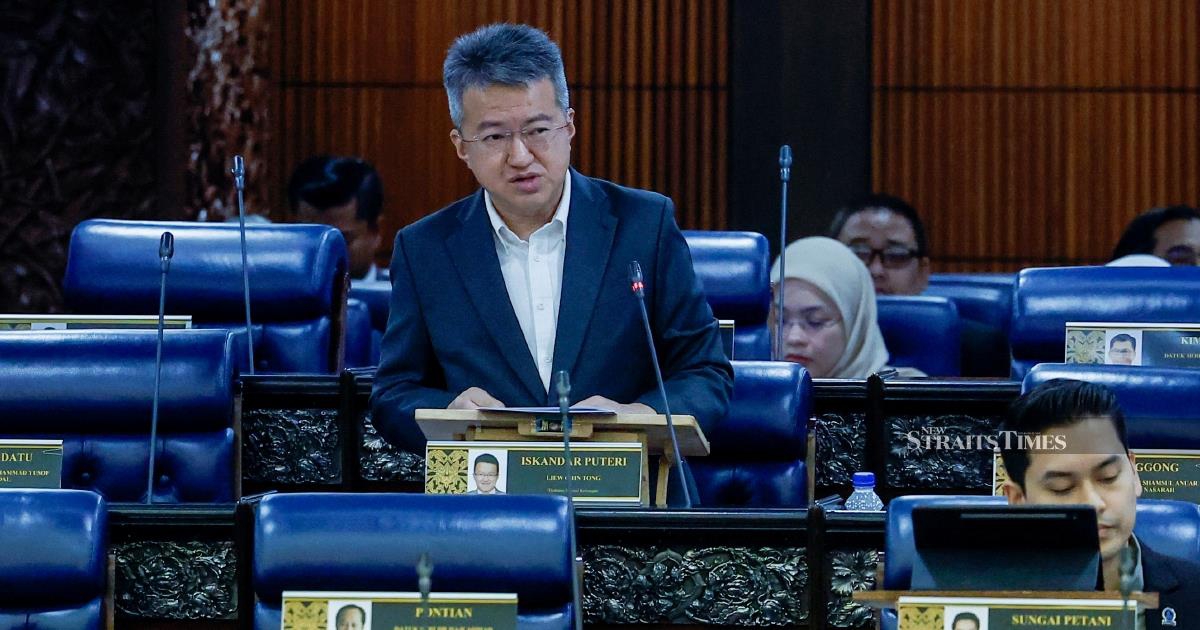
Parliament has passed new legislation designed to strengthen oversight of the Kumpulan Wang Amanah Negara (KWAN), Malaysia's sovereign wealth fund, directly responding to a significant governance vulnerability exposed three years ago when RM5 billion was withdrawn from the fund without proper parliamentary scrutiny. The revised framework represents a substantial tightening of the rules surrounding major fund distributions, ensuring that future withdrawals of comparable magnitude cannot occur unless specifically authorised by a Dewan Rakyat resolution.
The 2021 withdrawal episode fundamentally highlighted the inadequacy of existing safeguards governing Malaysia's strategic national assets. At that time, the absence of clear parliamentary oversight mechanisms allowed the transaction to proceed despite raising questions about transparency and accountability. This gap in the regulatory architecture underscored how quickly institutional vulnerabilities can be exploited when formal checks are insufficient, particularly where large sums held in trust for national purposes are concerned. The incident prompted a comprehensive reassessment of how such funds should be governed and what mechanisms would prevent similar occurrences in the future.
The newly enacted Bill addresses these deficiencies by establishing mandatory parliamentary approval as a prerequisite for withdrawals. This constitutional requirement effectively transforms the nature of KWAN governance, shifting from a system where decisions could be made within executive circles to one requiring legislative validation. Such a move reflects broader international best practices for sovereign wealth fund management, where institutional oversight typically involves multiple layers of review and stakeholder approval before major transactions proceed. The amendment ensures that Members of Parliament—who represent constituencies across Malaysia—must explicitly endorse any substantial fund utilisation, creating a democratic accountability mechanism previously absent.
For Malaysian readers and investors, this legislative change carries significant implications regarding the stewardship of public resources. KWAN, as a repository of national wealth, holds assets entrusted to it for purposes benefiting current and future generations. By requiring parliamentary resolution, the Bill essentially places such decisions within the public domain where they can be debated, scrutinised, and challenged by elected representatives and the media. This transparency principle has become increasingly important as public consciousness around governance standards has evolved, particularly following high-profile financial management controversies that have characterised Malaysian politics over the past decade.
The governance framework now mirrors practices employed by comparable regional institutions and established overseas sovereign wealth funds, where legislative bodies or parliamentary committees typically maintain oversight rights. Countries such as Singapore with its Government Investment Corporation and Norway with its Government Pension Fund Global require formal parliamentary or governmental board approval for major policy decisions and distributions. Malaysia's adoption of similar safeguards positions KWAN within international standards for institutional financial management while acknowledging the legitimate role of elected representatives in decisions affecting national assets.
The specific requirement for a Dewan Rakyat resolution means that any future withdrawal comparable to the 2021 transaction must now navigate the full parliamentary process. This includes debate on the Dewan Rakyat floor, potential questions from members, scrutiny from opposition benches, and ultimately a formal vote. Such a process would make it substantially more difficult—if not impossible—to extract large sums without the knowledge and consent of the legislative body, thereby creating a powerful deterrent against any future unauthorised or inadequately justified withdrawals.
Analysts point out that the legislative shift also enhances institutional memory regarding KWAN operations. When parliamentary approval is required, decisions become part of the official parliamentary record, creating documentation that informs future governance decisions and provides transparency to citizens and oversight bodies. This contrasts sharply with executive-level decisions that, while legally valid, may lack the comprehensive public record that parliamentary proceedings generate. The requirement thus creates institutional accountability that extends beyond individual officeholders to encompass the entire governance structure.
The implications for Southeast Asian markets and regional investment confidence should not be underestimated. Sovereign wealth fund governance has become a critical consideration for international investors assessing emerging market stability. When countries strengthen oversight mechanisms for major national assets, it signals institutional maturity and commitment to transparent governance standards. Malaysia's legislative action therefore provides reassurance to both foreign and domestic investors that national assets are subject to rigorous parliamentary scrutiny and cannot be deployed without democratic validation.
Looking forward, the Bill establishes clearer institutional boundaries for KWAN management while preserving the fund's operational flexibility within approved parameters. Fund managers can continue to make standard investment and operational decisions without parliamentary intervention, but any decision to withdraw or distribute substantial amounts must first obtain parliamentary sanction. This distinction between routine management and major distributions represents a balanced approach that maintains institutional effectiveness while preventing governance abuses.
The passage of this legislation also reflects broader recognition within Malaysia's political establishment that institutional resilience requires mechanisms that transcend individual administrations or officeholders. By embedding parliamentary approval requirements into law, rather than relying on administrative practice or convention, the legislation creates a permanent structural safeguard against future governance failures. Such legal enshrinement demonstrates lessons learned from the 2021 episode and represents genuine institutional reform.

