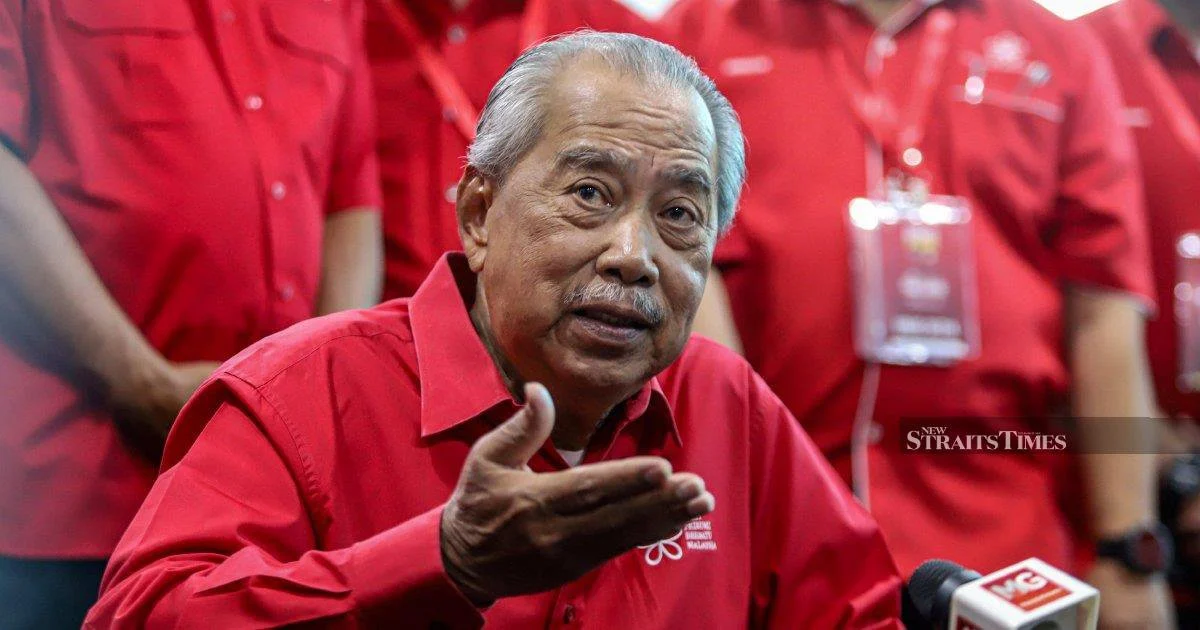
The leadership of Bersatu has moved to quell recurring doubts about its future within Perikatan Nasional by issuing an unequivocal public commitment to the coalition. Party president Tan Sri Muhyiddin Yassin declared that the party would maintain its membership indefinitely, effectively ruling out any prospect of departure from the political alliance despite months of circulating rumours regarding potential realignments.
Muhyiddin's statement carries particular weight given the volatile nature of Malaysian coalition politics, where alliances frequently shift based on electoral calculations and internal power struggles. By employing the term "forever," the party leader sought to convey a message of permanence and stability to both Bersatu's grassroots support base and to the broader political community in Kuala Lumpur. This public declaration functions as a stabilising mechanism in a landscape where political uncertainty has created palpable tension among coalition members.
The timing of this reassurance suggests that Bersatu has faced substantive questions from its own members and external observers regarding the viability of its continued association with Perikatan Nasional. Speculation about coalition changes typically intensifies when electoral prospects appear uncertain or when individual parties sense potential opportunities to strengthen their negotiating positions through strategic repositioning. By issuing this definitive statement, Muhyiddin sought to eliminate space for such speculation among the party cadre.
Perikatan Nasional has experienced its own share of internal complications since its formation, and the coalition's electoral performance has not consistently matched initial expectations. The reaffirmation of Bersatu's commitment provides symbolic reassurance that at least one major component of the alliance intends to weather current challenges through sustained partnership rather than pursuing alternative arrangements. For a coalition that has periodically faced existential questions, such public endorsements from constituent parties hold genuine political value.
The relationship between Bersatu and other Perikatan Nasional members, particularly PAS, has occasionally generated questions about compatibility and shared policy direction. Different regional strongholds and ideological emphases have occasionally created tensions that surface in public discourse. Muhyiddin's declaration serves to emphasize that these tensions do not reflect fundamental fragmentation or imminent realignment, but rather normal operating challenges within any multi-party coalition.
FromMuhyiddin's perspective as party president, maintaining coalition cohesion aligns with strategic interests. Bersatu's leverage within Malaysian politics derives partly from its role as a coalition member rather than as an independent political force. Exiting or threatening to exit Perikatan Nasional would fundamentally alter the party's negotiating position in broader political discussions. The pledge to remain indefinitely thus reflects calculated political self-interest alongside any genuine commitment to coalition stability.
Malaysian political coalitions operate within a complex landscape where timing, relative party strength, and broader political developments continuously reshape the calculations that guide strategic decisions. Current national political circumstances, including the composition of the federal government and emerging electoral mathematics for future contests, provide the context within which Bersatu's pledge should be understood. The party's leadership recognizes that abrupt shifts in coalition membership would signal instability and potentially damage credibility in negotiations with other political players.
The recent history of Malaysian politics demonstrates that public declarations of indefinite commitment do not invariably prove prophetic. Coalition arrangements have repeatedly undergone dramatic transformations despite earlier assurances of permanence. Observers familiar with the Malaysian political tradition will likely regard such pledges as reflecting current intentions and strategic preferences rather than as absolute guarantees against future developments. Political circumstances evolve, and parties adjust their positions accordingly.
For ordinary Malaysians and regional observers monitoring political developments in the country, Muhyiddin's statement addresses a specific moment of potential uncertainty about Perikatan Nasional's structural integrity. The broader significance lies in what the declaration reveals about coalition management and the continuing importance of public affirmations of political commitment in Malaysian political culture. Whether such reassurances ultimately satisfy stakeholders will depend partly on how effectively the coalition performs in addressing national priorities and responding to electoral challenges in coming months.
%22%2F%3E%3C%2Fpattern%3E%3C%2Fdefs%3E%3Crect%20width%3D%22100%25%22%20height%3D%22100%25%22%20fill%3D%22url(%23ph1q1qkg)%22%2F%3E%3Crect%20width%3D%22100%25%22%20height%3D%22100%25%22%20fill%3D%22url(%23ph1q1qkp)%22%2F%3E%3Ctext%20x%3D%2250%25%22%20y%3D%2250%25%22%20text-anchor%3D%22middle%22%20dominant-baseline%3D%22central%22%20fill%3D%22rgba(255%2C255%2C255%2C0.95)%22%20font-family%3D%22Georgia%2C%20'Times%20New%20Roman'%2C%20serif%22%20font-weight%3D%22700%22%20font-size%3D%22226%22%20letter-spacing%3D%22-0.02em%22%3EEnergy%3C%2Ftext%3E%3C%2Fsvg%3E)