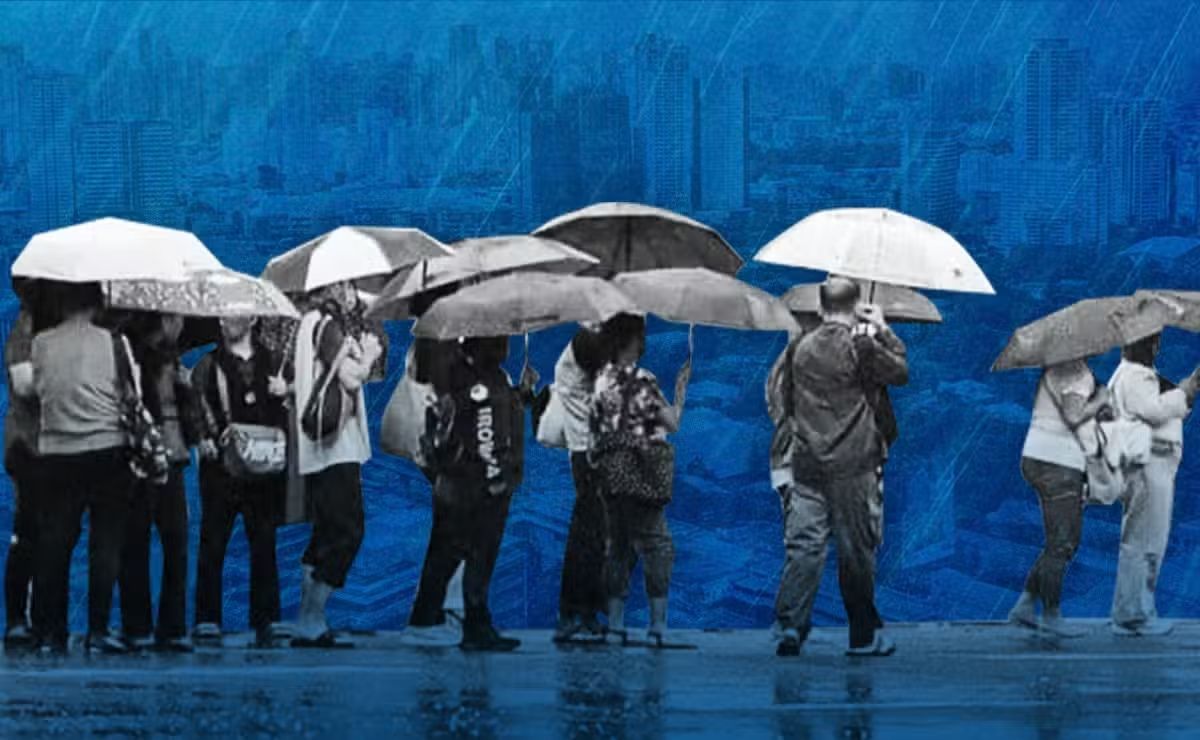
Metro Manila faced an intense precipitation event between August 5 and 14 that brought approximately 483 millimeters of rainfall across the metropolitan area, driven by the southwest monsoon and successive tropical cyclones. Data from 23 monitoring stations operated by the Philippine Atmospheric, Geophysical and Astronomical Services Administration revealed this sobering accumulation, translating to roughly 48 millimeters daily on average. Yet the distribution proved uneven across locations, with some areas receiving significantly heavier volumes that strained local drainage and river systems to their breaking point.
Dr Alicor Panao, an associate professor at the University of the Philippines specialising in data science, analysed the rainfall patterns and identified a striking concentration of the deluge. Nearly half of the total precipitation fell within just two consecutive days, August 9 and 10, with the Airport station alone recording 226.5 millimeters on August 9 alone. This intensity matches what Panao described as "extraordinary rain," yet the data reveals an even more troubling picture when examined across the entire metropolitan footprint. The sheer volume becomes apparent when translated into absolute water quantities: 483.4 millimeters falling uniformly across a single square kilometre represents approximately 483.4 million litres of water, a figure that contextualises the challenge facing Metro Manila's drainage infrastructure.
When extrapolated across Metro Manila's approximately 620 square kilometres, the cumulative rainfall during this period would equate to roughly 120,000 Olympic-sized swimming pools of water—an average of 193 pools per square kilometre. This framework for understanding the volume underscores why conventional drainage systems become inadequate during such events. Certain localities experienced even more severe precipitation, with Sitio Wawa recording 708 millimetres, San Mateo-2 accumulating 701 millimetres, and La Mesa Dam receiving 645.5 millimetres over the same ten-day span. These figures substantially exceed the metropolitan average, indicating that some districts faced double the rainfall burden compared to others.
The rainfall event, while severe, did not establish a new single-day record for Metro Manila. That benchmark remains held by Tropical Storm Ondoy in September 2009, when the Science Garden station recorded 455 millimetres in a twenty-four-hour period—a figure itself exceeded only by a 1967 precipitation event that brought 334 millimetres. However, Panao emphasised that the significance of the recent episode lies not in breaking daily records but in the cumulative impact of sustained heavy rainfall over a compressed timeframe. This distinction matters considerably when assessing infrastructure vulnerability, as prolonged precipitation prevents natural drainage systems, rivers, and watersheds from recovering between rainfall events.
The implications for Manila's flood management extend well beyond the question of building additional structural defences, according to Panao's assessment. He articulated a sophisticated understanding of the problem, noting that the challenge represents less a matter of constructing more dams, canals, and retention facilities and more fundamentally a question of whether existing infrastructure receives adequate design, proper construction, and consistent maintenance. This perspective reframes the flood control problem as one rooted in governance, implementation capacity, and institutional accountability rather than purely technical or financial constraints.
The timing of this analysis arrives amid ongoing investigations into allegations that plague Metro Manila's flood control programme. Reports have surfaced of ghost projects—funds ostensibly spent on non-existent infrastructure—alongside documented instances of substandard construction and artificially inflated project costs. These revelations suggest a systemic breakdown in project oversight and financial management within government agencies responsible for flood mitigation. Several investigations have progressed beyond preliminary stages, with criminal cases reportedly now advancing through the judicial system, indicating that prosecutorial authorities have identified sufficient evidence of wrongdoing to pursue formal charges.
For Malaysian readers and regional observers, the Manila situation carries cautionary relevance. Several Southeast Asian cities face comparable challenges: rapid urbanisation, aging drainage infrastructure, climate variability, and governance constraints that impede effective capital deployment in water management. Kuala Lumpur, George Town, and other metropolitan areas across Malaysia have experienced their own episodes of severe flooding, partly attributable to inadequate drainage systems and competing demands on municipal budgets. The Manila case demonstrates that even substantial investment in flood control infrastructure proves insufficient if projects lack proper oversight, if maintenance receives inadequate resources, and if endemic corruption diverts funds intended for protective infrastructure.
Panao's emphasis on the relationship between repeated heavy rainfall and system recovery time addresses a dimension often overlooked in flood management discourse. Modern climate patterns in tropical and subtropical regions show evidence of increased rainfall intensity and frequency, compressing the intervals available for drainage systems to clear excess water before subsequent precipitation begins. This temporal squeeze renders infrastructure designed for historical rainfall patterns increasingly inadequate for current meteorological reality. Systems engineered based on twentieth-century precipitation frequency face obsolescence against twenty-first-century rainfall patterns, yet retrofitting or replacing infrastructure requires sustained financial commitment and political will—precisely the resources that inadequately resourced municipal governments struggle to mobilise.
The broader governance dimension identified in Panao's commentary touches on a challenge endemic across the region: the gap between policy announcements and implementation outcomes. Many Southeast Asian governments have articulated ambitious flood mitigation strategies and allocated budget resources toward infrastructure development, yet actual delivery remains patchy, with project completion, quality, and maintenance outcomes falling short of stated objectives. Metro Manila's alleged ghost projects and overpriced contracts represent an extreme manifestation of implementation failure, but lesser versions of the same problem appear across the region's rapidly developing cities.

