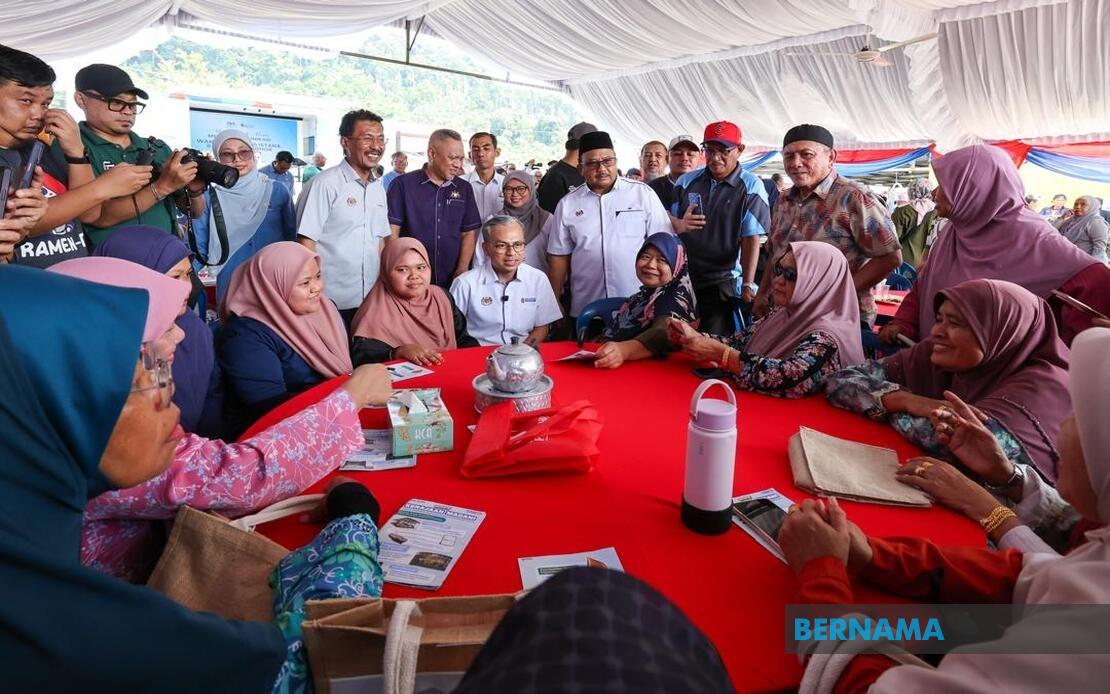
Pakatan Harapan's communications director Datuk Fahmi Fadzil has pushed back against criticism that the coalition's delayed introduction of its 'Johor for All' manifesto puts it at a disadvantage, asserting instead that the timing reflects a deliberate strategy prioritising substantive policy development over speed. Speaking at Batu Pahat on July 4, Fahmi contended that releasing the manifesto only after securing approval from the PH coalition's highest echelons, including Prime Minister Anwar Ibrahim, demonstrates seriousness and rigour in campaign preparation.
The comments directly address concerns raised by former Bangi MP Ong Kian Ming, who had warned that PH's slower manifesto launch could hamper campaign effectiveness during a critical election period. Ong had specifically flagged the coalition's failure to name a menteri besar candidate and the absence of senior-ranking politicians as campaign contenders as additional vulnerabilities that, combined with the manifesto delay, positioned BN for a decisive victory. However, Fahmi characterised these assessments as disconnected from ground realities, pointing to robust turnout at PH grassroots events as evidence of sustained voter enthusiasm.
The timing question reflects deeper strategic differences within Malaysia's opposition coalition as it navigates a crucial state-level contest. By introducing the manifesto in the second week of campaigning, PH sought to capitalise on candidate introduction and media visibility while allowing time for internal coordination and policy refinement. For Malaysian voters accustomed to rapid-fire campaign announcements, the measured approach represents a calculated gamble: either appearing thoughtful and deliberative, or risking the perception of sluggish organisation. The distinction matters particularly in Johor, where the ruling Barisan Nasional maintains significant structural advantages through incumbency and administrative machinery.
Fahmi also reframed criticism from Khairy Jamaluddin, the former UMNO Youth chief who dismissed the PH manifesto as essentially derivative of BN's policy platform. Rather than defending the manifesto's originality directly, Fahmi suggested that Khairy's energetic campaigning stood in stark contrast to the more muted public presence of Johor Menteri Besar Datuk Onn Hafiz Ghazi, implying that BN's official campaign leadership lacked the vigour and communication skills Khairy demonstrated. This rhetorical manoeuvre shifts the debate from policy substance to personality and campaign intensity, a tactic designed to suggest that internal BN tensions or leadership uncertainty might undermine the coalition's apparent electoral advantage.
The jab at Onn Hafiz carries particular significance given questions about the Johor state government's direction and performance during the incumbent's tenure. By highlighting Khairy's relative prominence, Fahmi subtly raises doubts about whether Onn Hafiz commands sufficient authority or enthusiasm within his own party's ranks. This kind of intra-coalition criticism, when deployed by opposition figures, can amplify existing fractures and signal to voters that the governing side may lack cohesion or compelling leadership.
Another flash point Fahmi addressed involves alleged controversies surrounding the Democratic Action Party, specifically suggestions circulating on social media that a senior DAP figure supported pardoning former Prime Minister Najib Razak. The issue touches on DAP's perceived vulnerability as a coalition member in Muslim-majority Johor, where the party's secular orientation and Chinese-majority support base can be leveraged against it during campaigns. Fahmi dismissed concerns that such allegations would damage PH momentum, citing the robust responses at campaign events and noting that the PH candidate contesting the Bentayan seat, Ng Yak Howe, is himself a DAP member.
Fahmi's invocation of Marina Ibrahim's recent comments proved telling. Ibrahim, the former Skudai assemblyman, had publicly withdrawn from politics, citing disillusionment with what she described as DAP leadership posturing around the Najib pardon question. By addressing these remarks directly rather than ignoring them, Fahmi acknowledged the controversy's potential toxicity while attempting to contain damage by emphasising grassroots momentum over social media narratives. The calculation reflects how opposition coalitions in Malaysia must constantly navigate between acknowledging internal tensions and projecting unity to voters.
The Johor state election, scheduled for July 11 with early voting on July 7, represents a significant political contest in its own right and as a bellwether for national sentiment. With 172 candidates competing for 56 state seats, the election offers the first substantial electoral test since Anwar Ibrahim's government took office at the federal level. PH's performance in Johor will likely shape perceptions of the coalition's electoral viability ahead of the next general election, making campaign strategy and messaging particularly consequential.
For Malaysian observers, the manifesto timing debate illustrates broader campaign philosophy differences between coalitions. BN's traditional approach emphasises rapid deployment of resources and aggressive messaging, leveraging administrative advantages and media access. PH's strategy, by contrast, often emphasises consultative decision-making and coalition consensus-building, which can appear slower but reflects attempts to maintain cohesion among diverse political partners with sometimes competing interests. Whether voters reward deliberation over dynamism, or penalise what could be perceived as sluggish momentum, remains the central question.
The manifesto's substantive policy content, distinct from timing questions, ultimately bears the weight of persuading undecided Johor voters. Fahmi's confidence in grassroots support suggests PH expects its programmatic offerings to resonate sufficiently to overcome any disadvantages from the delayed launch. The coalition's emphasis on comprehensive policy development and senior leadership endorsement reflects a conviction that voters increasingly demand substantive governance agendas rather than mere campaign theatrics. Whether this calculation proves correct will become apparent on polling day and in the subsequent analysis of PH's vote share relative to expectations.

