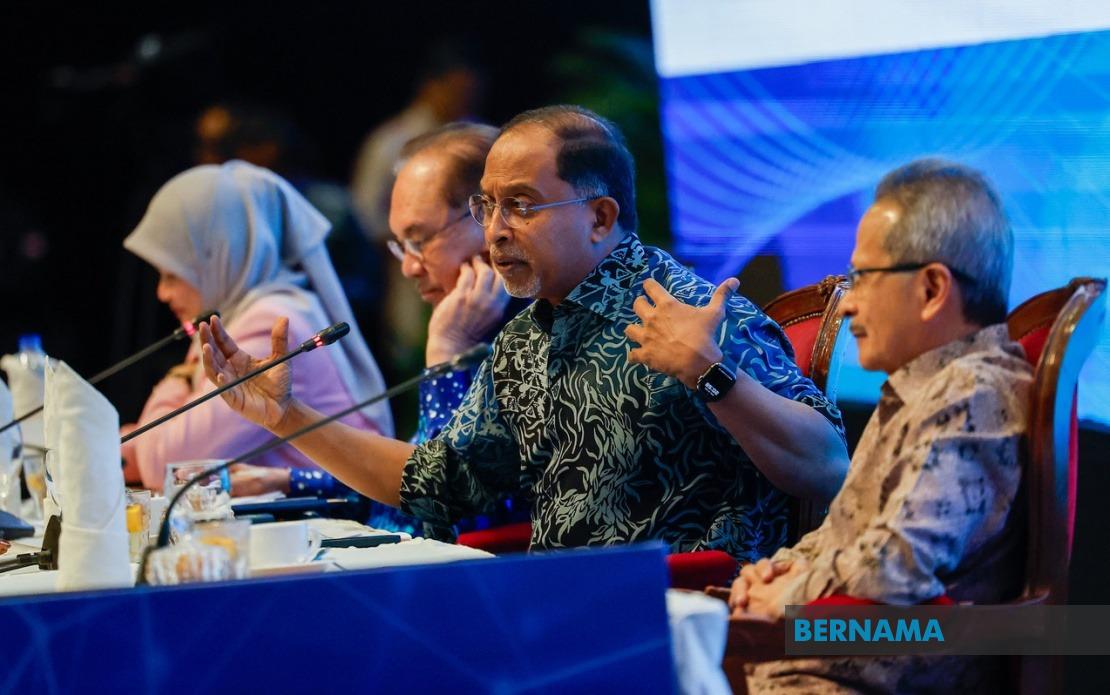
The future trajectory of Malaysia's higher education system hinges on overhauling outdated legislation that has constrained universities for decades, according to Higher Education Minister Datuk Seri Dr Zambry Abd Kadir. Speaking at a major policy forum attended by Prime Minister Datuk Seri Anwar Ibrahim, Zambry emphasized that the Universities and University Colleges Act 1971, commonly known as AUKU, requires substantial revision to remain relevant in contemporary educational contexts. His remarks signal a significant shift toward modernising the regulatory environment governing Malaysia's universities, addressing longstanding grievances over restrictions on academic expression and institutional autonomy.
The minister's intervention comes as part of broader MADANI Malaysian Scholars Forum discussions on national education policy and institutional governance. Zambry framed the legislative review as essential groundwork for ensuring Malaysia's higher education ecosystem does not become further hampered by regulatory frameworks designed for a different era. He acknowledged that existing constraints embedded in current legislation have limited institutions' capacity to operate effectively and responsively. This recognition reflects growing consensus among policymakers that AUKU's provisions—originally enacted more than five decades ago—inadequately address the complexities and demands of twenty-first century university operations, from research collaboration to student activism and institutional governance structures.
Central to Zambry's reform agenda is expanding academic freedom and student empowerment within Malaysian universities. The minister specifically highlighted the need to guarantee meaningful freedom of expression alongside genuine academic liberty, concerns that have animated campus debates for years. These provisions, he suggested, remain constrained under current legal structures that were drafted when higher education served different social and economic purposes. By repositioning academic freedom as a foundational principle rather than an implicit right, the ministry aims to align Malaysian universities with international best practices while maintaining accountability mechanisms appropriate to the national context. This recalibration could substantially reshape the relationship between institutions, faculty, and students.
To translate these ambitions into concrete legislative change, the Ministry of Higher Education has established an Independent Committee tasked with gathering, assessing, and synthesizing submissions from academics, student representatives, and other stakeholders. This consultative process represents a departure from top-down policymaking, signalling genuine engagement with constituents who have navigated AUKU's constraints. By systematically collecting memoranda and perspectives from across the academic community, the committee creates space for diverse voices to shape reform outcomes. The inclusivity of this approach may generate broader institutional and public support for eventual legislative amendments, while also surfacing practical concerns that policy designers might otherwise overlook.
Beyond reviewing AUKU specifically, the ministry is exploring a more ambitious structural solution: consolidating disparate higher education statutes into a single, comprehensive One Higher Education Act. Such consolidation would streamline governance by coordinating multiple legislative instruments under a unified framework, reducing institutional confusion arising from overlapping jurisdictions and conflicting provisions. This approach mirrors reforms undertaken in other Commonwealth education systems and could facilitate more coherent policy implementation across Malaysia's diverse higher education landscape. A coordinated legal framework would enable more efficient institutional management while potentially clarifying the rights and obligations of universities, government bodies, and academic communities.
Education Minister Datuk Seri Fadhlina Sidek, participating alongside Zambry at the forum, articulated a complementary vision focused on expanding equitable access throughout Malaysia's education ecosystem. She articulated the ministry's commitment to "humane education" as an overarching philosophy, one that recognises students as multidimensional individuals rather than merely examination performance metrics or future workforce units. This philosophical reorientation carries significant implications for how Malaysian schools and universities conceptualize their missions and measure success. By centering human development alongside academic achievement, the approach challenges prevailing meritocratic frameworks that have historically dominated Malaysian education discourse.
Fadhlina's emphasis on extending educational access to historically marginalised populations demonstrates how higher education reform connects to broader equity objectives. She referenced multiple initiatives expanding access pathways, including Schools in Hospital, rehabilitative education programmes, and specialized schooling models for Orang Asli students. These innovations acknowledge that meaningful educational inclusion requires differentiated provision tailored to diverse learner circumstances. Simultaneously, the ministry has dramatically expanded pre-school access through free provision, recognizing that educational foundations established in early childhood significantly influence subsequent attainment. Such investments represent substantial resource commitments reflecting official recognition that formal access alone proves insufficient without addressing underlying barriers.
The ministry's conceptualization of education transcends narrow vocational preparation or economic productivity metrics. Fadhlina articulated a vision wherein schools and universities deliberately cultivate moral resilience, psychological wellbeing, and civic virtue alongside intellectual development. This holistic educational purpose acknowledges that students enter classrooms carrying emotional vulnerabilities, psychological burdens, and aspirational ambitions demanding institutional recognition. The explicit rejection of examination-centric educational models signals potential rebalancing toward developmental outcomes encompassing mental health, ethical reasoning, and social responsibility. Such reorientation could reshape how Malaysian institutions allocate resources, design curricula, and evaluate institutional effectiveness.
The convergence of higher education reform and philosophical reorientation toward humane education reflects evolving recognition that legislative modernization and pedagogical transformation must advance together. AUKU review efforts provide the structural foundation enabling universities to implement alternative educational approaches without regulatory obstruction. Simultaneously, reconceptualizing education's fundamental purposes creates institutional receptiveness to the freedoms that modernized legislation would provide. This synergistic relationship between legal reform and philosophical renewal positions Malaysia's education sector for potentially transformative change, though implementation success will depend on sustained political commitment and adequate resource allocation across coming years.

