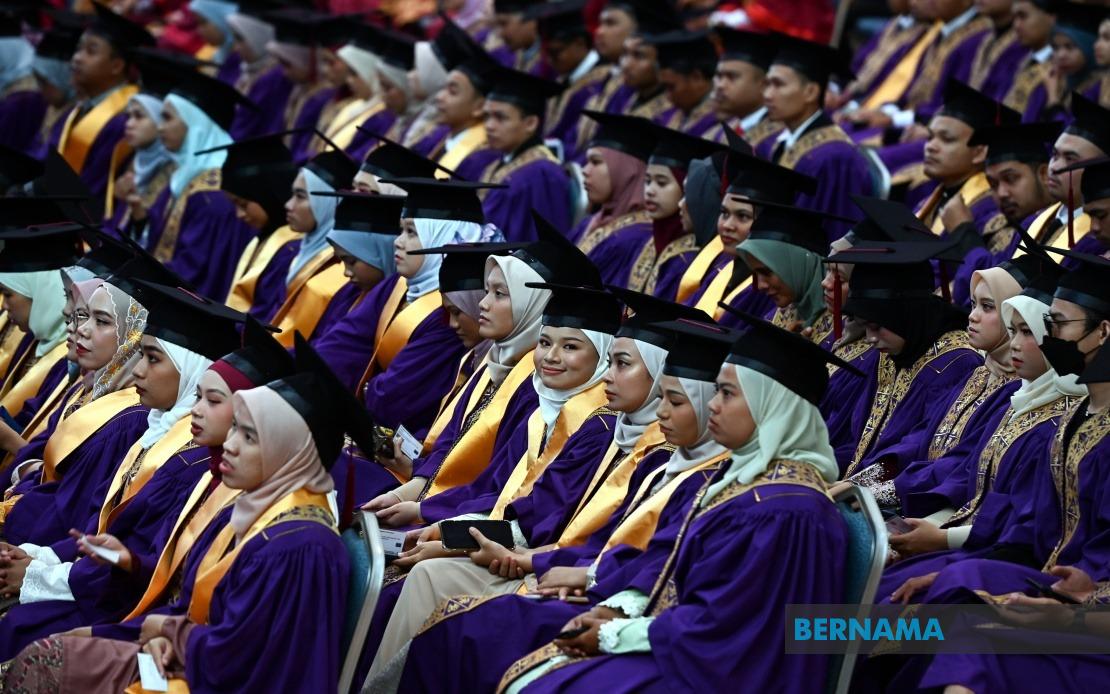
The Ministry of Higher Education (MoHE) has announced an immediate halt to all disciplinary proceedings at public universities that involve students exercising freedom of speech, expressing opinions, offering public criticism, or participating in peaceful assembly. The directive, issued from Putrajaya on August 28, represents a significant policy shift in how Malaysian universities regulate student conduct and marks a turning point in the ongoing debate over academic freedoms within higher education institutions.
The suspension aligns directly with remarks made by Prime Minister Datuk Seri Anwar Ibrahim at the Malaysia MADANI Intellectuals Forum (FIM) Series 13, where he signalled the government's intention to repeal the Universities and University Colleges Act 1971 (Act 30), commonly known as AUKU. This legislation has long been regarded by civil liberties advocates as one of the most restrictive laws governing student behaviour in the region, with provisions that have historically criminalised peaceful dissent and independent student organising within campuses.
The MoHE's statement indicates that the ministry is simultaneously undertaking a comprehensive review of existing legal frameworks to identify provisions that can be immediately suspended or exempted without waiting for the lengthy legislative process required to fully repeal AUKU. This pragmatic approach acknowledges the political reality that new legislation takes time to draft, debate, and pass through Parliament, while student grievances and restrictions on expression cannot wait indefinitely. The decision to act within existing legal constraints rather than simply announcing future intentions demonstrates a commitment to delivering tangible change in the near term.
Specific areas identified for immediate exemption include students' rights to manage their own associations and clubs without excessive institutional interference, the freedom to organise activities and events, and the right to express views and organise assemblies. Critically, the exemptions extend to students' use of communication platforms and their ability to distribute and publish documents—provisions that have previously been used to suppress student journalism, social media commentary, and internal campus publications. For Malaysian students accustomed to operating under significant regulatory constraints, these specific carve-outs represent concrete recognition of contemporary modes of expression that university rules have struggled to accommodate.
However, the MoHE has carefully balanced expanded freedoms with corresponding responsibilities, noting that students' rights to expression and assembly must be exercised within bounds of respect for law and institutional order. The ministry emphasised that conduct involving violence, vandalism, property destruction, criminal activity, academic dishonesty, or violation of legitimate disciplinary standards remains subject to applicable laws and regulations. This framing attempts to navigate between critics who view AUKU as necessary for maintaining institutional discipline and those who see it as an authoritarian relic incompatible with democratic values. The distinction between protecting legitimate student expression and maintaining campus safety represents a genuine policy challenge rather than mere political theatre.
The reform initiative extends beyond institutions governed directly by AUKU. The MoHE announced that parallel reviews would be conducted at the International Islamic University Malaysia (IIUM) and Universiti Teknologi MARA (UiTM), which operate under different legal frameworks but maintain student regulations similarly restrictive to their AUKU-governed counterparts. Bringing these institutions into alignment with broader reform efforts suggests a systematic attempt to address inconsistencies in how different public universities treat student freedoms, a particularly important consideration given IIUM and UiTM's substantial student populations and prominent roles in Malaysian higher education.
The timing of this announcement reflects broader shifts in Malaysian governance philosophy under the current administration. Prime Minister Anwar Ibrahim has positioned democratic reform and institutional openness as central to his vision for national development, particularly regarding intellectual life and academic spaces. The MADANI framework, which explicitly emphasises institutional reform and transparency, provides the ideological scaffolding for these university changes. Students and civil society organisations have long highlighted the disconnect between Malaysia's constitutional guarantees of freedom of expression and the severe restrictions imposed within university settings, creating a focal point for broader debates about democratic implementation.
For Malaysian universities, the implications are substantial. Student unions and organisations will likely reconstitute more actively, internal campus debate may become more animated and diverse, and student media may operate with greater editorial independence. Historically, AUKU has been used to prevent student activism around issues ranging from tuition fees to environmental concerns to political reform. Suspending disciplinary actions tied to expression may embolden student engagement across these domains. Universities will need to develop new approaches to student governance that accommodate greater freedom whilst maintaining functional campuses, a transition that will test institutional creativity and administrative flexibility.
The broader regional context matters here as well. Malaysia's universities compete internationally for students and faculty, and restrictive speech codes have undermined Malaysia's competitiveness in attracting international talent and maintaining research excellence. Singapore's universities, whilst not entirely free from political constraints, operate with somewhat greater internal autonomy. Thailand's universities have faced severe restrictions under military and quasi-military governance. By liberalising student expression, Malaysia positions its institutions more competitively within Southeast Asia's higher education landscape, potentially attracting researchers and students seeking more open intellectual environments.
Implementation will prove crucial. Government circulars and policy statements frequently encounter resistance or foot-dragging at institutional level, particularly when they contradict long-standing administrative practices. University administrators accustomed to invoking AUKU restrictions may resist these changes through bureaucratic delay, narrow interpretations of exemptions, or arguments that specific conduct falls outside protected categories. The MoHE will need to provide clear guidance, regular monitoring, and enforcement mechanisms to ensure universities genuinely honour the suspension rather than simply rebranding disciplinary actions under different rationales.
The suspension also raises questions about retrospective justice. Students previously disciplined under provisions now being suspended may seek review or reversal of historical cases. The ministry has not addressed whether it will establish mechanisms for considering appeals from students punished for expression that would now be protected. This represents both a legal and moral question that could affect hundreds or even thousands of current and recent students across Malaysia's public university system. Equitable resolution of these cases would strengthen the reform's credibility and demonstrate genuine commitment rather than symbolic gestures.
Looking forward, the full repeal of AUKU remains the ultimate objective, with the current suspension serving as an interim measure. The process of drafting new legislation will inevitably involve extensive consultation with universities, student representatives, parents, and other stakeholders. Malaysia's experience over coming months of managing universities with greater student freedoms will inform this drafting process, providing practical evidence about whether expanded expression creates genuine problems or whether long-standing fears about campus chaos prove unfounded. The success of this interim approach may ultimately determine political will for completing legislative reform.

