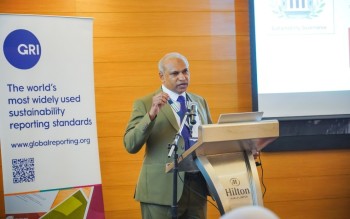
Malaysia's financial sector is fundamentally reshaping loan approval processes by making environmental, social and governance (ESG) reporting a prerequisite for business financing. Banks and other lending institutions across the country now routinely demand that companies demonstrate their sustainability performance through formal reports before approving credit applications, a shift that affects everything from multinational corporations to small family businesses seeking expansion capital.
This emerging financial requirement represents a significant evolution in how Malaysian businesses must operate if they wish to remain competitive and solvent. According to Prathab V, principal consultant at Malaysia-based ESGright Sdn Bhd, this development carries profound implications for both large enterprises and smaller operations. Companies that successfully navigate these new sustainability expectations gain preferential access to capital and increasingly to international markets, while those that lag behind risk being sidelined by competitors who have embraced the transition. The advantage extends beyond mere financing availability—organisations demonstrating robust sustainability credentials attract what financial analysts call "smart capital," investment that comes with lower risk premiums and longer-term stability.
The regulatory landscape in Malaysia already reflects this directional shift. Listed companies face mandatory sustainability statement requirements, establishing an expectation that has gradually permeated the broader business ecosystem. However, unlisted companies still operate under optional guidelines, creating a two-tier system that may not persist indefinitely. Industry observers suggest that as banking institutions tighten their lending criteria around ESG metrics, the practical distinction between mandatory and optional reporting will blur considerably. Companies that currently view sustainability reporting as discretionary are increasingly recognising that their financing options narrow without it, making the exercise effectively compulsory regardless of formal regulatory status.
Government policy initiatives across multiple agencies have actively encouraged this transition toward sustainability integration. Rather than imposing hard mandates, Malaysian regulators have fostered an environment where market forces naturally incentivise corporate action. This approach aligns with international trends where sophisticated capital providers view environmental and social risks as material financial considerations. A company's carbon footprint, labour practices, and governance structures now figure prominently in credit assessments, much like traditional metrics such as debt-to-equity ratios or cash flow projections.
The practical implications for Malaysian businesses extend well beyond domestic financing. Companies operating with robust sustainability frameworks find it considerably easier to export products, establish supply chains in developed economies, and participate in global value networks where buyers increasingly demand evidence of responsible practices. Many of Malaysia's largest listed corporations recognised this advantage years ago, voluntarily adopting Global Reporting Initiative (GRI) Standards well before local exchanges mandated sustainability disclosures. These early adopters positioned themselves advantageously for international market access, a competitive edge that has only widened as global buyer standards have intensified.
Small and medium enterprises face a distinct challenge within this evolving landscape. Unlike multinational corporations with dedicated sustainability teams and substantial budgets, SMEs typically operate with constrained resources and competing priorities. Robin Hodess, chief executive officer of the Global Reporting Initiative, has noted that SMEs require appropriately scaled frameworks rather than the comprehensive disclosure requirements imposed on larger entities. The solution lies not in exempting smaller businesses from sustainability considerations but in tailoring reporting expectations to their operational reality and resource capacity. A simplified disclosure set focused on genuinely material issues would enable SMEs to progress on their sustainability journey without imposing disproportionate administrative burdens.
A particularly significant advantage for SMEs lies in supply chain integration. As suppliers to multinational corporations or exporters serving international customers, smaller businesses increasingly encounter sustainability requirements embedded in commercial relationships. Demonstrating ESG compliance becomes a gateway to lucrative supply chain opportunities and customer retention, making sustainability reporting a legitimate business investment rather than merely a compliance exercise. Companies that help their SME suppliers develop basic sustainability frameworks simultaneously strengthen their own supply chains and create competitive advantages in markets where responsible sourcing commands premium valuations.
Malaysia's position within the Asian sustainability landscape offers additional context. The country has developed one of the highest concentrations of GRI-certified professionals across Southeast Asia, reflecting both government commitment and market demand for expertise in this domain. ESGright's emergence as the fifth-largest GRI trainer globally—and third-largest in the Asia-Pacific region—demonstrates how market opportunities have crystallised around sustainability capacity building. The firm's recent appointment as an approved education partner by the International Financial Reporting Standards Foundation further extends Malaysia's institutional capability to support corporate sustainability transitions aligned with global standards.
However, expansion of reporting requirements introduces a genuine complication: complexity and compliance fatigue. As different frameworks proliferate—GRI standards, IFRS sustainability standards, Bursa Malaysia guidelines, industry-specific requirements—companies face an expanding universe of disclosure obligations that can feel contradictory or overlapping. Prathab V identifies this as a substantial challenge facing Malaysian businesses, where the weight of accumulating compliance demands threatens to overshadow the underlying mission of sustainability improvement. The risk emerges when companies become fixated on ticking boxes for multiple frameworks rather than identifying genuine areas where their operations can meaningfully reduce environmental impact or improve social outcomes.
Navigating this complexity requires strategic prioritisation rather than attempting universal excellence across all sustainability dimensions. Prathab recommends that each company carefully assess which sustainability areas represent their most significant opportunities for positive impact—whether environmental stewardship, community engagement, governance transparency, or supply chain responsibility—and concentrate intensive effort on excelling within chosen domains. This focused approach generates more substantial real-world improvements than spreading limited resources across superficial compliance with every possible reporting standard. Paradoxically, demonstrating deep commitment to specific material issues often impresses both lenders and investors more effectively than attempting comprehensive but shallow compliance across numerous frameworks.
The sustainability reporting transition also intersects with corporate profit obligations, creating a tension that responsible management must navigate thoughtfully. Shareholders legitimately expect profitability and returns, yet integrating sustainability considerations into operations requires upfront investments that may not generate immediate financial returns. However, evidence increasingly suggests that companies embedding sustainability into core strategy achieve superior long-term financial performance through enhanced risk management, improved stakeholder relationships, and positioning in growing markets where sustainability credentials command premium valuations. The question shifts from viewing sustainability and profitability as competing priorities to recognising them as complementary strategic objectives.
For Malaysian policymakers and business leaders, the trajectory is evident: sustainability reporting will transition from emerging best practice to baseline expectation within the next several years. Financial institutions have effectively become enforcement mechanisms for this transition, using lending decisions to reward sustainability leadership and penalise laggards. Rather than perceiving this as burdensome regulation, forward-thinking enterprises recognise the opportunity to shape their competitive positioning through early adoption of robust sustainability frameworks. The businesses that thrive in this landscape will be those that view sustainability not as a compliance checkbox but as an integral strategic capability that strengthens resilience, attracts capital, and unlocks market opportunities across Southeast Asia and beyond.

