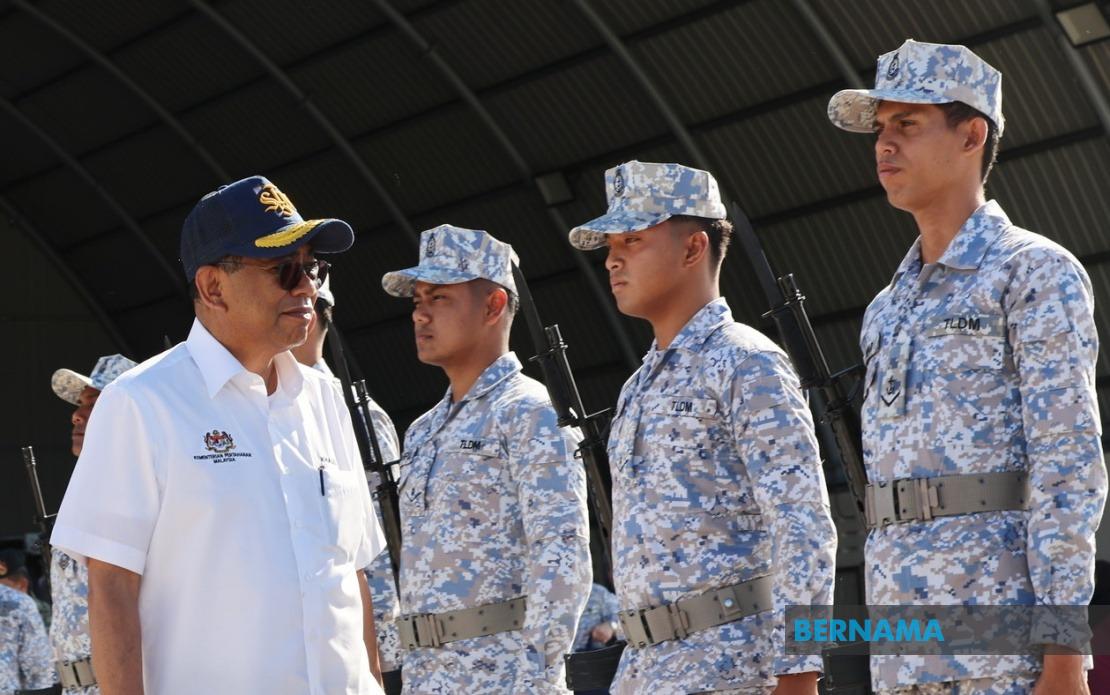
Malaysia's Defence Ministry has committed to a comprehensive upgrade of critical infrastructure at Layang-Layang Island, positioning the nation's forward operating base to meet emerging security challenges in the South China Sea. During a working visit to the Royal Malaysian Navy's LIMA Station, Defence Minister Datuk Seri Mohamed Khaled Nordin outlined plans to strengthen operational, logistical, communications and support systems to maintain the facility at peak readiness. The strategic investment underscores Kuala Lumpur's determination to maintain a continuous and visible presence in one of the world's most contested maritime zones, where competing territorial claims threaten regional stability.
Located approximately 270 kilometres from Labuan and 280 kilometres from Sabah, the 35-hectare Layang-Layang Island has functioned as Malaysia's primary defensive foothold in the South China Sea since the Royal Malaysian Navy established LIMA Station on 17 April 1984. The facility sits within Gugusan Semarang Peninjau, an area subject to overlapping maritime and territorial claims from China, Vietnam and the Philippines. For nearly four decades, the station has served as the cornerstone of Malaysia's national security operations in these waters, supporting surveillance missions, naval logistics and intelligence-gathering activities that extend across the disputed region. The island's strategic value derives not merely from its geographic position but from its role as a tangible manifestation of Malaysian sovereignty in waters where assertiveness and sustained presence have become essential components of territorial defence.
Among the most significant developments announced is the planned installation of an air defence radar system to complement the island's existing maritime radar infrastructure. The Defence Minister indicated that site preparation work would commence immediately, with the radar system expected to reach full operational capacity by 2029. This technological enhancement represents a qualitative upgrade in Malaysia's detection and monitoring capabilities, enabling authorities to identify and track aerial movements across the region with greater precision. The addition of air defence systems addresses a critical gap in Malaysia's multi-layered security architecture, moving beyond surface-level vessel detection to provide comprehensive three-dimensional awareness of activities surrounding the island. Such modernisation aligns with broader regional trends as Southeast Asian nations invest in advanced surveillance technologies to maintain effective maritime domain awareness.
The Defence Ministry's broader infrastructure modernisation programme extends well beyond radar systems. Mohamed Khaled emphasised that improvements would encompass basic facilities and personnel welfare provisions, recognising that effective military operations depend on the morale and wellbeing of stationed personnel. Enhanced water and electricity supply systems, expanded food provisions and improved accommodation facilities form the foundation of sustainable operations on the remote outpost. These investments reflect an understanding that maintaining continuous presence in challenging environments requires not merely military hardware but genuine commitment to ensuring personnel can execute their duties effectively. The cumulative effect of these upgrades transforms LIMA Station from a minimalist forward operating base into a more comprehensively equipped strategic asset capable of sustaining extended operations.
Defence Ministry officials accompanying the Defence Minister included Defence Ministry secretary-general Datuk Lokman Hakim Ali, Royal Malaysian Navy chief Admiral Tan Sri Dr Zulhelmy Ithnain, Royal Malaysian Air Force chief General Tan Sri Muhamad Norazlan Aris and Joint Forces commander Lieutenant General Datuk Tengku Muhammad Fauzi Tengku Ibrahim. The high-level representation signalled the significance attached to the island's development within Malaysia's strategic planning. The coordinated presence of navy, air force and joint command leadership underscores recognition that modern maritime security requires integrated multi-service approaches rather than single-service solutions. This institutional alignment suggests that infrastructure improvements form part of a coherent national strategy rather than isolated facility upgrades.
The Defence Minister framed Malaysia's development of Layang-Layang Island as a measured response to regional security imperatives, explicitly rejecting approaches that might escalate tensions or provoke confrontation. Mohamed Khaled characterised the sustained military presence as defensive rather than aggressive, emphasising that Malaysia seeks to safeguard legitimate interests without pursuing provocative escalation. This rhetorical positioning matters considerably within Southeast Asian diplomatic contexts, where perceptions of aggressive militarisation can trigger counter-responses and undermine regional stability. Malaysia's approach attempts to thread a delicate needle: demonstrating resolve and capacity to defend claimed territories whilst avoiding rhetoric or actions that might be misinterpreted as threatening. This distinction between assertiveness and provocation has become increasingly important as regional powers compete for influence and territorial recognition.
Planners identified additional technological enhancements beyond traditional radar infrastructure. The Defence Ministry intends to deploy unmanned systems and emerging technologies to strengthen Malaysia's maritime domain awareness, particularly in detecting suspicious or unauthorised movements throughout national waters. These systems represent cost-effective force multipliers, enabling continuous surveillance across vast maritime expanses without requiring permanent human presence. Unmanned platforms also reduce personnel exposure to operational risks whilst providing persistent intelligence collection capabilities. The integration of unmanned technologies into the island's security posture reflects broader global trends towards automation and remote monitoring, allowing smaller military forces to project awareness and presence across disproportionately large geographic areas.
Beyond defence and security considerations, Mohamed Khaled highlighted the island's substantial research potential, particularly regarding marine ecosystems, biodiversity conservation and coral reef sustainability in the South China Sea. This environmental dimension adds economic and scientific value to the strategic asset, creating opportunities for integrated civil-military research partnerships. Higher education institutions and relevant government agencies could leverage the island's unique location to advance knowledge about tropical marine environments whilst simultaneously strengthening Malaysia's capacity to manage regional natural resources. The convergence of strategic and environmental interests demonstrates how forward operating bases in the modern era serve multifaceted purposes extending far beyond traditional military functions.
The planned infrastructure investments reflect Malaysia's recognition that maintaining effective presence in contested maritime zones requires sustained commitment rather than episodic attention. The multi-year timeline for radar installation and ongoing facility improvements signal confidence in long-term strategic continuity. Malaysian policymakers evidently believe that incremental capability enhancement, steadily accumulated over extended periods, represents the most effective approach to consolidating territorial claims and operational effectiveness. This patient, methodical strategy contrasts sharply with dramatic military gestures or provocative actions that might generate international reactions. Instead, Malaysia opts for the cumulative effects of continuous development, allowing capabilities to mature whilst maintaining diplomatic flexibility.
For regional security dynamics, Malaysia's Layang-Layang Island investments represent significant developments in Southeast Asian defence modernisation. The island serves as a crucial node within Malaysia's broader maritime security network, alongside equivalent facilities maintained by regional neighbours. As China continues expanding its military presence throughout the South China Sea and Vietnam strengthens its defensive capabilities, Malaysian security investments should be understood as reciprocal responses to perceived threats rather than aggressive initiatives. The strategic competition unfolding across the region increasingly manifests through infrastructure development, technological modernisation and sustained military presence rather than overt military confrontation. Malaysia's approach to Layang-Layang Island exemplifies this evolutionary pattern, transforming a remote outpost into a comprehensively equipped strategic asset capable of defending Malaysian interests whilst contributing to regional stability and maritime security governance.
The significance of these developments extends beyond Malaysia's bilateral interests to broader Southeast Asian security architecture. As regional nations invest in defensive capabilities and forward operating bases, the cumulative effect reshapes maritime power distribution and operational dynamics throughout the South China Sea. Malaysia's infrastructure enhancements contribute to a competitive dynamic wherein multiple regional actors simultaneously strengthen military capabilities, potentially creating escalatory pressures despite each nation's stated commitment to avoiding provocation. However, investments focused on surveillance, monitoring and detection systems generally enhance stability by improving mutual awareness rather than offensive capabilities. The technologies planned for Layang-Layang Island—particularly advanced radar and unmanned monitoring systems—serve primarily defensive purposes, enabling Malaysia to detect threats rather than project offensive power. This distinction matters considerably for understanding whether regional military modernisation trends promote stability or instability across the South China Sea and broader Southeast Asian maritime domain.