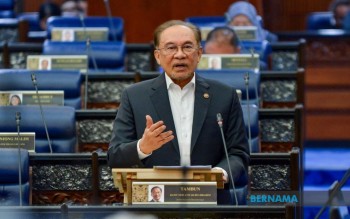
Prime Minister Datuk Seri Anwar Ibrahim has identified the Malaysia-Thailand Border Economic Zone as a gateway to unlock trade potential with Cambodia, Laos and Vietnam, promising that the initiative will dismantle longstanding customs obstacles that have constrained Malaysian exports. Speaking during parliamentary question time, Anwar, who also holds the finance portfolio, outlined how the bilateral framework aims to transform cross-border commerce and create competitive advantages for Malaysian businesses operating in Southeast Asia's fast-growing Indochina economies.
The border zone represents a strategic recalibration of Malaysia's regional trade positioning. For years, Malaysian exporters of fisheries and agricultural products have encountered Thai customs procedures that slowed their movement toward Indochinese markets, creating delays and raising operational costs. Anwar confirmed that Thailand's government, under Prime Minister Anutin Charnvirakul, has signalled willingness to streamline these requirements. This diplomatic concession transforms what was previously a friction point in bilateral trade into a facilitation corridor, allowing goods to progress through standardised customs clearances rather than navigating ad hoc restrictions.
The Malaysia-Thailand Border Economic Zone extends beyond the initial junction points of Sadao and Bukit Kayu Hitam, which the two premiers jointly inaugurated weeks earlier. The framework encompasses Rantau Panjang, a strategic coastal entry point in Kelantan, where federal and state authorities are coordinating to accelerate implementation. This geographical expansion reflects ambitions to diversify entry routes and reduce bottlenecks at existing land crossings. By activating multiple border corridors simultaneously, Malaysia and Thailand hope to distribute trade volumes more efficiently and prevent congestion that might otherwise undermine the initiative's commercial benefits.
For Malaysian small and medium enterprises, the zone presents opportunities to access markets previously considered geographically distant or logistically challenging. The Indochinese region, comprising Cambodia, Laos and Vietnam, represents roughly 150 million consumers with growing purchasing power and expanding industrial demand. Malaysian fisheries producers, particularly those processing and exporting seafood products, have struggled to compete in these markets partly due to the friction imposed by Thai intermediaries and customs authorities. Streamlined passage would allow these businesses to reduce supply chain costs and respond more quickly to market demand, strengthening their competitiveness against producers from other nations.
The agricultural sector stands to benefit similarly. Malaysian palm oil derivatives, rubber products and processed food items face tariffs and handling charges when passing through Thailand en route to Indochina. The relaxed customs framework should lower these transaction costs, making Malaysian agricultural goods more price-competitive. However, the success of this initiative depends substantially on how thoroughly Thailand implements its commitments. Past bilateral trade negotiations have sometimes faltered when announced agreements proved insufficient at implementation level, where lower-level officials or enforcement agencies introduced unanticipated obstacles.
Anwar emphasised that the zone prioritises inclusive economic development, particularly for small businesses and communities residing along the border. Rantau Panjang and surrounding districts have historically experienced slower development than federal territories and major urban centres, partly because border locations attracted limited private investment. The zone framework aims to catalyse job creation and skills training programmes, attempting to distribute prosperity beyond larger trading corporations to grassroots enterprises and workers. Yet success requires targeted policy instruments, such as preferential licensing for local small businesses, subsidised training and infrastructure improvements that directly benefit border residents.
The East Coast Rail Link anchors this broader economic strategy. The federal government has committed to extending the railway corridor to Rantau Panjang, transforming it from a peripheral coastal town into a logistics hub. Anwar revealed that discussions with Thailand's leadership have explored extending the railway across the border into Thai territory along the same alignment. Should this materialise, it would create a continuous freight corridor from Kuala Lumpur through Kelantan into Thailand and potentially connecting to Indochina's rail networks. Such infrastructure would revolutionise regional logistics, enabling containerised cargo movements that circumvent road congestion and reduce environmental impacts.
The rail extension addresses a critical weakness in Malaysia's trade infrastructure. Currently, goods moving from Malaysia to Indochina must either traverse congested Thai highways or navigate port facilities that operate at capacity. A dedicated railway corridor would provide capacity for sustained trade growth and enable Malaysia to position itself as a regional distribution centre. Thailand benefits similarly, gaining access to Malaysian ports and potentially serving as a transit route for traffic between Southeast Asia and China. This creates mutual incentives for Thailand to honour customs facilitation commitments, since the railway's success depends on efficient bilateral commerce.
The broader context involves Malaysia's strategic pivot toward regional integration under Anwar's leadership. Having previously emphasised bilateral ties with major powers, the current administration prioritises deepening engagement with immediate neighbours, particularly Thailand and Indochina. This reflects recognition that Malaysia's prosperity increasingly depends on becoming an indispensable node within Asian supply chains and trade networks. The border zone initiative exemplifies this approach, transforming a historical geopolitical boundary into a commercial corridor. It signals to foreign investors that Malaysia offers efficient transit options and institutional frameworks supporting regional commerce.
However, realising these ambitions requires sustained political will from both governments and coordination across multiple agencies. Previous bilateral initiatives have encountered implementation delays, bureaucratic resistance and shifts in political priorities that dampened initial momentum. The Malaysia-Thailand Border Economic Zone will succeed only if both nations commit resources to infrastructure development, enforce streamlined customs procedures consistently, and coordinate regulatory harmonisation. Regional observers will monitor whether announcements translate into tangible trade flows and whether small businesses can genuinely access the opportunities the zone purports to offer.
For Malaysian manufacturers and exporters, the zone represents a partially attainable competitive advantage. Access to Indochinese markets has long seemed strategically logical but remained practically constrained. The customs facilitation and railway infrastructure offer concrete mechanisms to overcome these constraints. Yet success depends on Thailand's willingness to maintain these commitments despite domestic political pressures, and on Malaysia's capacity to coordinate complex infrastructure projects effectively. The initiative's ultimate test will appear in trade statistics over the coming years, where observable increases in Malaysian exports to Cambodia, Laos and Vietnam would validate the framework's economic impact.

