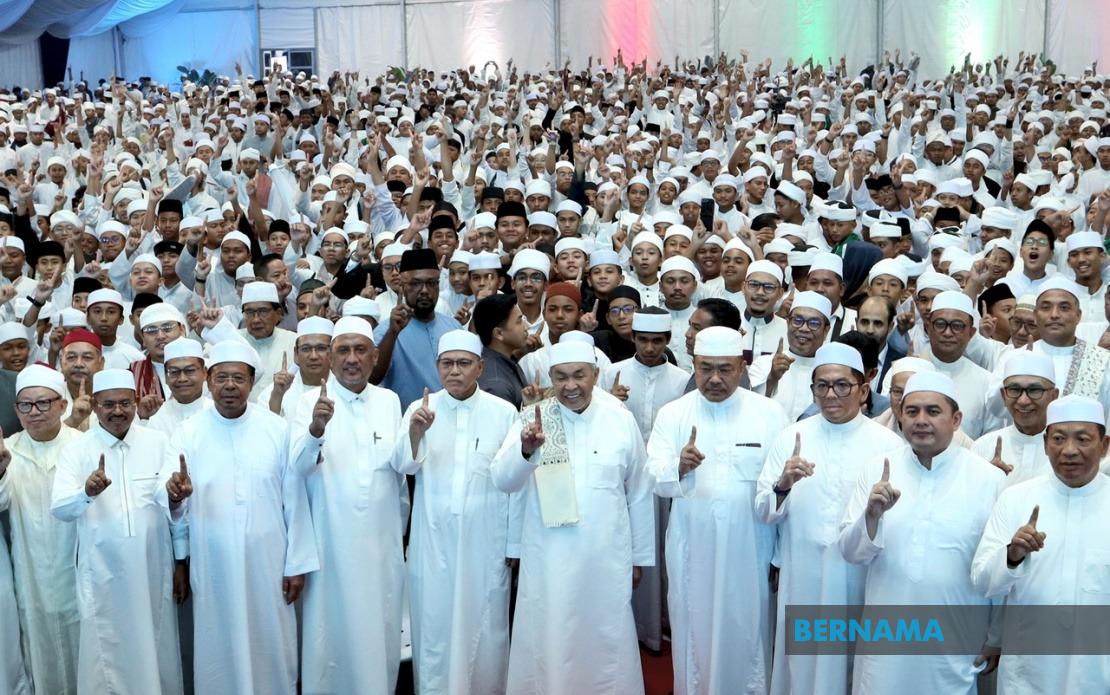
Malaysia has taken a significant step towards professionalising its tahfiz education system with government approval for the creation of a National Tahfiz Council, a move designed to bring coherence and structured progression to Islamic learning across the country. The decision, ratified during last week's Cabinet meeting, represents a watershed moment for tahfiz institutions and their students, positioning Quranic memorisation and Islamic education as a legitimate and recognised educational pathway within Malaysia's formal schooling framework. Deputy Prime Minister Datuk Seri Dr Ahmad Zahid Hamidi, who has been tasked with chairing the new council, announced the development while addressing the Pahang State Huffaz Gathering 2026 in Kuantan, an event that drew over 5,000 hafiz students from across the state.
The establishment of this council addresses a longstanding challenge within Malaysia's Islamic education sector: the fragmentation and lack of standardisation across tahfiz institutions nationwide. Previously, students who had completed their Quranic memorisation faced unclear pathways for further education or employment, with limited recognition of their qualifications by mainstream educational and professional bodies. The council will work to rectify this disparity by developing unified standards for educational quality, establishing consistent recognition protocols for tahfiz graduates, and creating transparent academic progressions that allow students to transition smoothly between tahfiz institutions and conventional universities or vocational training facilities. This structural reform acknowledges that Islamic education need not exist in isolation from broader economic and social advancement.
Among the council's primary objectives is repositioning tahfiz education as a genuine educational pathway rather than a supplementary or marginalised form of learning. According to Ahmad Zahid, the government envisions a system where tahfiz students can progress from madrasah directly into university, where their memorisation skills are coupled with contemporary professional competencies, and where their qualifications open doors to meaningful career opportunities. This reframing is particularly important for Southeast Asia's Muslim-majority context, where Islamic learning has deep cultural and spiritual significance but has historically struggled to integrate with modern employment markets. The council will serve as the coordinating body to ensure that tahfiz graduates possess both religious scholarship and practical skills demanded by employers.
Pahang has emerged as a model state for tahfiz education development, demonstrating how comprehensive and multilayered systems can be constructed. Under the inspiration of the Sultan of Pahang, Al-Sultan Abdullah Ri'ayatuddin Al-Mustafa Billah Shah, the state has implemented early childhood tahfiz programmes such as Tadika Tahfiz Negeri Pahang, creating a foundation for Quranic engagement from the youngest ages. From this kindergarten-level introduction, Pahang has progressively built a structured educational ladder extending through primary and secondary schooling and reaching into international-level Islamic scholarship. This tiered approach demonstrates that tahfiz education can be both comprehensive in scope and rigorous in execution, serving as a template for other states seeking to develop their own Islamic education infrastructure.
The government is simultaneously implementing a revised National Tahfiz Policy 2.0, which incorporates several innovative mechanisms to support students and standardise practice. Technical and Vocational Education and Training (TVET) tahfiz programmes will allow students to combine Quranic memorisation with hands-on vocational skills in fields such as engineering, healthcare, or hospitality, addressing employer demands for multiskilled workers. The Malaysian Tahfiz Certificate 2.0 will provide nationally recognised qualifications comparable to other educational certifications, while the Graded Hafazan Certification offers tiered recognition reflecting different levels of Quranic memorisation achievement. These credentials signal to employers and educational institutions that tahfiz study has rigorous standards and measurable outcomes.
Financial barriers to tahfiz education are being addressed through the Huffaz Financing Scheme, which will reduce economic obstacles that prevent talented students from lower-income families from pursuing Islamic scholarship. The Malaysian Tahfiz Recognition Standard establishes benchmarks for institutional quality and student achievement, ensuring that qualifications earned in one region are valued identically across the country. Strategic partnerships with universities and skills institutes embedded within the policy framework will facilitate student transitions and create dual-pathway opportunities. These complementary initiatives suggest a comprehensive government strategy rather than isolated piecemeal interventions.
The memorandum of understanding signed between Yayasan Pahang, the Community Development Department (KEMAS), and Majlis Amanah Rakyat (MARA) at the Kuantan gathering exemplifies the collaborative approach necessary to strengthen tahfiz education. MARA's involvement is particularly significant, as this government agency specialises in developing opportunities for Bumiputera communities and possesses extensive networks in rural and regional areas where many tahfiz institutions operate. By formalising partnerships, these organisations commit to expanding skills development programmes tailored for huffaz students, ensuring that Islamic learning environments can incorporate modern training delivery. Such cooperation demonstrates that tahfiz advancement requires mobilising multiple government bodies and agencies rather than leaving Islamic education in the domain of religious departments alone.
For Malaysia, this initiative carries implications extending beyond religious education into broader competitiveness and social mobility questions. Islamic education touches millions of Malaysian families, and integrating tahfiz pathways into the formal economy could unlock human potential currently underutilised in professional sectors. When hafiz students face dead ends after completing their memorisation, the nation loses educated individuals who could contribute substantially to healthcare, finance, education, and public administration. Conversely, by creating legitimate advancement routes, Malaysia can channel religious commitment into professional productivity, benefiting both individuals and the economy.
The Southeast Asian context adds further significance to Malaysia's move. With millions of Muslims throughout the region, Malaysia's approach to professionalising Islamic education will likely influence neighbouring countries' policies. Indonesia, Brunei, and Thailand, each with substantial Muslim populations, have grappled with similar questions about integrating tahfiz learning into mainstream economic structures. Malaysia's experience with the National Tahfiz Council could serve as a regional model or cautionary guide, depending on implementation success. The council's effectiveness in delivering its mandate will be closely observed by other regional governments considering similar reforms.
Parental perspectives are likely to shift as tahfiz education becomes more transparently connected to career outcomes. Currently, some Malaysian families view sending children to tahfiz institutions as a choice between religious training and secular economic advancement, perceiving these as competing rather than complementary paths. The National Tahfiz Council's establishment and the associated policy initiatives signal that the government views these paths as compatible and mutually reinforcing. As the council develops recognition frameworks and establishes university partnerships, parents may feel greater confidence that tahfiz education represents a legitimate investment in their children's futures rather than a sacrifice of economic opportunity.
Implementation challenges remain substantial. Standardising education across thousands of tahfiz institutions with varying resources, teaching quality, and operational structures will require significant coordination and enforcement capacity. Ensuring that universities genuinely recognise and credit tahfiz qualifications, rather than treating them as supplementary credentials, demands cultural shifts within higher education institutions accustomed to conventional schooling backgrounds. Building employer confidence in tahfiz graduates' skills competencies requires sustained engagement with private sector leaders. The council will need robust governance structures, adequate funding, and political commitment sustained across electoral cycles to navigate these obstacles.
Looking forward, the council's success will ultimately be measured by outcomes rather than structural elegance. Within several years, observers should expect to see measurable increases in the proportion of tahfiz graduates entering university and professional employment, declining wage gaps between tahfiz graduates and conventionally educated peers, and growing employer participation in collaborating with tahfiz institutions. Ahmad Zahid's leadership of the council places it at a high political level, suggesting genuine governmental prioritisation. Whether this leadership translates into resource allocation, regulatory authority, and sustained institutional support will determine whether the National Tahfiz Council becomes a transformative initiative or merely an administrative structure with limited practical impact.

%22%2F%3E%3C%2Fpattern%3E%3C%2Fdefs%3E%3Crect%20width%3D%22100%25%22%20height%3D%22100%25%22%20fill%3D%22url(%23ph3j096g)%22%2F%3E%3Crect%20width%3D%22100%25%22%20height%3D%22100%25%22%20fill%3D%22url(%23ph3j096p)%22%2F%3E%3Ctext%20x%3D%2250%25%22%20y%3D%2250%25%22%20text-anchor%3D%22middle%22%20dominant-baseline%3D%22central%22%20fill%3D%22rgba(255%2C255%2C255%2C0.95)%22%20font-family%3D%22Georgia%2C%20'Times%20New%20Roman'%2C%20serif%22%20font-weight%3D%22700%22%20font-size%3D%22320%22%20letter-spacing%3D%22-0.02em%22%3EGRS%3C%2Ftext%3E%3C%2Fsvg%3E)