The Prime Minister's Department (Religious Affairs) has initiated a fresh strategy to elevate the public profile and societal impact of Malaysia's most respected Islamic thinkers through the Maal Hijrah Lecture Series. The programme represents an intentional shift away from confining scholarly discourse to university seminars and specialist gatherings, instead positioning Islamic intellectual leadership as a resource for national dialogue accessible to all Malaysians regardless of academic background or religious affiliation.
Dr Zulkifli Hasan, who leads the Religious Affairs portfolio within the Prime Minister's Department, articulated the core motivation during the official launch of the 1448H/2026 edition of the lecture series. His remarks underscore a growing recognition within Malaysia's government that the insights of prominent Islamic scholars—particularly those acknowledged at both national and international levels—carry relevance beyond their traditional institutional settings. The initiative reflects a broader policy objective to weave Islamic intellectual traditions more visibly into Malaysia's mainstream public consciousness and civic discourse.
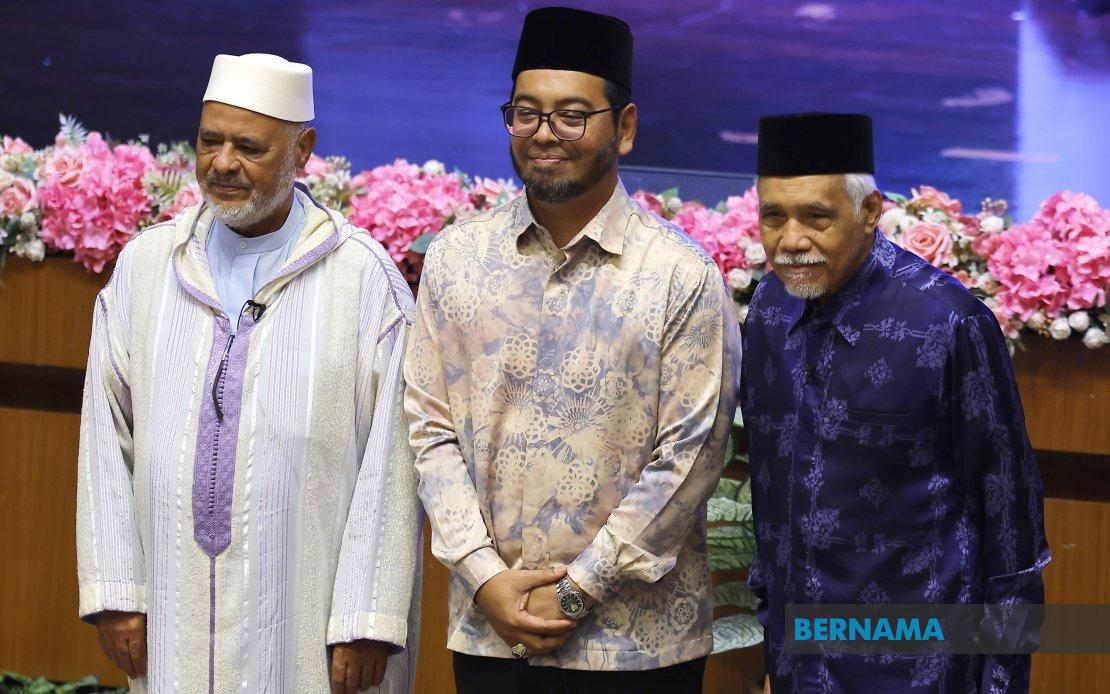
The selection of award recipients for this year's programme highlights the calibre of thinkers being elevated. Emeritus Professor Osman Bakar, rector of the International Islamic University Malaysia (IIUM), was recognised as the national Maal Hijrah figure, while Professor Sheikh Dr Ahmad Al-Raysuni, a distinguished Islamic jurisprudence specialist from Morocco, received the international award. These appointments signal Malaysia's interest in both honouring indigenous scholarship and fostering intellectual exchange with prominent Islamic voices operating on the global stage.
Sultan Nazrin Shah, the Sultan of Perak, formally presented the awards at the national-level Maal Hijrah celebration held at Masjid Putra, bestowing cash prizes, trophies, and formal certificates alongside the title. This ceremonial dimension—involving royal patronage and formal institutional recognition—amplifies the status of these scholars and communicates state endorsement of their intellectual contributions to national development.
The practical implementation of the lecture series depends substantially on collaborative partnerships with established educational institutions. Both Universiti Sains Islam Malaysia (USIM) and IIUM have already signalled support for the initiative, and Dr Zulkifli outlined plans to progressively involve additional universities and research institutions in the dissemination effort. This multi-institutional approach acknowledges that systematic reach requires leveraging existing networks and platforms rather than constructing entirely new delivery mechanisms.
A particularly significant aspect of the government's framing concerns breaking down barriers between different audience segments. Dr Zulkifli explicitly expressed the intention that these scholarly perspectives should resonate not only with Muslim audiences but also with Malaysia's non-Muslim communities. This inclusive positioning reflects Malaysia's plural society and suggests the government views Islamic intellectual contributions as relevant to national conversation more broadly—potentially addressing ethical, governance, and social questions of interest across religious lines.
For Malaysia specifically, this initiative addresses a persistent challenge in knowledge dissemination: the gap between academic research and public understanding. Universities generate substantial scholarship that often remains confined to journal publications and specialist conferences. By creating a dedicated platform, the government seeks to catalyse broader engagement with sophisticated Islamic thought, potentially enriching public debate around education, law, social welfare, and governance—domains where Islamic scholars frequently contribute distinctive perspectives.
The timing of the announcement—coinciding with Maal Hijrah celebrations marking the Islamic new year—carries symbolic weight within Muslim tradition, emphasising renewal and fresh beginnings. This ceremonial framing positions the lecture series not as a bureaucratic initiative but as part of a meaningful cultural and intellectual moment, potentially enhancing its resonance with target audiences.
From a Southeast Asian perspective, Malaysia's emphasis on elevating Islamic scholarship reflects a region-wide phenomenon: the growing visibility and influence of Islamic intellectual movements across Indonesia, Brunei, and beyond. By formalising mechanisms to amplify these voices, Malaysia positions itself as a serious centre for Islamic thought production and distribution, competing indirectly with other regional hubs while strengthening local institutions.
The practical success of the initiative will depend on several implementation factors not addressed in the announcement. The frequency and accessibility of lectures, whether sessions will be broadcast digitally, translation provisions for international audiences, and the specific mechanisms for engaging non-academic publics remain unanswered. Nonetheless, the institutional commitment—endorsed by major universities and supported by government resources—suggests a sustained effort rather than a one-off programme.
Looking forward, this initiative may evolve into a model whereby Malaysia systematically develops public intellectualism around Islamic thought. Should the lecture series gain traction and generate substantive public engagement, it could influence how other government departments approach scholarship dissemination and how academic institutions structure outreach activities. The programme thus represents not merely an expansion of one lecture series, but potentially a test case for broader strategies linking scholarly production to democratic citizenship and informed public discourse.