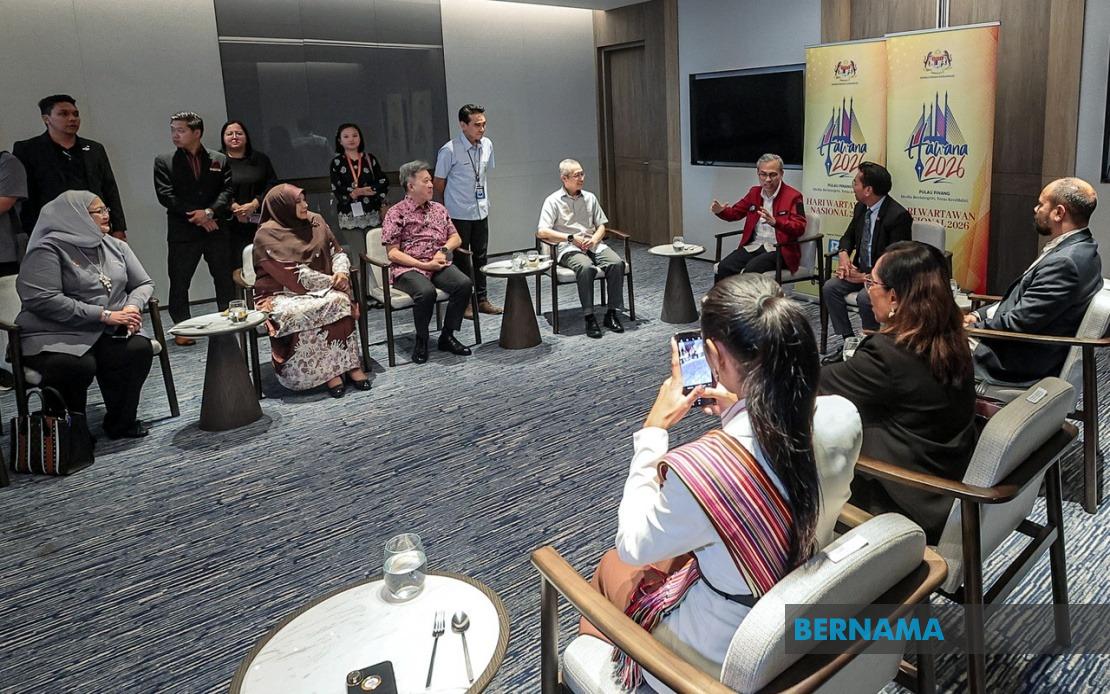
Communications Minister Datuk Fahmi Fadzil has initiated discussions to deepen media engagement between Malaysia and Timor-Leste, signalling Kuala Lumpur's intention to build a more integrated regional information framework. The overture came during a formal meeting at the PICCA Convention Centre @ Butterworth Arena, where Fahmi met with Timor-Leste's Secretary of State for Social Communication, Expedito Loro Dias Ximenes, alongside senior leadership from that nation's primary news agency.
The bilateral engagement centres on leveraging Malaysia's established media infrastructure to support Timor-Leste's continued development in journalism and broadcasting standards. Fahmi indicated that Malaysia's National News Agency, known locally as Bernama, and Radio Televisyen Malaysia (RTM) would serve as primary channels for expanded cooperation. The proposal extends beyond simple content exchange, with the minister specifically suggesting that Malaysia's Tun Abdul Razak Broadcasting and Information Institute (IPPTAR) conduct specialised training programmes tailored to Timorese journalists, acknowledging the professional development needs of the younger Southeast Asian nation.
The timing of this initiative carries particular significance given the regional context of media freedoms and journalistic independence. During their discussion, both ministers examined Timor-Leste's remarkable achievement in the World Press Freedom Index compiled annually by Reporters Without Borders (RSF), an international watchdog organisation. Timor-Leste currently stands as the regional leader in Southeast Asia, achieving a global ranking of 30th among 180 countries assessed—a position that reflects substantial progress in creating an environment where journalists can operate with relative autonomy.
Malaysia's positioning in this same index presents a contrasting narrative. The country presently ranks second within Southeast Asia, trailing its smaller neighbour, a reality that prompted candid discussion between the two officials. Fahmi acknowledged this disparity, using the occasion to reflect on Malaysia's trajectory under the MADANI Government. He emphasised that despite meaningful improvements registered over the previous three to four years compared with earlier administrations, Malaysia recognises persistent gaps between its current standing and its aspirational targets.
The minister framed Malaysia's lower ranking not as a source of defensive posturing but as evidence of work in progress. He articulated a vision of continuous institutional reform, suggesting that the government is actively pursuing policy modifications and structural improvements designed to elevate Malaysia's performance on international press freedom metrics. This perspective implies acknowledgment that press freedoms remain an area warranting sustained political attention and resource allocation, a notable contrast to characterisations that dismiss such concerns as externally motivated criticism.
The meeting itself carried symbolic weight within the broader HAWANA 2026 conference, the sixth edition of a major gathering that assembles approximately 1,000 journalism professionals from across Malaysia and abroad. The conference's central theme, "Media Integrity Strengthens Credibility," resonates directly with both nations' stated objectives. For Timor-Leste, which emerged from Portuguese colonial rule and subsequent Indonesian occupation to establish independence in 2002, media independence represents a cornerstone of national sovereignty and democratic practice. For Malaysia, confronting questions of media credibility and institutional integrity has become increasingly salient as audiences worldwide—and domestically—face proliferating misinformation and demand higher standards from news organisations and state-affiliated broadcasters.
The participation of senior Malaysian officials underscored institutional commitment to the initiative. The delegation accompanying Fahmi included Communications Ministry secretary-general Datuk Abdul Halim Hamzah, Bernama's chairman and senior editorial leadership, and Broadcasting's director-general, reflecting a whole-of-institution approach. This hierarchical emphasis suggests the proposed cooperation extends beyond ceremonial gestures toward substantive operational arrangements involving news gathering, editorial standards, and professional capacity building.
Prime Minister Datuk Seri Anwar Ibrahim's scheduled presence at the HAWANA 2026 official opening, timed for 3 pm on the day of the Timor-Leste delegation's visit, further elevated the political salience of the media cooperation agenda. The prime ministerial involvement signals that press freedom, media development, and regional information partnerships now occupy a more prominent position in Malaysia's diplomatic and domestic governance priorities than characterised previous administrations.
For Southeast Asia more broadly, the Malaysia-Timor-Leste media initiative reflects emerging recognition that regional stability and credibility increasingly depend upon functional, independent news ecosystems. The proposed journalist training programmes and enhanced agency coordination potentially create templates that other ASEAN members might consider. Timor-Leste's relative success in international press freedom rankings, despite its smaller size and more limited resources compared with neighbours like Indonesia and the Philippines, offers instructive lessons about institutional design and political will—lessons that Malaysia may selectively adopt.
The cooperation framework also carries implications for how regional media organisations manage transnational reporting and information flows. With Bernama and TATOLI potentially expanding regular information exchange, audiences in both countries gain exposure to differently sourced and contextualised news, potentially reducing over-reliance on international wire services or dominant regional broadcasters. This lateral information sharing between developing democracies can strengthen regional journalism's independence from Western or Chinese information dominance.
However, the practical implementation of these proposals will test both nations' commitment to the rhetoric surrounding press freedom. Malaysia's historical interventions in media operations, including the ISA provisions and defamation laws that journalists have contested, suggest that policy improvements require sustained pressure and institutional evolution beyond ministerial cooperation agreements. Similarly, Timor-Leste's reliance on international donor support for media development creates dependencies that complicate absolute editorial autonomy.
The initiative ultimately represents a recognition that media development in Southeast Asia requires intentional, structured partnerships between countries at different stages of democratic and institutional maturity. Malaysia's positioning as a mentor capable of offering training and institutional frameworks to Timor-Leste implicitly accepts responsibility for demonstrating that such cooperation can occur without compromising editorial independence or serve narrow political interests. Whether this cooperation materialises substantively will indicate whether Southeast Asian governments view press freedom as a genuine priority or as diplomatic currency invoked strategically at international forums.

%22%2F%3E%3C%2Fpattern%3E%3C%2Fdefs%3E%3Crect%20width%3D%22100%25%22%20height%3D%22100%25%22%20fill%3D%22url(%23ph2dkjhg)%22%2F%3E%3Crect%20width%3D%22100%25%22%20height%3D%22100%25%22%20fill%3D%22url(%23ph2dkjhp)%22%2F%3E%3Ctext%20x%3D%2250%25%22%20y%3D%2250%25%22%20text-anchor%3D%22middle%22%20dominant-baseline%3D%22central%22%20fill%3D%22rgba(255%2C255%2C255%2C0.95)%22%20font-family%3D%22Georgia%2C%20'Times%20New%20Roman'%2C%20serif%22%20font-weight%3D%22700%22%20font-size%3D%22272%22%20letter-spacing%3D%22-0.02em%22%3EAnwar%3C%2Ftext%3E%3C%2Fsvg%3E)