Prime Minister Datuk Seri Anwar Ibrahim's rapid diplomatic circuit through three Central Asian and Russian cities in just four days represents far more than ceremonial visits. The carefully choreographed journey to Tashkent, Kazan, and Ashgabat exemplifies how Malaysia is repositioning itself within a rapidly transforming global economic order, one increasingly defined by strategic competition, fragmentation, and contested supply chains rather than the open multilateral system that underpinned decades of growth.
The timing of these engagements cannot be separated from the broader context reshaping international commerce. Since the end of the Cold War, the world has experienced few periods as consequential as the current moment, when major powers openly deploy trade restrictions, sanctions regimes, export controls, and state-backed industrial policies as deliberate instruments of statecraft. For a trading nation like Malaysia, whose prosperity depends fundamentally on open connectivity and cross-border commerce, this shift poses existential questions about how to maintain growth and strategic autonomy in an increasingly contested environment.
Tashkent served as the diplomatic gateway, transforming from a scheduled courtesy call with President Shavkat Mirziyoyev into substantive working discussions. The visit built upon foundations laid during a previous 2024 official engagement, with conversations centring on multiple areas of economic cooperation where implementation details now require detailed attention. Rather than perfunctory pleasantries, the stopover demonstrated how Malaysia is systematically deepening relationships with Central Asian partners who occupy strategic geographic positions between Europe, Asia, and the Middle East.
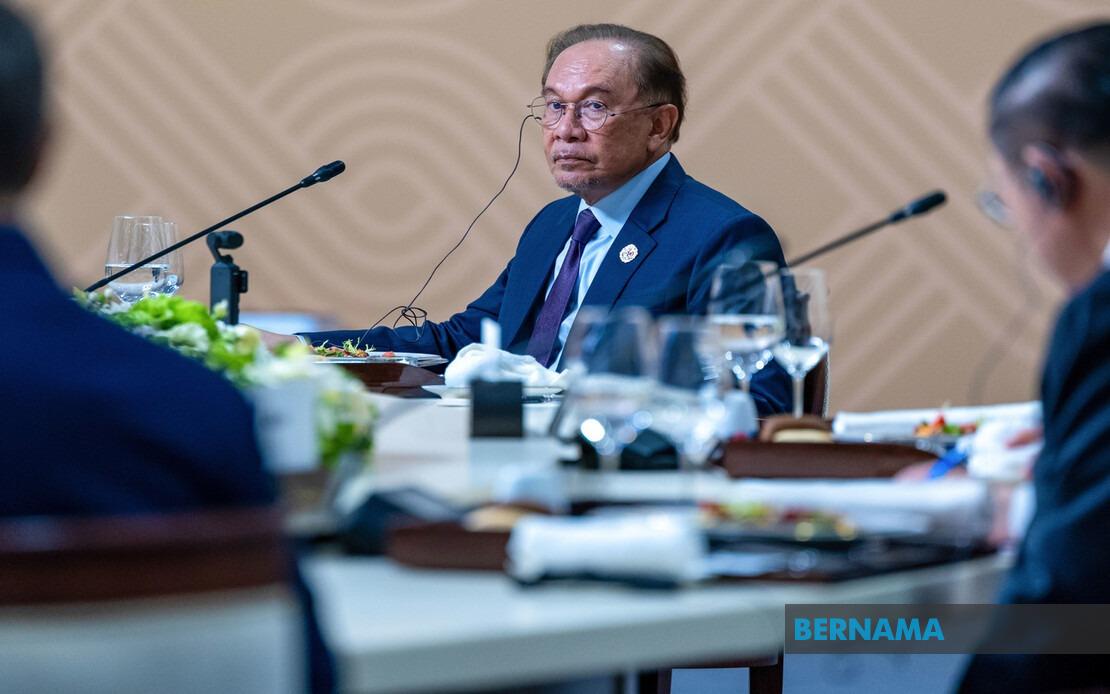
The Kazan leg proved more expansive in scope. Malaysia's participation in the ASEAN-Russia Commemorative Summit provided a broader platform for engaging not merely with Russian federal leadership but with business and political figures spanning the wider Eurasian region. These interactions underscored a fundamental principle animating Malaysia's contemporary economic diplomacy: resilience in a multipolar world increasingly depends on the breadth and quality of external relationships rather than concentration within narrow partnerships. For middle powers navigating intensifying great-power competition, this diversification becomes strategically imperative.
Turkmenistan, the final destination, exemplified the deepening of established partnerships rather than entry into new markets. Petronas's three-decade presence in the nation has evolved from being merely a foreign investor into a substantial contributor to infrastructure development, technological transfer, and human capital advancement. With cumulative investments approaching USD12 billion, the company has effectively become embedded within Turkmenistan's energy ecosystem. The landmark agreements concluded during the Prime Minister's visit, positioning Petronas with expanded stakes in one of the world's largest gas fields, signal entry into what Turkmenistan's President Serdar Berdimuhamedov described as a critical new phase of cooperation.
Yet the visit to Ashgabat transcends conventional energy diplomacy. Recent global crises have vividly demonstrated how disruptions in one geographic region cascade rapidly through interconnected transportation networks, production systems, and energy markets worldwide. By securing deepened energy partnerships with Turkmenistan through diversified production-sharing arrangements and expanded exploration activities, Malaysia strengthens not only commercial interests but fundamental strategic resilience. Energy security increasingly functions as a cornerstone of national security itself.
The Kazan summit's adoption of the ASEAN-Russia Strategic Programme on Trade and Investment Cooperation 2026-2035 reflects broader recognition that future competitiveness will hinge on innovation capacity, technological capability, and economic adaptability rather than labour cost advantages or natural resource abundance. The framework encompasses sectors from agriculture and advanced manufacturing to digital technologies and food security, acknowledging that no single nation or bloc can claim self-sufficiency in all critical domains. ASEAN's engagement with Russia, despite Russia being a relatively modest trade partner compared with China, Japan, or South Korea, demonstrates the association's commitment to maintaining open diplomatic and commercial channels across competing centres of geopolitical influence.
Particularly noteworthy were Malaysia's bilateral discussions with the Republic of Tatarstan, often overshadowed in external perceptions despite being one of Russia's most dynamic industrial and technological hubs. Conversations spanning biotechnology, halal industries, maritime capabilities, Islamic finance, and industrial cooperation illustrate a sophisticated understanding of how contemporary economic networks operate. National governments no longer function as exclusive gateways to economic cooperation. Instead, regional governments, provincial administrations, industrial clusters, and specialised innovation centres have become consequential actors in their own right. Building direct relationships with these subnational entities frequently generates practical opportunities that complement and sometimes exceed what traditional state-to-state diplomacy can deliver.
The Prime Minister's consistent emphasis throughout all bilateral engagements that economic diplomacy transcends trade and investment statistics marks an important analytical shift. Education partnerships, research collaboration, halal ecosystem development, and Islamic financial services featured prominently in discussions—areas that create enduring economic foundations precisely because they build institutional relationships, human capital, and mutual trust extending far beyond quarterly financial flows. This represents soft power in its most practical expression, where personal relationships between leaders and institutional networks between countries create conditions enabling more ambitious commercial cooperation.
Malaysia's approach reflects a broader reality confronting many middle powers navigating an era of accelerating fragmentation. Diversification does not mean abandonment of existing partnerships; rather, it signifies deliberate expansion of economic options in an increasingly unpredictable world. As the global economy gradually shifts toward multipolar configuration, countries successfully positioning themselves within broader economic networks enjoy greater strategic flexibility and resilience than those whose options remain concentrated within narrow partnerships. For a nation whose wealth creation depends fundamentally on openness and international connectivity, resilience increasingly correlates with the comprehensiveness of mutually beneficial relationships.
The four-day tour also underscores how contemporary economic statecraft requires leaders capable of simultaneously managing multiple negotiating streams across different geographic regions and institutional contexts. The discussions in Tashkent, Kazan, and Ashgabat were neither random nor disconnected; rather, they formed part of a coherent strategy to position Malaysia within multiple overlapping economic networks spanning Central Asia, the Caucasus region, and Russia's Far Eastern developments. This systematic approach to diversification represents recognition that in an era of shifting global alignments, a nation's economic future depends not on choosing exclusive partnerships but on cultivating complementary relationships that collectively enhance security and opportunity.
Looking forward, these engagements carry implications extending well beyond bilateral commerce. They demonstrate Malaysia's determination to preserve strategic autonomy while remaining engaged across competing centres of influence—a principle ASEAN has historically championed as central to regional stability and individual member prosperity. As global competition intensifies and technological domains become increasingly critical to economic competitiveness, the ability to maintain relationships spanning different geopolitical blocs may prove as valuable as any single partnership.