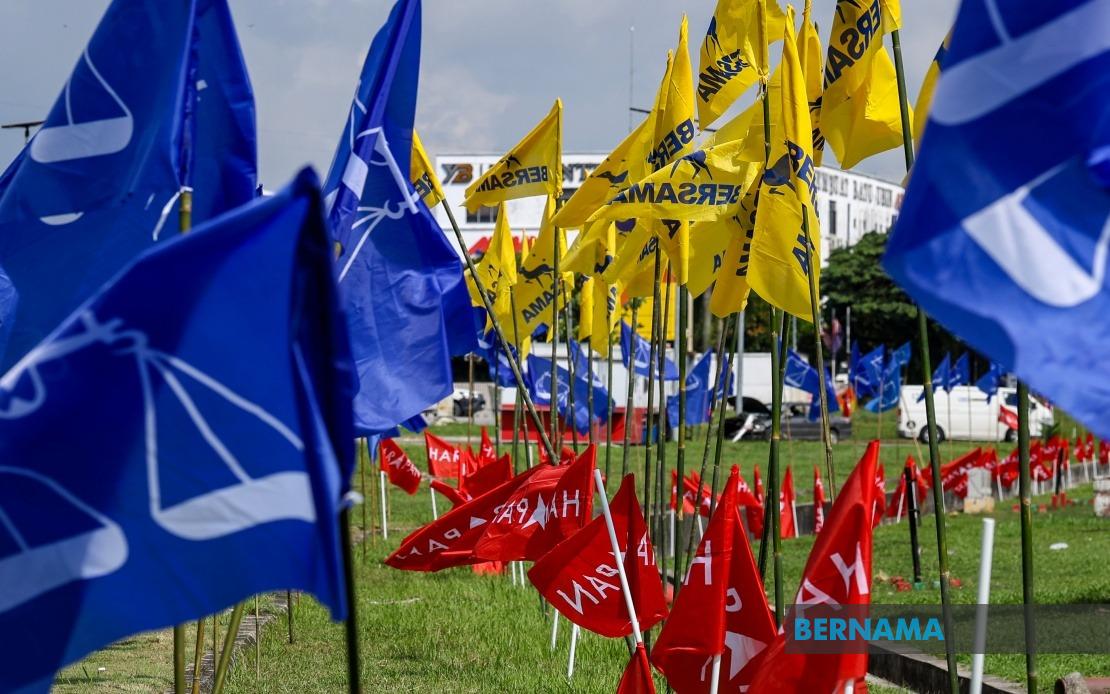
The 16th Johor state election has begun with a markedly different texture than previous campaigns, characterised by controlled momentum and an emphasis on precision targeting rather than the spectacle of large public gatherings. During the campaign's initial week, political parties across the spectrum have collectively embraced a more intimate style of outreach, deploying volunteers and candidates for house visits, small community forums, and direct constituent dialogues. This represents a strategic recalibration by Malaysia's major political forces, each calculating that the path to victory in Johor runs through methodical groundwork rather than headline-grabbing stadium events.
Political analysts attribute this shift to evolving campaign realities and resource constraints. Prof Datuk Dr Sivamurugan Pandian from Universiti Sains Malaysia emphasises that the opening phase functions as foundational preparation, during which candidates establish personal relationships with voters and party machinery tests its organisational capacity. By concentrating on face-to-face encounters, campaigns gather intelligence about voter sentiment while simultaneously strengthening internal structures. This approach offers tactical advantages: candidates gain granular understanding of local grievances and aspirations, while parties conserve budget for more intensive efforts later. Sivamurugan predicts the second campaign week will intensify considerably, with senior party leadership entering the fray, larger rallies resuming, and digital mobilisation targeting undecided voter blocs.
Contemporary election strategy has undergone profound transformation, driven by data analytics and digital platforms. Dr Azmi Hassan, a geostrategist at the Nusantara Academy for Strategic Research, observes that modern campaigns employ sophisticated voter categorisation—designating electors as white (committed supporters), grey (undecided), or black (opposition-leaning)—and deploy teams accordingly with tailored messaging. The era of mass rallies in open fields has given way to hybrid models combining traditional ground operations with social media saturation. This evolution reflects both technological capability and cost-effectiveness: targeted digital campaigns reach specific demographic and geographic segments at fraction of the expense required for nationwide broadcasting.
Thematic content in the opening week has remained relatively conventional, revolving around three pillars that dominate party narratives across the political spectrum. Candidates and campaign materials consistently emphasise track records of governance, future development pledges, and claims of institutional stability. Mujibu Abd Muis, a political science lecturer at Universiti Teknologi MARA and researcher at the Ilham Centre, cautions that while these themes are ubiquitous, they have not yet crystallised into a dominant narrative compelling enough to reshape the broader campaign landscape. The distinction between message and impact remains crucial: abstract pledges of good governance generate less electoral traction than concrete connections to voters' immediate circumstances.
For messaging to penetrate and influence voting behaviour, analysts stress that campaign narratives must anchor themselves in the lived experiences of Johor residents. Mujibu identifies the genuine fault lines affecting voter decision-making: the persistently rising cost of living, employment security and wage stagnation, infrastructure and service delivery in their localities, and public sector performance and accessibility. Campaigns that successfully translate their broader themes into solutions addressing these tangible concerns will likely prove most persuasive. Conversely, generic promises of development or stability without clear links to daily hardships risk being dismissed as formulaic political rhetoric.
Geographic deployment of campaign resources reveals how parties assess their electoral prospects across different regions. Throughout the initial week, concentrated activity emerged in northern Johor constituencies including Muar, Tangkak, Segamat, and portions of Batu Pahat and Kluang. This concentration is neither random nor incidental: these districts are regarded as competitive battlegrounds where election outcomes remain genuinely uncertain. By concentrating senior leaders' appearances in these areas, parties signal their strategic importance while maximising return on limited campaign investment. Resources flow toward constituencies likely to determine the overall election result rather than being dispersed uniformly across all 56 state assembly seats.
Regional political alignments further structure campaign strategy and resource allocation. Associate Professor Dr Mazlan Ali from Universiti Teknologi Malaysia notes that the contest centres fundamentally on the two major coalitions: Barisan Nasional and Pakatan Harapan. These coalitions have distinct geographic strongholds reflecting historical voting patterns and underlying demographic and political alignments. Pakatan Harapan maintains stronger organizational presence and voter affinity in southern and western Johor districts, while Barisan Nasional commands traditional support in eastern coastal areas including Mersing and Kota Tinggi. Understanding these fault lines explains why campaign machinery mobilisation mirrors each coalition's confidence in particular zones—efforts concentrate where victory is possible but not assured, rather than in regions already considered safe.
The scale of this election encompasses considerable organisational complexity. A total of 172 candidates are competing for 56 state assembly seats, representing multiple parties and independent candidates seeking to represent Johor residents. The compressed campaign calendar—with early voting scheduled for July 7 and polling day for July 11—intensifies the pressure on campaign teams to maximise impact within constrained timeframes. This urgency reinforces the logic of targeted approaches: with limited days available, efficiency of voter contact becomes paramount.
Among all analysts, a consensus emerges regarding one critical variable determining electoral outcomes: voter turnout. The percentage of registered voters who actually cast ballots frequently determines which party or coalition emerges victorious, particularly in closely contested districts where margins separate winners from defeated candidates. Campaigns therefore invest substantial effort encouraging supporters and persuadable voters to actually vote, recognising that enthusiasm for a particular party means little if that enthusiasm does not translate into physical presence at polling stations. In Johor's competitive environment, turnout mobilisation may prove decisive.
The opening week of the Johor state election illustrates how Malaysian political campaigns continue adapting to changing circumstances and technologies. The retreat from spectacle toward precision reflects maturation of campaign science and recognition that elections are fundamentally decided through countless individual conversations between candidates and voters rather than through mass demonstrations. Whether this quieter opening presages the campaign's overall character or merely represents the calm before escalating intensity remains to be seen. What seems certain is that parties understand Johor's competitiveness demands strategic sophistication and disciplined resource deployment rather than the political equivalent of theatre.

