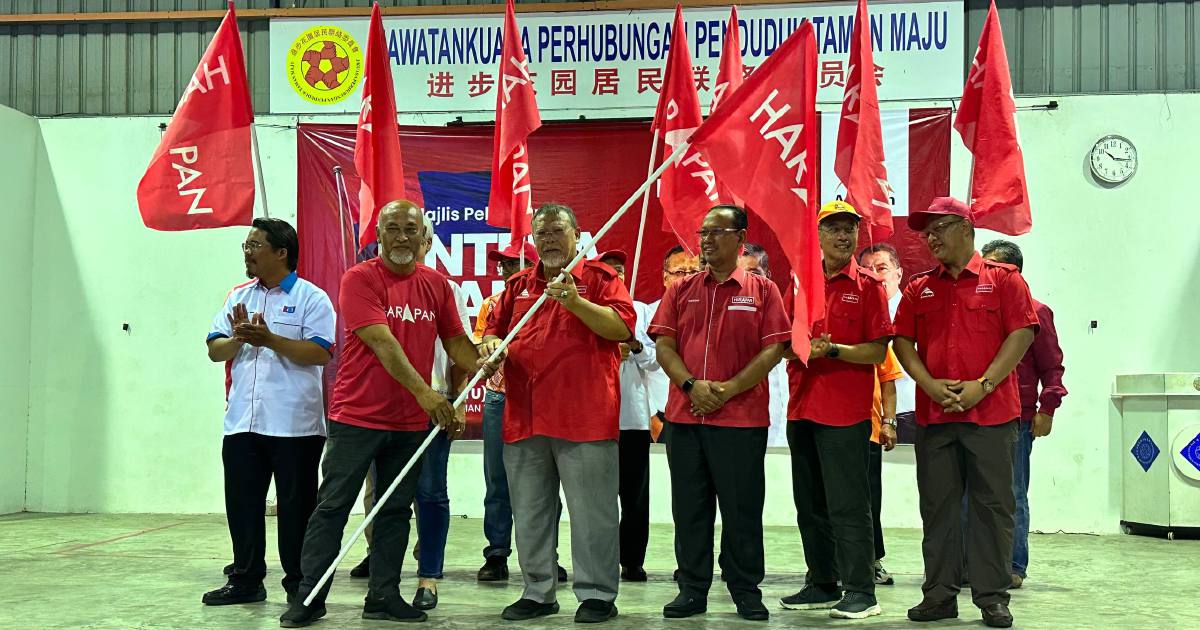
The Johor chapter of Amanah has publicly expressed confidence that it will secure a minimum of six seats from the ten state constituencies it is fielding candidates for in the northern zone ahead of the July 11 state election, indicating a shift in the party's electoral fortunes in Peninsular Malaysia's southernmost state.
The announcement, made in Batu Pahat, reflects Amanah's growing organisational capability and grassroots support in Johor's northern districts. The party's decision to contest across a significant number of constituencies demonstrates its commitment to increasing representation beyond its current footprint, particularly in an area traditionally dominated by other political coalitions.
Amanah's electoral strategy in the northern zone appears calibrated to tap into voter sentiment regarding governance and local development priorities. The party has invested considerable effort in building ground support through community engagement programmes and identifying local issues that resonate with northern Johor residents. This granular approach to campaigning reflects lessons learned from previous electoral cycles across Malaysia.
The broader political landscape in Johor has undergone substantial transformation in recent years, with voters demonstrating openness to alternative voices beyond the established political paradigm. Amanah's performance in the northern constituencies could significantly influence the overall composition of the state assembly and potentially reshape governing coalitions at the state level. The party's ambitious target of six seats would represent a substantial improvement on previous performance levels.
Northern Johor encompasses constituencies with distinct demographic profiles and economic foundations, ranging from agricultural communities to semi-urban centres. Amanah's campaign strategy must address the specific concerns of these varied populations, whether related to agricultural support, small business development, or urban infrastructure. The party's ability to articulate policy positions tailored to local contexts will determine its success in converting campaign confidence into actual electoral gains.
The July 11 election will serve as a significant barometer of Amanah's organisational capacity and appeal among Johor voters. As a relatively younger political entity compared to established parties, Amanah continues to build its brand identity and credibility with electorates. Strong performance in the northern zone would enhance the party's standing within broader opposition coalitions and potentially unlock greater resources and political leverage for future endeavours.
Competition in Johor state politics has intensified considerably, with multiple parties vying for voter attention and loyalty. Amanah faces the challenge of differentiating its message and offering while simultaneously managing voter expectations. The party's six-seat target suggests internal polling data and organisational assessments that indicate viability in these constituencies, though such projections require translation into actual votes during the election itself.
The geographical focus on northern constituencies reflects Amanah's strategic assessment of where its candidate roster and organisational infrastructure are strongest. This targeted approach, rather than contesting every available seat, demonstrates sophisticated political calculation and resource allocation. Such selectivity can enhance the party's chances in chosen battlegrounds by concentrating campaign efforts and volunteer deployment where victory remains plausible.
Amanah's performance in Johor also carries implications for the broader Malaysian political ecosystem. Success in the state election would validate the party's positioning as a credible force in East Coast and Southern Peninsula politics, potentially encouraging defections from other parties and strengthening its coalition partnerships. Conversely, disappointing results could necessitate strategic reassessments regarding party direction and electoral positioning.
The party's campaign messaging is expected to emphasise governance competence, anti-corruption positioning, and development priorities that resonate with northern Johor communities. Whether Amanah can effectively communicate these themes to voters while overcoming the inherent advantages of incumbent political structures remains a critical variable in determining election outcomes. Local candidates and ground organisations will ultimately prove decisive in translating organisational confidence into electoral success.
Voter turnout and demographic shifts in the northern zone will also influence final results, as younger voters, rural-urban migrants, and constituencies experiencing economic pressure may respond differently to Amanah's messaging compared to traditional voter bases that have historically supported established parties. The July 11 election will provide crucial data regarding these shifting political preferences.
As campaigning intensifies across Johor, Amanah's six-seat target in the northern zone represents a meaningful stake in the state's political future. The coming weeks will demonstrate whether the party's organisational capacity and grassroots support match its electoral ambitions, ultimately shaping Johor's political trajectory and potentially influencing broader Malaysian political configurations.
%22%2F%3E%3C%2Fpattern%3E%3C%2Fdefs%3E%3Crect%20width%3D%22100%25%22%20height%3D%22100%25%22%20fill%3D%22url(%23ph1q1qkg)%22%2F%3E%3Crect%20width%3D%22100%25%22%20height%3D%22100%25%22%20fill%3D%22url(%23ph1q1qkp)%22%2F%3E%3Ctext%20x%3D%2250%25%22%20y%3D%2250%25%22%20text-anchor%3D%22middle%22%20dominant-baseline%3D%22central%22%20fill%3D%22rgba(255%2C255%2C255%2C0.95)%22%20font-family%3D%22Georgia%2C%20'Times%20New%20Roman'%2C%20serif%22%20font-weight%3D%22700%22%20font-size%3D%22226%22%20letter-spacing%3D%22-0.02em%22%3EEnergy%3C%2Ftext%3E%3C%2Fsvg%3E)