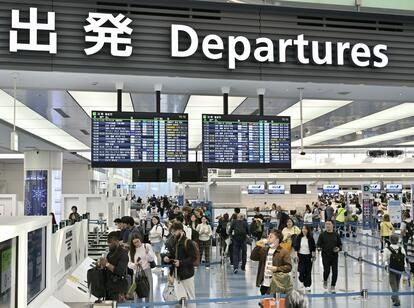
Japan has implemented a significant restructuring of its travel-related taxation and fee framework, signalling the government's determination to address the mounting pressures of mass tourism whilst maintaining visitor flows. The centrepiece of the new policy is the tripling of the departure tax to 3,000 yen per person—an increase from 1,000 yen that took effect on 1 July. This adjustment represents the most substantial change to Japan's international tourist tax since its introduction, and it underscores Tokyo's commitment to financing comprehensive countermeasures against the congestion and infrastructure strain that have accompanied record visitor numbers.
The departure tax, formally known as the international tourist tax, operates as a universal levy collected at the point of ticket purchase by airlines, cruise operators, and travel agencies. Unlike many other travel taxes worldwide, the charge applies regardless of the passenger's nationality, meaning Japanese residents departing the country contribute equally to foreign travellers. This inclusive approach reflects the government's view that managing overtourism benefits all stakeholders in the travel ecosystem. The tax collected in the fiscal year ending March 2025 reached approximately 49 billion yen, a figure expected to swell to around 130 billion yen in the subsequent fiscal year, demonstrating the substantial revenue implications of this tripling measure.
The revenue generated from the departure tax increase will be channelled into two primary strategic areas. First, the government plans to deploy funds toward immediate congestion relief at Japan's most iconic and crowded attractions. This includes establishing designated zones at popular photography locations where foreign visitors frequently congregate, a measure aimed at distributing foot traffic more evenly and reducing bottlenecks. Second, and arguably more consequential for Japan's long-term tourism sustainability, the funds will support regional dispersal initiatives designed to redirect visitors away from the heavily trafficked Tokyo and Kyoto corridors. These initiatives encompass transforming local railway networks into tourist attractions and undertaking renovation projects at station buildings across provincial areas, thereby creating incentives for visitors to explore less-visited regions.
Concurrently, Japan has significantly increased the cost of visitor visas in what represents the first fee adjustment in nearly half a century. Effective from the same date, single-entry visa fees have surged to 15,000 yen, a fivefold increase from previous levels, while multiple-entry visas now cost 30,000 yen. Foreign Minister Toshimitsu Motegi attributed the hike to two principal factors: the accumulated effects of inflation over decades and the recent depreciation of the yen against major currencies. Motegi's statement that the government does not anticipate an immediate dampening effect on visitor arrivals suggests confidence that the fee increase, whilst material, remains sufficiently competitive relative to visa charges imposed by other developed nations. Indeed, Japan's visa fees, even after this substantial increase, have historically been considered modest compared with those of fellow Group of Seven members, positioning Tokyo to maintain its appeal to international travellers despite the new charges.
The visa fee increases carry particular significance for Southeast Asian nations, including Malaysia, where Japanese travel remains a popular destination. Malaysian travellers seeking to visit Japan will now face considerably higher administrative costs, potentially affecting travel planning budgets and visa application strategies. Travel agencies and visa service operators across the region are likely to experience increased inquiry volumes as travellers seek to understand the implications of the new fee structure and explore options for multiple-entry visas that, whilst more expensive, provide greater flexibility for frequent visitors.
To mitigate the regressive impacts of the departure tax on Japanese citizens, the government simultaneously announced reductions to domestic passport application fees. The charge for a ten-year passport at designated application centres—typically passport offices and administrative centres—fell to 9,300 yen from 16,300 yen for adults. Younger applicants seeking five-year passports benefit from standardised fees of 4,800 yen regardless of age, replacing the previous system of age-differentiated pricing. Furthermore, applicants willing to complete their applications online receive additional discounts, with the ten-year passport fee reduced to 8,900 yen and the five-year passport fee to 4,400 yen. These reductions serve a dual purpose: they offset the burden imposed on Japanese nationals by the tripling of the departure tax, whilst simultaneously addressing a persistent policy concern regarding Japan's relatively low passport ownership rates compared with other advanced economies. Government analysts believe that reducing the financial barrier to passport acquisition will encourage greater international travel amongst Japanese citizens, thereby supporting the long-term expansion of Japan's travel industry.
Certain categories of travellers receive exemptions from the newly increased departure tax. Transit passengers remaining in Japan for fewer than twenty-four hours, together with children under two years of age, are spared the charge. Passengers whose air or sea tickets were purchased prior to Tuesday—the day before the increase took effect—remain subject to the original 1,000 yen rate, a transitional provision that limits disruption to bookings already arranged. These exemptions reflect an understanding that transit traffic should not bear the cost of tourism management measures, and that very young children place minimal demand on the tourism infrastructure that the tax supports.
The timing of these policy changes reflects Japan's strategic reassessment of its approach to managing tourism growth. Following the pandemic-related international travel pause, Japan experienced a dramatic surge in inbound visitors, with numbers exceeding pre-pandemic records. This resurgence, whilst economically beneficial, has generated genuine quality-of-life concerns amongst residents of tourist-dense areas and sustainability questions regarding the carrying capacity of popular destinations. Rather than imposing restrictive caps on visitor numbers—a measure that would conflict with Japan's broader goal of tourism promotion—the government has chosen to use fiscal instruments to manage demand whilst funding solutions that benefit both visitors and host communities. The departure tax increase thus represents not a discouragement of tourism, but rather an evolution in how Japan finances and manages the infrastructure necessary to accommodate visitor growth without permitting degradation of visitor experiences or local amenities.

