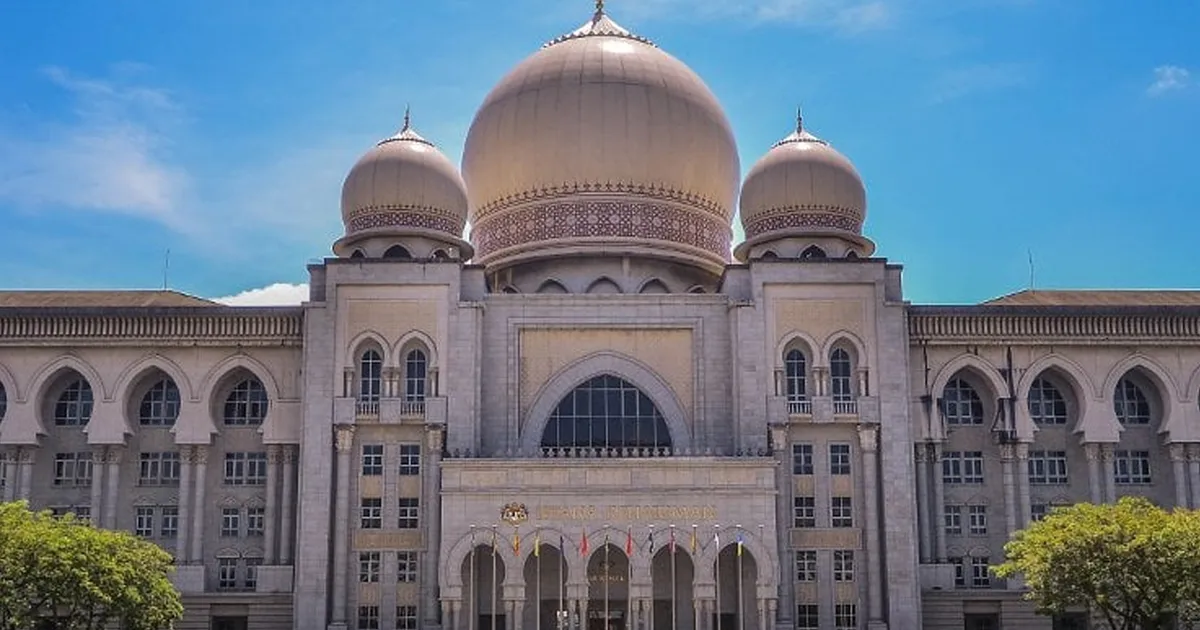
Pertubuhan Ikram Malaysia is escalating a significant legal battle by bringing its case before the country's highest court, seeking to overturn a Court of Appeal ruling that has profound implications for how civil society organisations can defend themselves against reputational harm. The Islamic NGO has formulated ten distinct legal questions for the apex court's consideration, fundamentally challenging the lower court's finding that registered societies lack the necessary legal personality and standing to commence defamation proceedings.
The core dispute centres on a foundational question of law: whether organisations formally registered under the Societies Act possess the legal capacity to be injured by defamatory statements and therefore maintain the right to sue for damages to their reputation. The Court of Appeal's earlier decision effectively created a barrier preventing registered societies from seeking redress through the courts when they become targets of false or damaging statements. This ruling has attracted significant attention from the civil society sector, which has long grappled with questions about how best to protect organisational integrity in an increasingly contentious media environment.
Pertubuhan Ikram Malaysia's decision to petition the Supreme Court reflects the gravity with which the organisation views this judgment and its broader implications for civil society in Malaysia. The ten legal questions the NGO has prepared are designed to probe the logical and legal foundations of the Court of Appeal's reasoning, examining whether the traditional common law principles applied by the lower court adequately account for the modern role and status of registered societies in Malaysian civil life. The Supreme Court will now determine whether the existing legal framework sufficiently protects the reputational interests of organisations that operate within formally recognised legal structures.
For the Malaysian civil society landscape, the outcome carries substantial weight. Thousands of NGOs, religious organisations, community groups, and professional associations operate as registered societies, relying on public trust and reputation to carry out their missions. If the Court of Appeal's ruling stands, these organisations would find themselves in a paradoxical position: they can be named in defamatory statements but lack a legal remedy to seek correction or compensation. This asymmetry raises serious questions about whether the law adequately balances free speech protections with fair recourse for organisations whose reputations are wrongfully damaged.
The timing of this case also reflects broader tensions in Malaysian society regarding the intersection of religious organisations, media accountability, and legal frameworks designed for an earlier era. Pertubuhan Ikram Malaysia, which operates in the Islamic civil society space, has found itself at the centre of a dispute that transcends any single organisation or religious community. The legal principles at stake apply equally to secular NGOs, community organisations, and professional bodies, making this a matter of systemic significance for how Malaysian law treats institutional actors within civil society.
Common law jurisdictions internationally have grappled with similar questions, with courts in various countries reaching different conclusions about whether unincorporated associations or registered societies can maintain defamation actions. The Supreme Court's decision will effectively signal where Malaysia stands on this spectrum and whether the country's approach to organisational legal personality aligns with contemporary understanding of how civil society operates. The decision will also shed light on whether Malaysian courts interpret the Societies Act as conferring sufficient legal personality for defamation claims, or whether amendments to legislation might be necessary to clarify this matter.
The stakes for Pertubuhan Ikram Malaysia are immediate and practical. Beyond the legal principle involved, the organisation faces the question of whether it can seek legal redress for statements made about it. However, the broader implications extend far beyond this single organisation. If the Court of Appeal's reasoning is upheld, it would establish a precedent affecting how all registered societies approach reputational disputes, potentially forcing organisations to rely on other legal mechanisms such as injunctions or pursuing claims through directors or spokespersons rather than the organisation itself.
From a Southeast Asian perspective, Malaysia's approach to this question may influence how other countries in the region address similar gaps in their legal frameworks. As civil society has become increasingly vital across Southeast Asia, questions about how organisations can protect themselves legally have taken on greater urgency. A ruling in favour of Pertubuhan Ikram Malaysia could set a regional precedent for stronger legal protections for NGOs and civil society organisations facing reputational attacks.
The Supreme Court's consideration of the ten legal questions will likely require a careful examination of constitutional principles, the proper interpretation of the Societies Act, and the relationship between substantive legal rights and procedural standing to assert those rights. The court will need to balance concerns about protecting organisational reputation with any legitimate interests in ensuring that defamation law does not become an instrument of suppression used by powerful institutions to silence legitimate criticism.
The litigation also underscores how gaps or ambiguities in legal frameworks can create unexpected consequences for entire sectors of society. What may have seemed like a technical question about the legal standing of a registered society has revealed itself to be a fundamental issue affecting how civil society organisations can operate with security and dignity in Malaysia. The Supreme Court's resolution of this matter will likely generate significant discussion about whether the legal system is adequately equipped to serve the needs of modern civil society or whether legislative reform is necessary to clarify the rights and obligations of registered organisations in an increasingly complex social environment.

