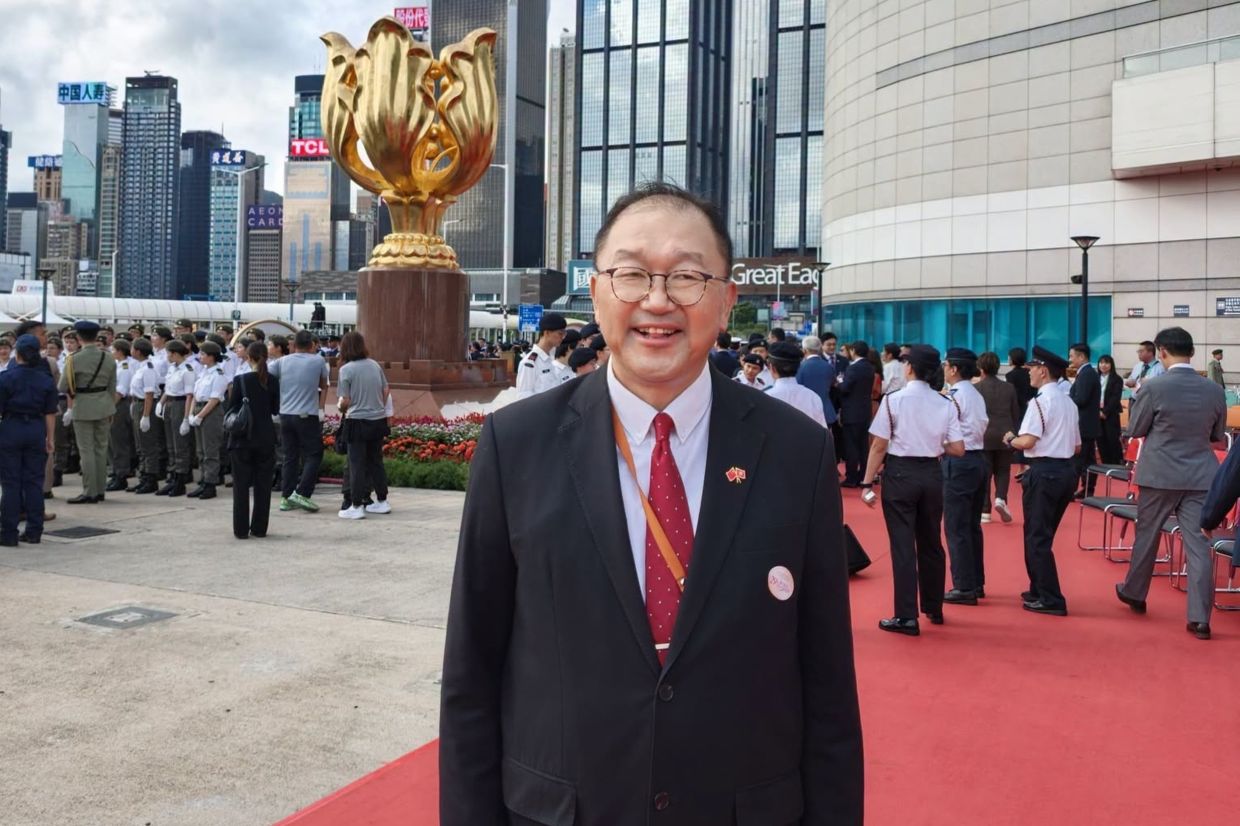
William Wong Kam-fai, a 66-year-old Hong Kong legislator, has become the first member of the Legislative Council to resign over a scandal in more than 26 years, following his arrest on suspicion of drink-driving and involvement in a hit-and-run incident. Wong announced his resignation on Friday, just days after being detained on Monday night when his vehicle collided with two parked cars on a university campus. The decision marks a significant moment in Hong Kong's legislative history and raises questions about accountability standards among the city's political representatives.
In his resignation statement, Wong expressed regret for the consequences of his actions, acknowledging the embarrassment caused to both the institution and the broader community. He emphasised that stepping down immediately would prevent further disruption to the Legislative Council's functioning. While stopping short of providing detailed comments on the incident itself, Wong cited the ongoing police investigation as reason for his restraint, though he pledged to continue serving the public in alternative capacities beyond his legislative role.
Legislative Council President Starry Lee Wai-king formally acknowledged Wong's resignation letter and commended his years of service to the institution and Hong Kong more broadly. The acceptance came swiftly, suggesting institutional consensus that his departure was both appropriate and necessary. Wong's position extended beyond his Legislative Council seat; he also held membership in the Chinese People's Political Consultative Conference, the country's premier political advisory body, a role that may now face scrutiny.
Political analysts in Hong Kong have characterised Wong's swift resignation as a prudent decision designed to minimise reputational damage to multiple stakeholders. Lau Siu-kai, a consultant at the Chinese Association of Hong Kong and Macau Studies, argued that remaining in office would have invited sustained criticism and potentially undermined confidence in Hong Kong's political system itself. The principle of "patriots administering Hong Kong," a cornerstone of post-2020 governance reforms, demands that elected officials maintain exemplary standards of personal conduct. Wong's immediate departure, according to this perspective, represents damage control that preserves the broader credibility of the legislature.
Experts anticipate that Wong will likely relinquish his CPPCC membership as well, though the formal process differs from his Legislative Council resignation. Central authorities, while rarely expelling members, are expected to accept such a resignation given the severity of the traffic incident and associated legal jeopardy. The consensus among political observers is that Wong's removal from high-profile positions serves the interests of political stability and institutional integrity, even if some view the underlying circumstances as unfortunate.
Tam Yiu-chung, a former Hong Kong representative to the National People's Congress Standing Committee, reinforced that resignation reflected appropriate acknowledgment of the elevated standards expected of legislators. For individuals holding such offices, a serious breach of traffic law and associated conduct violations creates an untenable political position. Tam's comments underscore a broader expectation within Hong Kong's political establishment that those entrusted with legislative authority must model exemplary personal behaviour, regardless of position or seniority.
The legislative impact of Wong's departure appears limited in operational terms. He represented the Election Committee constituency rather than a functional constituency, meaning his seat does not directly represent a specific economic or professional sector whose interests require dedicated advocacy. This distinction matters because it reduces the immediate pressure to hold a by-election to fill the vacancy. The government retains discretion over whether to conduct a by-election, with no legal requirement mandating one within any specific timeframe. Previous precedent supports this approach; a seat remained unfilled for approximately three years after Stephen Wong Yuen-shan, another Election Committee legislator, departed in late 2022 to lead a government think tank.
The government's consideration of financial prudence in deciding whether to hold a by-election suggests that resource allocation plays a role in such decisions. Constitutional and Mainland Affairs minister Erick Tsang Kwok-wai indicated in a 2024 Legislative Council session that cost considerations would factor into the government's calculus. Given that Wong's term still encompasses a reasonable period, authorities may decide that proceeding without a by-election represents the most efficient approach, further underscoring the limited institutional disruption his departure creates.
Wong's resignation stands in marked contrast to the legislative history of the previous two decades. The last lawmaker to resign over scandal was Gary Cheng Kai-nam in September 2000, shortly after winning his seat. Cheng's misconduct involved failure to disclose business relationships, unauthorised transmission of confidential government documents, and personal infidelity—matters that ultimately resulted in his 2001 conviction on four counts, including bribery and misconduct in public office, earning him an 18-month prison sentence. The 26-year gap between resignations of this nature suggests that Hong Kong's Legislative Council has generally maintained stability despite occasional individual transgressions.
Chinese University of Hong Kong, Wong's employer, has responded by suspending him from administrative duties pending the outcome of police investigations. The university's statement emphasised its commitment to high standards of staff conduct and professional ethics, indicating that institutional employers are taking parallel action to address the incident. This multi-institutional response—spanning the legislature, central political bodies, and the academic sector—demonstrates how a single incident can trigger consequences across an individual's professional portfolio.
The incident itself occurred on Monday evening when Wong lost control of his vehicle near a staff residence at approximately 10:46 pm, resulting in collisions with two parked vehicles. His arrest on suspicion of drink-driving and hit-and-run places him under formal criminal investigation, with potential legal consequences beyond his political career. The interplay between ongoing criminal proceedings and political accountability creates a complex situation that Wong's resignation attempts to navigate by removing the political element while allowing the legal process to proceed independently.
For Malaysian observers, Wong's situation illustrates how serious personal misconduct by legislators triggers institutional responses in Hong Kong's political system, despite the city's centralised governance structure. The swift resignation and cross-institutional consequences reflect expectations of accountability that extend across multiple spheres. Whether such standards apply consistently across different political systems and circumstances remains an open question, particularly in jurisdictions where connections to political power may insulate individuals from consequences. Wong's case demonstrates that even in Hong Kong's constrained political environment, reputational pressure and institutional expectations can compel voluntary departure from office.

