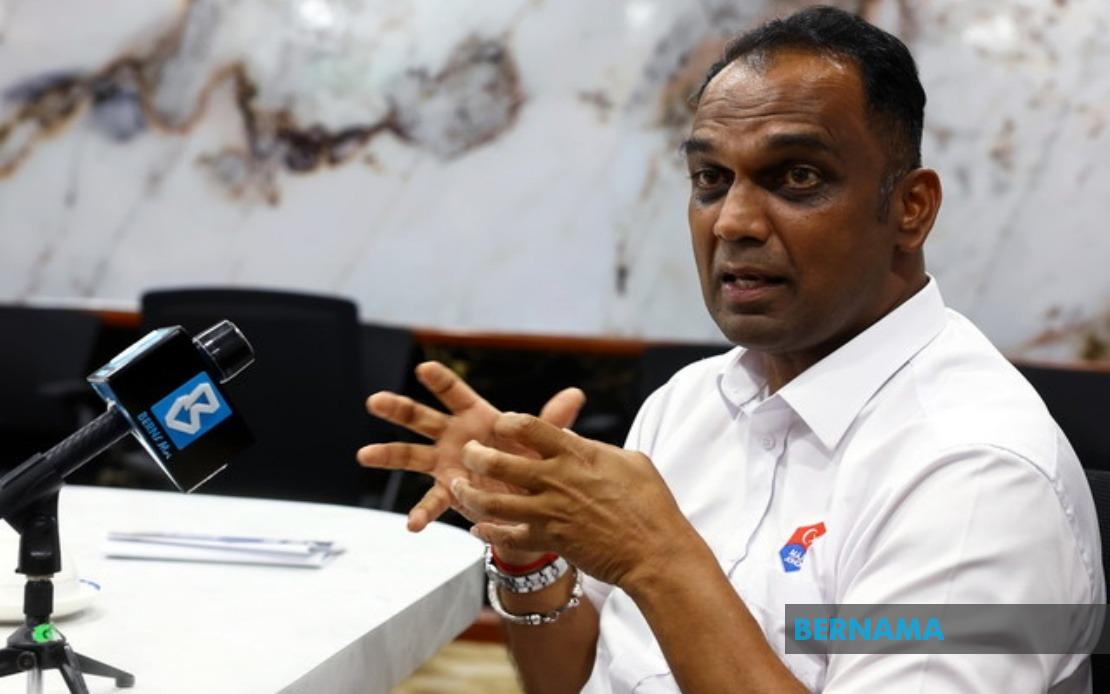
In his first venture into state-level politics, Barisan Nasional's Perling candidate P. Pannir Selvam is championing an unconventional campaign approach that privileges intimate community gatherings over the polished machinery of modern digital marketing. Running in the 16th Johor State Election, Pannir Selvam has adopted what he calls "pocket talks"—small-group conversations with residents—as his primary strategy to build support and establish credibility in a constituency that encompasses 109,992 registered voters.
The candidate's deliberate choice to emphasise face-to-face engagement reflects a broader tension in contemporary Malaysian electoral politics between the allure of social media as a campaign tool and the enduring effectiveness of personal contact. Pannir Selvam does not dismiss the importance of digital platforms but argues that traditional grassroots interaction creates a qualitatively different relationship with voters, one rooted in human connection rather than algorithmic reach. By conducting numerous pocket talks across the Perling state assemblyman (DUN) district, he seeks to transcend the typical candidate-voter dynamic where political figures remain distant and formal.
These localised conversations serve multiple functions within his campaign architecture. They allow Pannir Selvam to introduce himself directly to residents, articulate his political vision in accessible language, and most importantly, listen to the concrete challenges facing the constituency. Rather than imposing pre-determined policy platforms, the pocket talk format positions him as genuinely interested in understanding community grievances from the ground up. This methodology has reportedly generated encouraging feedback, validating his confidence as polling day approaches.
Pannir Selvam's background as a former Johor Bahru City Council (MBJB) member provides tangible credentials for this localised approach. His experience in municipal administration demonstrates familiarity with the machinery of local governance and the practical requirements of addressing residents' concerns. This experience positions him differently from candidates entering state politics without prior experience in managing public administration, offering voters a sense that he understands how to navigate bureaucratic processes to deliver results.
His father, Datuk KS Balakrishnan, serves as both inspiration and institutional memory for the campaign. At 84 years old, the former Permas Assemblyman and former Johor state executive council member continues to actively participate in ground operations, displaying an commitment that transcends typical parental support. The elder Balakrishnan's five-term tenure as state assemblyman and his administrative experience represent continuity with a different era of Malaysian politics, one potentially marked by stronger community engagement before the digital age transformed campaign operations. For Pannir Selvam, his father's presence on the ground and willingness to campaign regardless of weather conditions carry symbolic weight—a demonstration that public service remains grounded in personal dedication rather than media spectacle.
The intergenerational dimension of this campaign also reflects a mentorship philosophy. Pannir Selvam credits his father with teaching him the foundational principles of effective public service: impartial treatment across racial and religious lines, the ability to receive criticism constructively, and an unwavering commitment to integrity. These lessons, absorbed through years of observation and discussion, constitute invaluable political education that cannot be acquired through formal training programmes. In a Malaysian context where political dynasties and family involvement in public life remain significant, this transmission of values and knowledge between generations represents a particular form of political capital.
Regarding his specific pledges to Perling voters, Pannir Selvam has identified traffic congestion and inadequate parking facilities around Taman Perling Public Market as priority concerns demanding immediate attention. These are not abstract policy positions but tangible grievances directly affecting daily life in the constituency. The choice to foreground such practical issues—rather than grand ideological statements—aligns logically with his pocket talk strategy, which presumably surfaces these recurring complaints through direct conversation. His municipal background ostensibly equips him to tackle such urban management challenges more effectively than candidates lacking local government experience.
The Perling constituency contest itself reflects broader dynamics within Johor politics and the national electoral landscape. Three candidates are competing: Pannir Selvam representing Barisan Nasional, Alan Tee Boon Tsong for Pakatan Harapan, and Boo Wei Han for Parti Bersama Malaysia. The emergence of Bersama as a contesting force represents the fragmentation and realignment occurring within Malaysian politics as new coalitions and parties seek to capture voter dissatisfaction with established formations. This three-way contest suggests Perling residents will have genuine ideological and strategic choices rather than facing a binary election.
The broader Johor state election encompasses 172 candidates competing across 56 seats, with polling scheduled for July 11 and early voting on July 7. The scale of this contest positions it as a significant test of voter sentiment within one of Malaysia's most economically significant states. Johor's electoral outcomes carry implications extending beyond the state itself, providing indicators of broader public mood and the relative positioning of national political coalitions heading into potential federal-level contests.
Pannir Selvam's campaign strategy ultimately reflects a calculated wager about what persuades Malaysian voters in contemporary politics. By eschewing the polished digital machinery that dominates contemporary campaign discourse, he bets that residents still value direct human connection with their political representatives. His approach assumes that despite widespread social media penetration, voters retain a fundamental preference for understanding candidates through personal interaction and observing their authenticity and commitment at the grassroots level. Whether this calculated bet on traditional campaign methods proves effective in a state election marked by modern political alignments will provide instructive lessons for Malaysian political practitioners navigating the intersection of grassroots politics and digital transformation.

