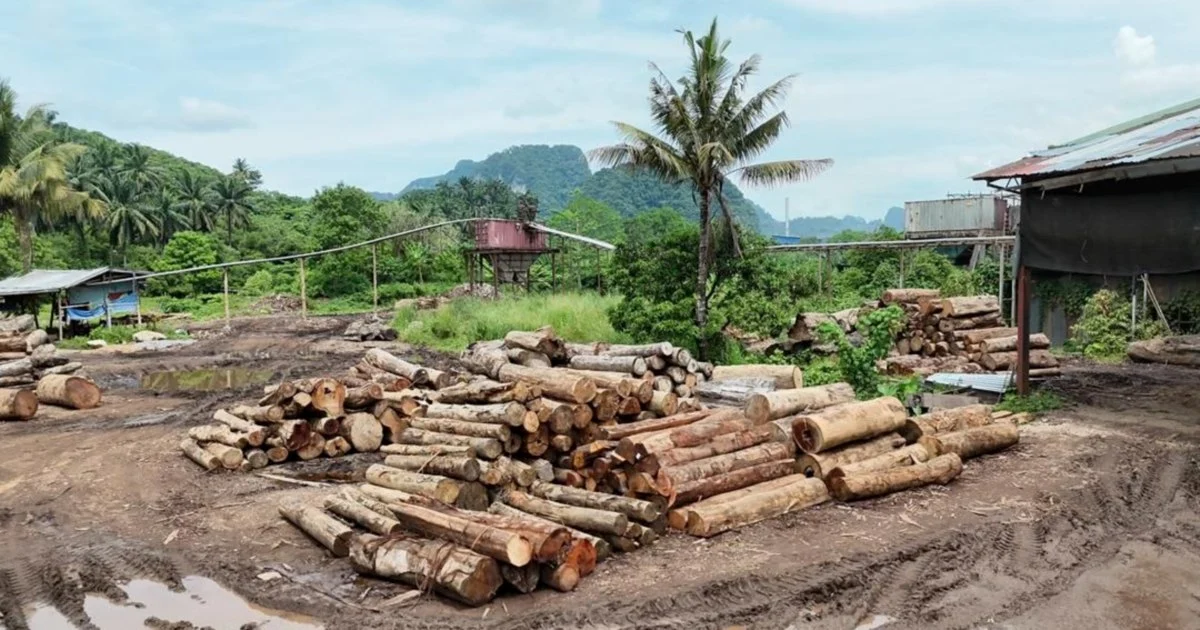
Malaysian authorities have arrested 11 individuals during coordinated raids across Kelantan and Terengganu, recovering timber stocks and heavy machinery valued at more than RM2.43 million. The operation, conducted by the General Operations Force (GOF), marks another significant crackdown on illegal timber trafficking in the peninsula's northeastern states. Among those detained were four Indonesian nationals, suggesting a cross-border dimension to the suspected offences under investigation.
The dual-state operation underscores the persistent challenge of unauthorised timber harvesting and smuggling networks that span multiple regions and often involve foreign labour. Kelantan and Terengganu, both heavily forested states with extensive forest reserves, have become focal points for enforcement agencies combating the illegal extraction and export of valuable timber species. The scale of confiscated materials points to organised operations rather than opportunistic small-scale activities, a pattern that has become increasingly common in Malaysia's timber crime sector.
The involvement of Indonesian nationals in these operations reflects broader regional dynamics around natural resource extraction and transnational criminal networks. Cross-border labour networks are well-established in the timber industry, with foreign workers sometimes unknowingly recruited into illegal operations or serving as front-line operators while local coordinators manage logistics and sales. The detention of four Indonesians suggests authorities may be pursuing leads into supply chains and distribution networks that extend beyond Malaysian borders.
Government enforcement agencies have intensified their focus on timber-related crimes as international markets for illegally sourced wood remain robust and profitable despite tightening regulations. The recovered machinery, which comprised a significant portion of the seized assets, indicates that the suspected operations involved mechanised extraction and processing capabilities. Such equipment represents substantial capital investment, hinting at well-resourced criminal enterprises rather than ad-hoc illegal activities. The loss of RM2.43 million in assets may prove a considerable setback to the operation, though authorities must now determine whether additional equipment or hidden stockpiles remain undetected.
Kelantan has historically grappled with timber enforcement challenges due to its vast forest cover and complex landscape that can facilitate illegal activities. The state's position relative to international maritime routes and proximity to neighbouring jurisdictions creates multiple vulnerabilities within supply chains. Terengganu, similarly positioned with extensive natural forest reserves, has witnessed repeated enforcement actions targeting unauthorised extraction activities. The concentration of operations in these two states reflects their strategic importance within broader timber trafficking networks.
The detention of 11 suspects provides investigators with potential leads into organisational structures, financing sources, and destination markets for illicitly harvested timber. Interrogation typically focuses on supply source locations, distribution routes, buyer identities, and payment mechanisms—intelligence critical to dismantling operational networks. The backgrounds of detained individuals, particularly the foreign nationals, may illuminate whether operations are primarily locally-managed with imported labour or externally-directed by international criminal groups exploiting Malaysia's forest resources.
Enforcement success rates depend heavily on sustained intelligence operations, community reporting, and inter-agency coordination. The GOF's involvement indicates serious federal-level attention, reflecting the scale and significance authorities attribute to the operation. However, timber crime experts note that successful prosecutions require maintaining evidence chains and securing witness cooperation—logistical challenges in cross-border cases involving foreign nationals who may face repatriation rather than conviction in Malaysian courts.
The economic dimensions of this operation merit scrutiny, particularly the valuation methodology for seized materials. Timber prices fluctuate substantially based on species, quality, and market conditions, and the RM2.43 million assessment may reflect either wholesale or retail valuations. Understanding the true economic impact requires clarity on intended destinations and market prices in end-use countries, which range from neighbouring ASEAN nations to distant international markets.
International environmental organisations have emphasised that Malaysia's forest resources, already significantly diminished through decades of legal harvesting and land conversion, face accelerating pressure from illegal extraction networks. The continued recovery of substantial timber quantities suggests that enforcement, while important, remains insufficient to deter determined criminal operations. Sustainable forest management, economic incentives for legal harvesting, and regional cooperation mechanisms remain essential complements to tactical enforcement actions.
The investigation now proceeds through normal judicial channels, with authorities examining not only the detained individuals' roles but also their connections to broader networks. Success will ultimately be measured by whether this operation disrupts trafficking infrastructure or merely removes participants from an otherwise resilient criminal ecosystem. The involvement of international elements elevates the case's complexity, requiring coordination with Indonesian counterparts to fully understand network structures and potentially pursue source-end investigations.