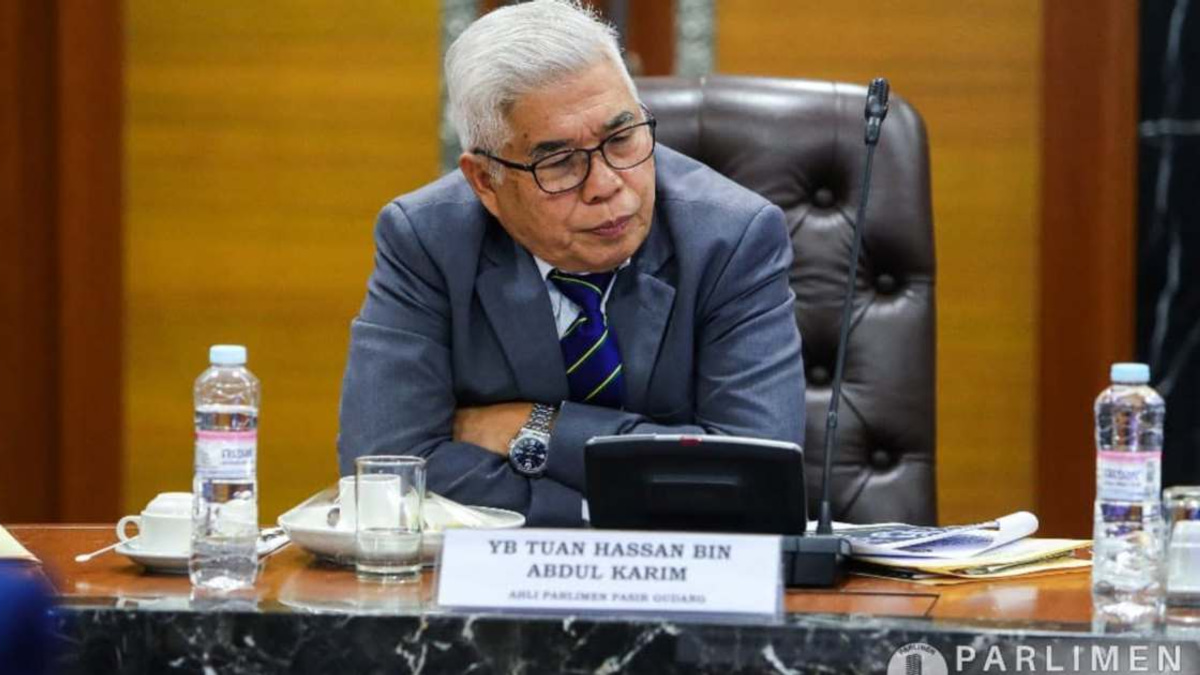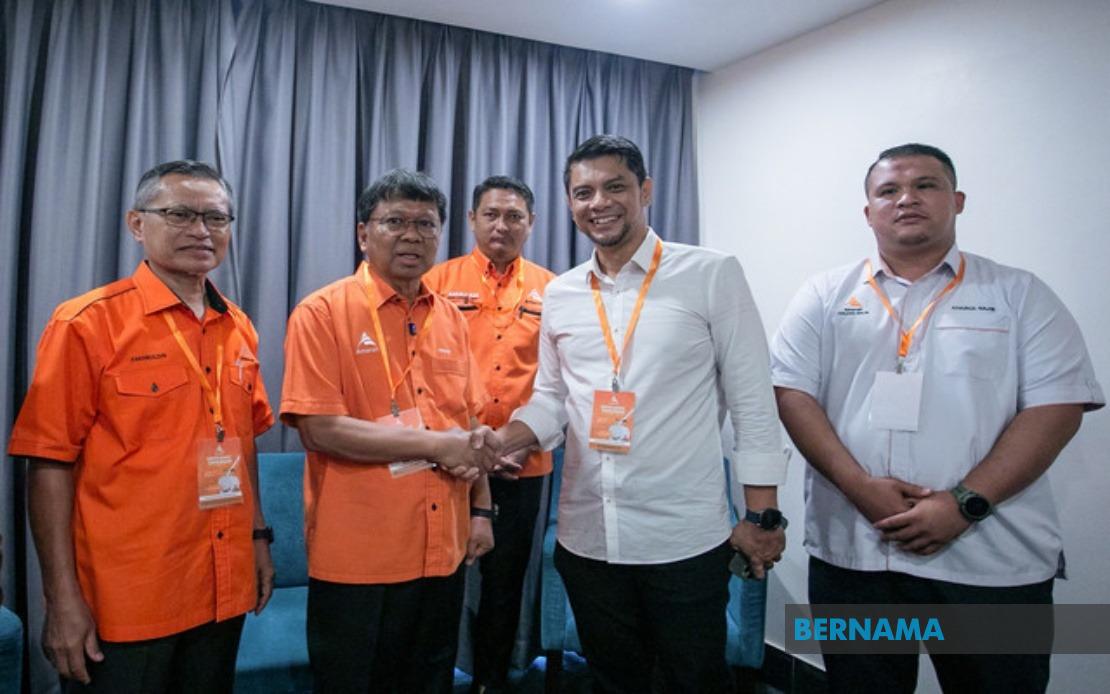
Hasnul Zulkarnain Abd Munaim, who previously represented Titi Serong in the Perak state assembly, has formally rejoined Parti Amanah Negara after an absence of nearly six years. The readmission was approved during the party's National Management Meeting and National Leadership Meeting held on June 18, according to Perak Amanah chairman Datuk Asmuni Awi, who announced the development following the 2026 Amanah Tambun annual meeting in Ipoh on June 21.
Hasnul Zulkarnain, who previously served as the state Amanah Youth chief, had signalled his desire to return to the party for some time, but the party leadership deemed the political climate unsuitable for processing such applications. The delay reflects the complexity of intra-party decision-making in Malaysian politics, where timing and internal consensus often determine whether former members can be rehabilitated. Asmuni explained that circumstances have now evolved to the point where Amanah's leadership believes reconsidering applications from departing members serves the party's long-term interests.
The party chairman framed the readmission within a broader strategy, noting that Amanah is adopting an approach already employed by several other political parties. This openness toward former members acknowledges a reality in Malaysian politics: departures do not necessarily reflect ideological misalignment, but rather pragmatic responses to shifting political circumstances. By welcoming back individuals like Hasnul Zulkarnain, Amanah aims to consolidate support among those who maintain loyalty to its core principles despite having left its ranks.
Hasnul Zulkarnain's political journey illuminates the volatile landscape of Malaysian state politics over the past four years. In March 2020, amid the dramatic realignment that followed Tun Mahathir Mohamad's resignation and the formation of the Perikatan Nasional government at the federal level, Hasnul Zulkarnain made a decisive move. Alongside two other state assemblymen—Yong Choo Kiong from Tronoh and A. Sivasubramaniam from Buntong, both from the Democratic Action Party—he quit his party and became an independent, a move that reflected the unprecedented political upheaval gripping Perak and the nation during that period.
His exit from Amanah occurred amid the broader political convulsions of early 2020, when multiple state governments teetered on the edge of collapse as assemblymen switched allegiances. Perak, in particular, experienced multiple changes of government during this period, with different coalitions commanding majority support at different times. For Hasnul Zulkarnain, the decision to leave reflected the precarious position faced by many backbenchers whose party affiliation no longer guaranteed political viability in their constituencies.
The independent status proved temporary. By July 2020, just months after his exit, Hasnul Zulkarnain joined Parti Pribumi Bersatu Malaysia, then the dominant party in the federal Perikatan Nasional coalition. This move underscored the transactional nature of party-switching during that period, as assemblymen sought platforms that offered the greatest prospect of political survival and advancement. His shift from Amanah to independence to Bersatu reflected the calculus facing elected representatives in states where coalition control remained contested and unpredictable.
Now, his return to Amanah signals yet another recalibration. The decision carries implications for Perak's political balance, a state that has experienced more changes of government than any other Malaysian state in recent years. Amanah, as part of the larger Pakatan Harapan coalition, has been strategically building its presence in Perak following the recovery of its federal standing after the 2022 general election. Readmitting figures like Hasnul Zulkarnain, who maintains grassroots support and institutional memory within the party, can strengthen its organisational capacity.
Asmuni's commentary reveals Amanah's assessment that such readmissions strengthen party cohesion. The chairman suggested that many former members continue to identify with Amanah's ideological position and struggle, and that their return can be leveraged for organisational benefit. This perspective assumes that departures were driven by circumstance rather than fundamental disagreement—a reasonable assumption given the opportunistic nature of much party-switching in Malaysian politics, particularly at the state level where constituencies determine individual political fortunes.
Hasnul Zulkarnain's own statement, expressing gratitude and framing his readmission as evidence of leadership confidence, suggests a smooth reconciliation. Such rhetoric is typical in these scenarios, where both the returning member and party leadership benefit from projecting unity and mutual respect. For Hasnul Zulkarnain, readmission offers renewed organisational affiliation and the prospect of contesting future elections under Amanah's banner. For Amanah, it adds a figure with experience in state assembly representation and youth mobilisation.
The broader context matters for understanding this development. Malaysian political parties, particularly those in opposition-dominated states, must manage constant pressures from defections, as assemblymen seek to align with governing coalitions. Amanah's willingness to readmit former members reflects hardened realism about these dynamics. Rather than maintain rigid boundaries around party membership, the party has concluded that flexible readmission policies serve its long-term interests by maintaining relationships with individuals who may cycle in and out of formal membership.
For Malaysian readers following Perak politics, this development suggests continued instability in state assembly composition as elected representatives recalibrate their party affiliations. Hasnul Zulkarnain's return to Amanah may also signal preparations for the next state election cycle, when Perak's constituencies will be contested once more. Whether his readmission translates to electoral advantage depends on whether he can secure a Titi Serong nomination and, critically, whether Amanah can maintain sufficient coalition support to render its ticket competitive in his constituency.
The decision also reflects Amanah's broader institutional development since its founding. Originally established as a reformist Islamic-oriented party positioned between the more secular Pakatan Harapan partners and the more Islamist opposition, Amanah has gradually consolidated into a pragmatic political force willing to employ the tactical flexibility necessary for survival in Malaysia's competitive political environment. Readmitting Hasnul Zulkarnain fits this trajectory, demonstrating that principle and pragmatism need not represent a false dichotomy for contemporary Malaysian political parties.