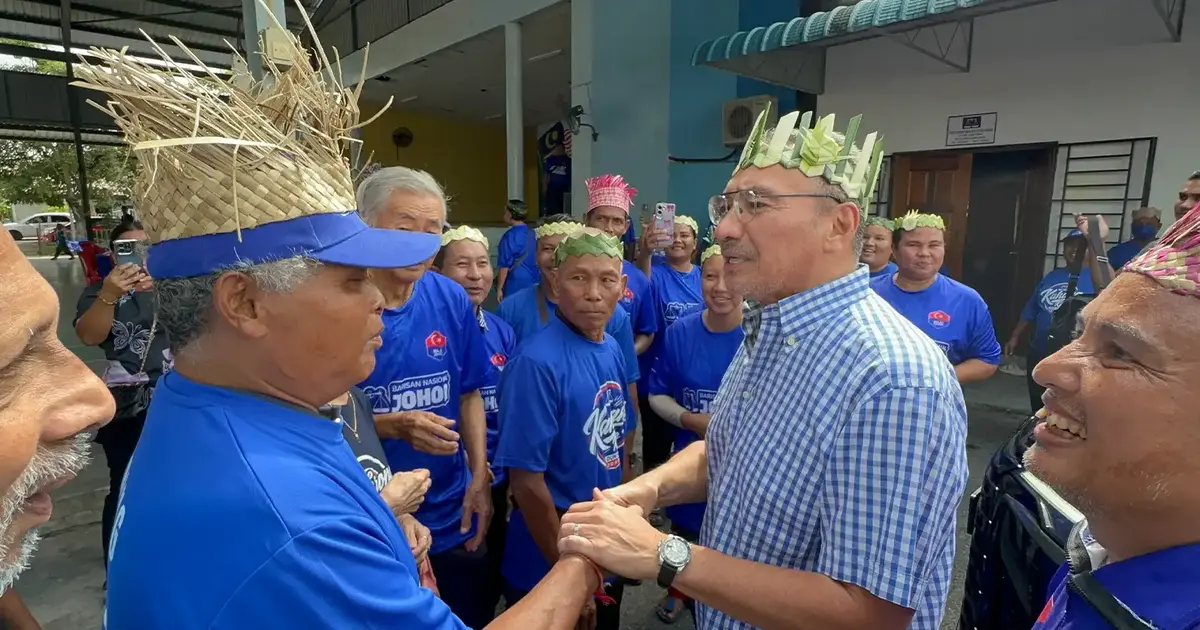
Hisham Samsudin, the Umno representative for the Sembrong constituency, has called on Barisan Nasional campaign workers to shift their focus away from election forecasts and predictions toward the substantive work of connecting with candidates and communities on the ground. The message reflects a broader campaign strategy aimed at channeling organizational energy into direct voter engagement rather than allowing teams to become distracted by polling speculation and pre-election commentary.
The Sembrong MP's directive comes at a time when Malaysian political campaigns increasingly feature extensive polling and predictive analysis in both mainstream and social media. While such data can offer tactical insights, Hisham's appeal suggests that excessive preoccupation with forecast narratives may be counterproductive to the disciplined, methodical work required to build electoral support across constituencies. His remarks underscore a fundamental principle in campaign management: that ground-level mobilization and voter contact often prove more decisive than external commentary about likely outcomes.
Hisham's positioning of voters as the ultimate arbiters of electoral results is a reminder of democratic fundamentals that sometimes become obscured in the machinery of modern political campaigns. By emphasizing the primacy of voter choice, he effectively redirects attention toward the democratic process itself rather than allowing predictive frameworks to create a false sense of inevitability about results. This framing can be particularly important for campaign morale, as teams working in constituencies perceived as secure might otherwise reduce their efforts, while those in seats deemed difficult might become discouraged.
Barisan Nasional, Malaysia's longstanding ruling coalition, has experienced significant electoral volatility over recent election cycles. The 2018 general election marked a watershed moment when the coalition lost federal power for the first time in the nation's history, followed by a complex period of political realignment and coalition rebuilding. Subsequent elections at both state and federal levels have demonstrated that voter preferences remain fluid and that assumptions about electoral outcomes can prove misleading. This recent history provides concrete context for why campaign strategists might caution against overreliance on predictive analysis.
The emphasis on candidate-focused campaigning also reflects recognition that local representation matters profoundly to Malaysian voters, particularly in a federal system where both parliamentary and state assembly members hold substantive legislative authority. Voters often base their choices on assessments of individual candidates' competence, accessibility, and commitment to local issues rather than solely on national party messaging or coalition-level considerations. By directing workers toward deeper engagement with their candidates' platforms and constituents' concerns, Hisham's guidance aligns campaign tactics with how voters actually make decisions.
For Umno specifically, this message carries additional significance. Malaysia's largest political party has undergone considerable internal turbulence in recent years, grappling with questions of leadership, party identity, and coalition alignment. Channeling activist energy into systematic candidate-centered work can help consolidate party organization and rebuild grassroots networks that form the backbone of electoral competitiveness. When party workers concentrate on substantive campaign activities rather than speculation, they contribute to organizational cohesion and demonstrate commitment to the democratic process through tangible effort.
The broader campaign environment in Malaysia has become increasingly complex, with multiple information sources competing to shape narratives about electoral prospects. Independent polling organizations, political analysts, and social media commentators all contribute varied perspectives on likely outcomes. While this diversity of analysis reflects healthy democratic discourse, it can also create confusion about reliable information and diffuse campaign focus. Hisham's intervention suggests that campaign leadership sees value in cutting through this noise and returning workers to fundamentals.
From a Southeast Asian perspective, Malaysia's experience with prediction-focused campaigning mirrors challenges faced across the region as digital technology expands the volume and velocity of political commentary. Democratic societies throughout Southeast Asia grapple with managing campaign narratives in an environment where speculation about outcomes circulates constantly and influences both activist behavior and public sentiment. Hisham's approach offers a regional lesson in maintaining campaign discipline amid information proliferation.
The practical implications of his guidance extend beyond immediate campaign mechanics. When campaign workers concentrate on direct voter engagement, they generate valuable intelligence about constituent concerns, local political dynamics, and emerging issues that might not surface prominently in national polling or media coverage. This ground-level feedback creates a feedback loop that can inform subsequent campaign messaging and strategic adjustments. The systematic candidate-focused work that Hisham advocates thus serves both immediate electoral purposes and longer-term strategic intelligence gathering.
Ultimately, Hisham's message resonates with a timeless principle in democratic politics: elections are decided through the accumulation of individual voter choices at the ballot box, and the work of winning those votes happens through sustained engagement with communities, explanation of candidate positions, and demonstration of commitment to local concerns. By redirecting campaign focus toward these fundamentals rather than toward predictive speculation, Barisan workers are being urged to invest their efforts where they statistically matter most—in the direct relationship between candidates and voters that determines electoral outcomes.

