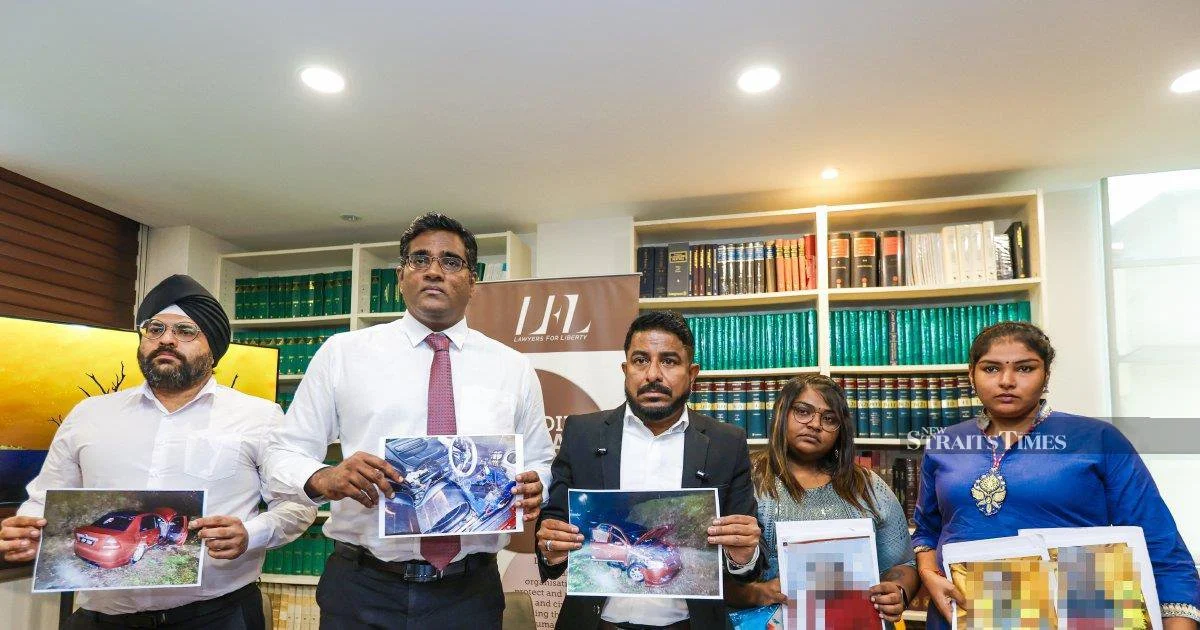
The families of three men who died in a police shooting in Durian Tunggal, Melaka, have escalated their push for accountability by formally requesting that the Malaysian Anti-Corruption Commission launch an independent investigation into the way authorities managed the case.
The move represents a significant development in what has become a contentious incident, with bereaved relatives now questioning not just the circumstances of the shooting itself but the subsequent official response. By appealing to the MACC, the families are effectively signalling that they lack confidence in the existing oversight mechanisms and believe there may be institutional failures or irregularities requiring scrutiny from Malaysia's premier anti-corruption body.
Investigations into police-involved deaths carry particular sensitivity in Malaysia, where questions about accountability, transparency, and the adequacy of oversight have long been discussed among civil society groups. The decision by these families to escalate their demands to an anti-corruption authority suggests they believe the handling of the case has involved more than procedural shortcomings—potentially pointing to allegations of concealment or mismanagement of evidence.
The Durian Tunggal incident has already drawn considerable public attention, reflecting broader concerns about police conduct and the mechanisms available to families seeking justice and truth. When high-profile incidents occur, the initial investigation and the way authorities communicate their findings become crucial to public confidence. Families often report feeling shut out of the process, with limited access to information and little opportunity to challenge official narratives during early stages.
Malaysia's institutional framework for investigating police shootings involves multiple bodies, including the police's own internal affairs division, the Public Complaints Bureau, and potentially the Attorney General's Chambers. However, critics argue that these structures can sometimes lack sufficient independence or may prioritise institutional protection over transparent fact-finding. The families' decision to petition the MACC indicates they believe a fresh institutional perspective is needed.
The MACC's mandate focuses on corruption, but in Malaysia's context, investigations into official misconduct frequently intersect with corruption concerns. Allegations of cover-ups, fabrication of evidence, or failure to properly investigate can fall within the commission's purview if they suggest abuse of authority or deviation from proper procedure in ways that constitute corrupt conduct.
This case arrives during a period of increased scrutiny on police practices throughout Southeast Asia. Regional neighbours including Thailand, the Philippines, and Indonesia have faced similar controversies regarding extrajudicial killings and police accountability. Malaysia's response to cases like Durian Tunggal therefore carries implications beyond national borders, affecting how regional law enforcement standards are perceived and discussed.
For the families involved, the pursuit of a MACC investigation represents both a tactical escalation and an expression of deep frustration. It signals that internal police investigations and standard oversight mechanisms have not provided the level of transparency and independent scrutiny they believe the case deserves. The request also places public pressure on government institutions to demonstrate that accountability mechanisms can function effectively in sensitive cases.
The involvement of the anti-corruption commission could potentially broaden the scope of inquiry beyond the immediate circumstances of the shooting. Such investigations typically examine the entire chain of decision-making, communication between agencies, documentation procedures, and whether officials followed established protocols. If improprieties emerge, they could have implications not only for the specific case but for how similar incidents are handled going forward.
Malaysian civil society observers have long advocated for more robust independent oversight of police operations. The Durian Tunggal case provides a test of whether such mechanisms can actually function in practice. Should the MACC take up the families' request, its approach and findings could set precedents for future cases and potentially influence how police agencies handle investigations internally.
The demand also reflects the evolving landscape of accountability in Malaysia, where families and advocacy groups are increasingly willing to pursue multiple channels simultaneously to seek answers. Rather than accepting initial findings, bereaved relatives are leveraging various institutional and public avenues to maintain pressure for thorough investigation.
As the case progresses, attention will focus on how the MACC responds to the families' petition and whether it determines that the matter warrants formal investigation. The outcome could significantly shape both the immediate search for answers in this case and broader questions about police accountability infrastructure in Malaysia.