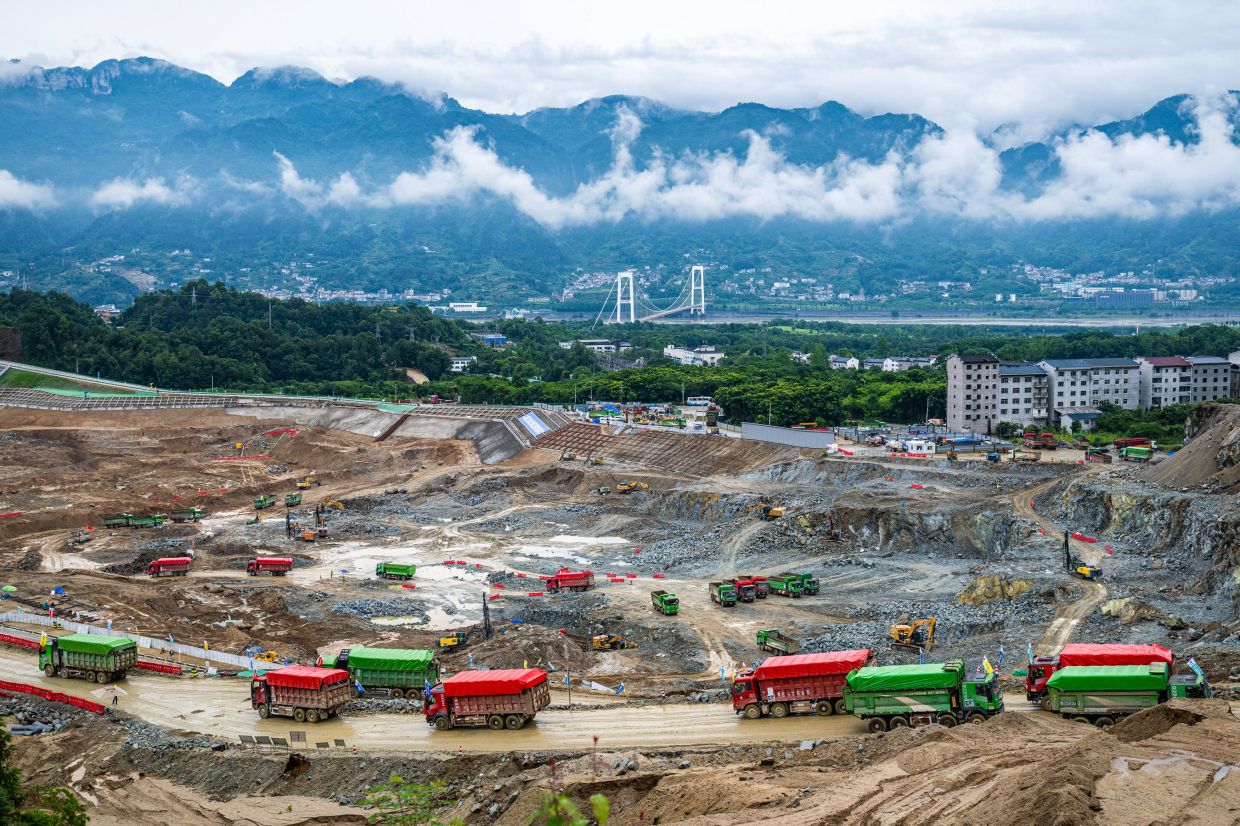
China has formally kicked off construction on an ambitious infrastructure scheme to address severe shipping bottlenecks at the Three Gorges Dam. The Monday groundbreaking ceremony signals the beginning of work on the 77.2 billion yuan (US$11.4 billion) undertaking, expected to take approximately nine years to complete. The initiative represents the most significant infrastructure development along the Yangtze in decades.
At the heart of the project lies a sophisticated new navigation channel stretching 6,680 metres in length, incorporating a five-stage staircase lock system capable of handling two-way traffic. The design enables 10,000-tonne-class vessels—considered very large river-going ships—to pass through the dam with minimal delays. Upon completion, the facility is projected to nearly double the current annual throughput capacity to 336 million tonnes, compared with the existing 173 million tonnes recorded in 2025.
Shipping demand has surged dramatically since the Three Gorges Dam opened in 1997 for flood control and hydroelectric generation. The existing locks, constructed in 2003, first exceeded their 100 million-tonne design capacity in 2011. As manufacturing activity concentrates along the 6,300-kilometre waterway connecting Chongqing, Wuhan, Nanjing, and Shanghai, the ageing facilities have become increasingly strained. The capacity constraint threatens to undermine Beijing's long-term vision for integrating coastal regions with central and western provinces through the Yangtze River Economic Belt strategy.
Liu Weiping, president of state-owned Three Gorges Group, emphasised the broader economic benefits extending beyond maritime logistics. According to Xinhua, Liu stated that the project will enhance implementation of the Yangtze River Economic Belt development strategy and fortify domestic economic circulation. The engineering works will include not only the main staircase locks but also expanded approach channels and supplementary lock facilities on both upstream and downstream sections.
%22%2F%3E%3C%2Fpattern%3E%3C%2Fdefs%3E%3Crect%20width%3D%22100%25%22%20height%3D%22100%25%22%20fill%3D%22url(%23ph3b9lwg)%22%2F%3E%3Crect%20width%3D%22100%25%22%20height%3D%22100%25%22%20fill%3D%22url(%23ph3b9lwp)%22%2F%3E%3Ctext%20x%3D%2250%25%22%20y%3D%2250%25%22%20text-anchor%3D%22middle%22%20dominant-baseline%3D%22central%22%20fill%3D%22rgba(255%2C255%2C255%2C0.95)%22%20font-family%3D%22Georgia%2C%20'Times%20New%20Roman'%2C%20serif%22%20font-weight%3D%22700%22%20font-size%3D%22136%22%20letter-spacing%3D%22-0.02em%22%3EPAS-Bersa%E2%80%A6%3C%2Ftext%3E%3C%2Fsvg%3E)
%22%2F%3E%3C%2Fpattern%3E%3C%2Fdefs%3E%3Crect%20width%3D%22100%25%22%20height%3D%22100%25%22%20fill%3D%22url(%23ph2piyog)%22%2F%3E%3Crect%20width%3D%22100%25%22%20height%3D%22100%25%22%20fill%3D%22url(%23ph2piyop)%22%2F%3E%3Ctext%20x%3D%2250%25%22%20y%3D%2250%25%22%20text-anchor%3D%22middle%22%20dominant-baseline%3D%22central%22%20fill%3D%22rgba(255%2C255%2C255%2C0.95)%22%20font-family%3D%22Georgia%2C%20'Times%20New%20Roman'%2C%20serif%22%20font-weight%3D%22700%22%20font-size%3D%22226%22%20letter-spacing%3D%22-0.02em%22%3EHannah%3C%2Ftext%3E%3C%2Fsvg%3E)