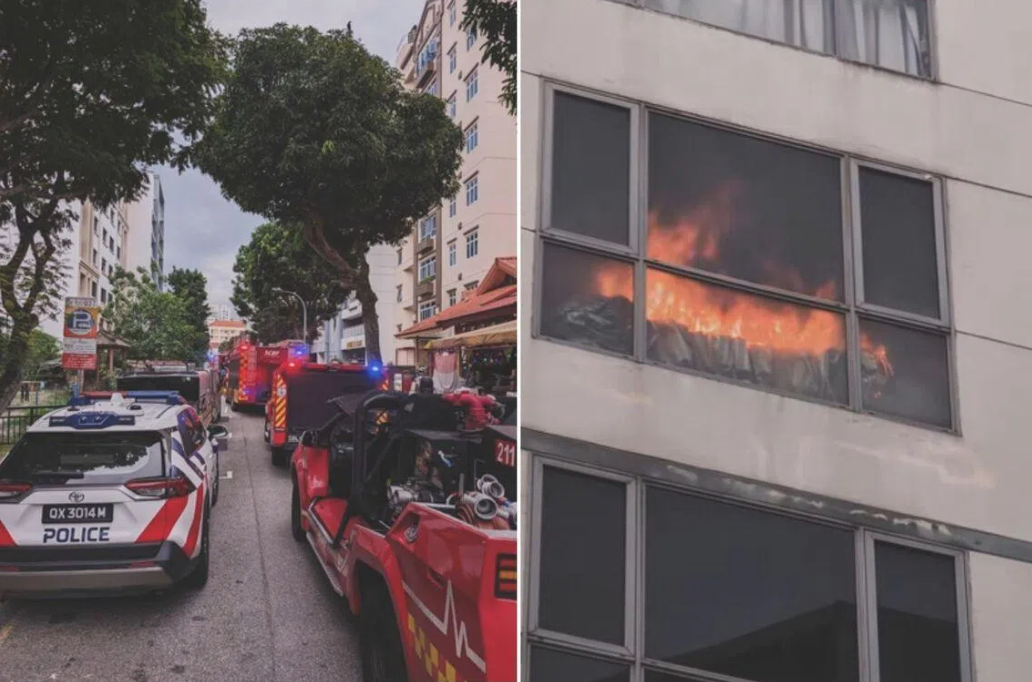
An unattended power-assisted bicycle battery erupted into flames inside a residential unit at Casa Aerata condominium in Geylang, Singapore, on Sunday afternoon, triggering the evacuation of five residents from neighbouring apartments as a precautionary measure. The Singapore Civil Defence Force responded to the blaze at 9 Lorong 26 Geylang just after 5.35pm, discovering that the fire had originated from the battery of a PAB being charged in the living room of a seventh-floor apartment. Emergency responders quickly brought the situation under control using a hosereel and compressed air foam backpack, preventing the fire from spreading to other units and avoiding any reported injuries.
The incident underscores a mounting concern across the region regarding the safety of increasingly popular active mobility devices. Singapore, like many Southeast Asian cities, has seen a surge in the adoption of personal mobility devices and power-assisted bicycles as alternatives to conventional transport. However, the rapid proliferation of these gadgets has outpaced public awareness of their potential hazards, particularly regarding battery safety and proper charging practices. The fact that this particular fire occurred in an unattended situation is noteworthy, as it mirrors a broader pattern of fires that develop when devices are left charging without supervision, often overnight when residents are asleep and unable to respond quickly.
MP for Bishan-Toa Payoh GRC Cai Yinzhou arrived at the scene after witnessing smoke and hearing emergency sirens in the neighbourhood. His swift response exemplified the kind of community vigilance that can prove crucial during such emergencies. He took the initiative to clear the area directly beneath the burning unit in anticipation of structural failure, demonstrating awareness of the secondary risks posed by high-temperature fires—specifically the danger of windows and other fixtures becoming projectiles when exposed to intense heat. This intervention likely prevented additional injuries, though the fire was eventually controlled before the situation deteriorated further.
The Singapore Civil Defence Force's preliminary investigation determined that the fire originated from electrical faults within the PAB's battery system, a finding that points to inherent risks in battery chemistry and charging infrastructure. Lithium-ion batteries, which power most modern mobility devices, are prone to thermal runaway—a cascading chemical reaction that causes rapid heat generation and combustion if the battery's internal thermal management fails. This can be triggered by manufacturing defects, damage to the battery casing, overcharging, or exposure to excessive heat. The investigation highlighted that using non-original or counterfeit batteries substantially increases these risks, as third-party batteries often lack the safety mechanisms and quality control built into manufacturer-approved products.
In response to the incident, the SCDF issued fresh guidance cautioning the public against purchasing or using non-original batteries for active mobility devices, a practice that remains disturbingly common in Southeast Asia due to the cost differential. Genuine batteries command premium prices, prompting some users to seek cheaper alternatives from informal retailers. However, these counterfeit or substandard batteries frequently lack proper circuit protection, thermal cutoffs, and other safeguards that prevent fires. The authority also urged users never to charge PAB and PMD batteries for extended periods or overnight, recommendations that appear obvious in retrospect but are frequently ignored by residents seeking convenience.
Statistical trends from Singapore's fire safety data reveal a complex picture of the risks posed by active mobility devices. In 2025 alone, 49 fires involved AMDs out of 304 total electrical fires at residential premises, a notable decrease from 67 AMD fires in 2024. However, this apparent improvement masks a concerning shift in the composition of incidents: while overall AMD fires declined, personal mobility device fires specifically increased from 25 cases in 2024 to 31 in 2025. This divergence suggests that while power-assisted bicycles may have benefited from increased public awareness or regulatory intervention, personal mobility devices are becoming progressively more fire-prone—potentially indicating that PMD adoption is outpacing safety improvements.
The implications for the broader Southeast Asian region extend beyond Singapore's borders. Malaysia, with its own burgeoning e-bike and e-scooter market, faces comparable challenges with inadequate regulatory frameworks governing battery safety standards and retail sales. The same types of non-compliant batteries that caused the Geylang fire are readily available through online marketplaces and informal shops across Malaysian cities. Public awareness campaigns about proper charging practices remain limited, and enforcement of battery import standards is inconsistent. As more residents across Kuala Lumpur, Penang, and other major Malaysian cities adopt these devices for last-mile transport, the potential for similar incidents escalates correspondingly.
The fire also highlights gaps in building-level fire safety protocols within high-density residential settings. Apartment blocks and condominiums present unique risks when personal electronics are involved, as fires can spread vertically through ventilation systems and horizontally to adjacent units. The evacuation of five neighbouring units from a single charging incident illustrates how localized battery fires can disrupt entire residential communities. Building management associations should consider implementing specific guidelines for lithium-ion battery storage and charging in common areas, potentially designating secure charging stations with proper ventilation and fire suppression systems rather than leaving residents to charge batteries freely within living quarters.
Looking forward, stakeholders across Malaysia and Singapore would benefit from harmonized battery safety standards and more rigorous enforcement of import regulations. Consumer education remains paramount, yet public messaging campaigns have struggled to penetrate widespread user populations. The most effective approach likely combines mandatory battery certification requirements at point of sale, clearer labelling of risks and proper charging protocols, and incentive structures that make genuine batteries more affordable through bulk purchasing agreements or subsidy programmes. Until these systemic changes take root, incidents like the Casa Aerata fire will continue to pose risks to residents in high-rise developments across Southeast Asia.

%22%2F%3E%3C%2Fpattern%3E%3C%2Fdefs%3E%3Crect%20width%3D%22100%25%22%20height%3D%22100%25%22%20fill%3D%22url(%23ph17rgmg)%22%2F%3E%3Crect%20width%3D%22100%25%22%20height%3D%22100%25%22%20fill%3D%22url(%23ph17rgmp)%22%2F%3E%3Ctext%20x%3D%2250%25%22%20y%3D%2250%25%22%20text-anchor%3D%22middle%22%20dominant-baseline%3D%22central%22%20fill%3D%22rgba(255%2C255%2C255%2C0.95)%22%20font-family%3D%22Georgia%2C%20'Times%20New%20Roman'%2C%20serif%22%20font-weight%3D%22700%22%20font-size%3D%22320%22%20letter-spacing%3D%22-0.02em%22%3EPM%3C%2Ftext%3E%3C%2Fsvg%3E)