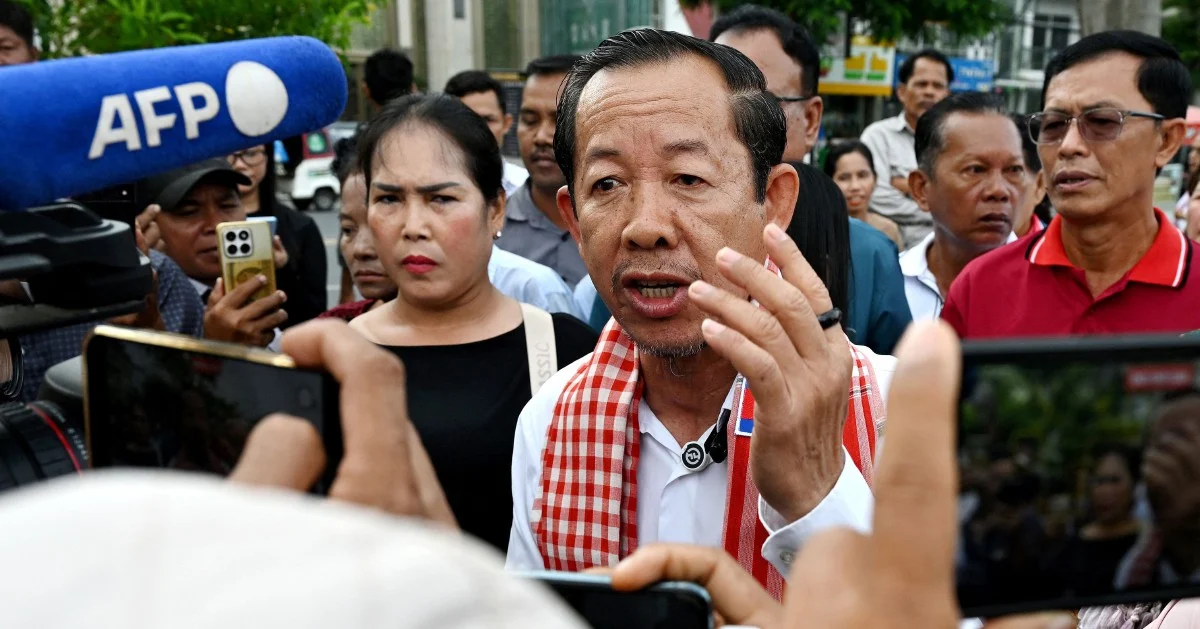
Cambodia's Supreme Court delivered a mixed ruling on Friday regarding opposition politician Rong Chhun, suspending the prison sentence he had been handed while simultaneously upholding restrictions that bar him from participating in future elections. The decision, confirmed by Rong Chhun's legal team, demonstrates the continuing tension within Cambodia's judicial system between nominally reducing custodial punishment and maintaining structural limitations on political opposition figures.
The suspension of Rong Chhun's prison term represents a tactical retreat from the original sentencing, potentially easing international pressure on Cambodia's government regarding its treatment of dissidents. However, the preservation of the election ban reveals the deeper intent behind the legal framework—to neutralise opposition participation in democratic processes without necessarily subjecting prominent figures to prolonged incarceration. This approach allows authorities to claim moderation while achieving the substantive goal of restricting political competition.
Rong Chhun has emerged as a notable voice within Cambodia's fragmented opposition landscape. His legal entanglements reflect broader patterns in Southeast Asia where judicial systems are wielded as instruments of political control, particularly against figures who maintain grassroots mobilisation capacity. The contrast between Rong Chhun's suspended sentence and his maintained election ban illustrates how legal mechanisms can be calibrated to achieve political objectives while maintaining superficial appearances of judicial temperance.
The ruling arrives amid Cambodia's evolving political environment following the dominance of Prime Minister Hun Sen's Cambodian People's Party. Opposition politics in the Kingdom remain constrained following the dissolution of the Cambodia National Rescue Party in 2017, leaving remaining opposition figures to navigate an institutional landscape heavily weighted toward the ruling establishment. Rong Chhun's case exemplifies the particular vulnerability of opposition leaders operating outside the formal party structure.
For Malaysian observers and regional analysts, Cambodia's judicial handling of opposition figures provides instructive parallels and contrasts with political management across Southeast Asia. While Malaysia has witnessed more explicit democratic competitions and periodic transfers of power, the underlying technique of using legal mechanisms to constrain opposition—whether through defamation suits, sedition charges, or electoral restrictions—remains visible across multiple democracies in the region. The distinction lies in degree and transparency rather than fundamental principle.
The election ban's upholding suggests Cambodia's authorities view preventing Rong Chhun's candidacy as strategically essential despite willingness to suspend his custodial sentence. This prioritisation reveals what officials perceive as genuine threats to their political position. Opposition politicians with independent constituencies, community networks, or mobilisation capacity represent different challenges than those confined to institutional party structures, explaining why individualistic figures attract particular legal scrutiny.
International responses to Cambodia's judicial treatment of opposition figures have historically emphasised concerns about rule of law and democratic standards. Western governments and human rights organisations regularly criticise restrictions on political participation as inconsistent with democratic principles. However, such external pressure has produced limited practical changes in Cambodia's governance patterns, suggesting that international criticism alone lacks enforcement mechanisms sufficient to alter entrenched political practices.
The suspension of Rong Chhun's prison term may reflect calculations by Cambodia's leadership regarding international relations and potential economic sanctions. Demonstrating capacity for judicial flexibility on custodial matters creates political space for claiming responsiveness to concerns about due process, while maintaining substantive restrictions on opposition efficacy. This calibrated approach enables governments to manage international criticism while preserving domestic political advantages.
For opposition politics across Southeast Asia, Rong Chhun's case underscores the vulnerability of politicians operating without institutional party protection. Individual dissidents, regardless of their popular support or political capabilities, face asymmetric legal contests against state resources. This structural disadvantage shapes opposition strategy across the region, often pushing figures toward either party affiliation, international exile, or strategic retreat from electoral competition.
Cambodia's handling of election eligibility restrictions shares characteristics with mechanisms observed elsewhere in Southeast Asia, where legal disqualifications have excluded opposition figures from contests without subjecting them to lengthy imprisonment. These restrictions operate as permanent political disabilities, preventing participation in a single or multiple electoral cycles depending on legislative formulation. They achieve opposition neutralisation through procedural means rather than overtly coercive detention.
The ruling's implications extend beyond Rong Chhun's individual circumstances to suggest Cambodia's emerging judicial philosophy regarding political opposition. The distinction between suspending custodial sentences and maintaining electoral restrictions indicates preference for structural exclusion over explicit punishment. This preference may reflect lessons learned from international criticism of previous opposition crackdowns, suggesting more sophisticated deployment of legal instruments for political management.
Regional developments in Cambodia inevitably influence Southeast Asia's broader democratic trajectory and international perceptions of governance standards throughout the association. As ASEAN's largest economies and international observers assess democratic health across member states, Cambodia's treatment of opposition politicians contributes to regional reputational dynamics and shapes international engagement patterns. These consequences ripple outward, affecting investment climates, diplomatic relationships, and international confidence in Southeast Asian institutions.
Moving forward, Rong Chhun's continued exclusion from electoral contests represents an enduring constraint on Cambodia's democratic development regardless of his freedom from incarceration. The suspension-without-reversal approach adopted by Cambodia's Supreme Court exemplifies modern sophisticated political restrictions that achieve substantive goals while projecting images of moderation. For observers across Southeast Asia, this case demonstrates how legal systems can simultaneously appear responsive on superficial dimensions while remaining fundamentally committed to limiting authentic political competition.


%22%2F%3E%3C%2Fpattern%3E%3C%2Fdefs%3E%3Crect%20width%3D%22100%25%22%20height%3D%22100%25%22%20fill%3D%22url(%23ph2h3ibg)%22%2F%3E%3Crect%20width%3D%22100%25%22%20height%3D%22100%25%22%20fill%3D%22url(%23ph2h3ibp)%22%2F%3E%3Ctext%20x%3D%2250%25%22%20y%3D%2250%25%22%20text-anchor%3D%22middle%22%20dominant-baseline%3D%22central%22%20fill%3D%22rgba(255%2C255%2C255%2C0.95)%22%20font-family%3D%22Georgia%2C%20'Times%20New%20Roman'%2C%20serif%22%20font-weight%3D%22700%22%20font-size%3D%22272%22%20letter-spacing%3D%22-0.02em%22%3EZahid%3C%2Ftext%3E%3C%2Fsvg%3E)