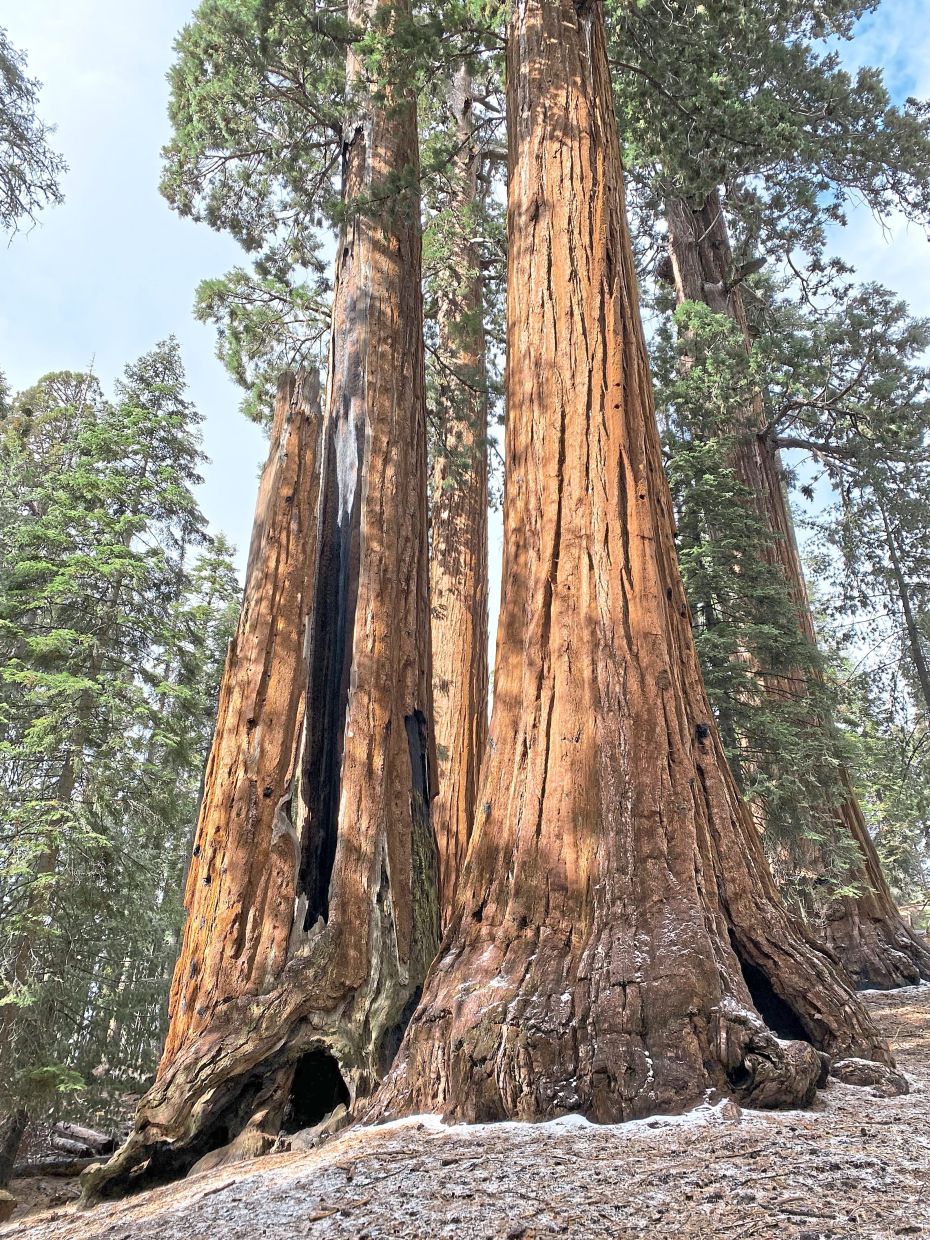
California's ancient giant sequoias face an existential crisis following catastrophic wildfires in 2020 and 2021 that claimed the lives of nearly one-fifth of the world's remaining population of these towering giants. The fires ravaged groves across the southern Sierra Nevada, destroying thousands of trees that can reach heights of 91.5 metres and live for up to three millennia. Now, a coalition of state and federal agencies, tribal representatives, and environmental organisations has embarked on an ambitious, multi-year restoration effort to prevent history from repeating itself as summer fire season approaches once more.
The scale of the losses stunned scientists and park managers alike. Kevin Conway, the state forests programme manager for Cal Fire, described the emotional toll of witnessing these irreplaceable trees succumb to flames. The realisation that human management decisions had inadvertently created conditions for such devastation prompted an unprecedented collaborative response. Rather than retreating into despair, stakeholders recognised that they possessed both the knowledge and the capacity to fundamentally alter the trajectory of these ancient groves.
The Giant Sequoia Lands Coalition, formed after the fires, brings together eight primary institutional members responsible for lands stretching from Tahoe National Forest down to Bakersfield, where the 94 remaining groves are concentrated. This partnership encompasses Cal Fire, California State Parks, the National Park Service, Tulare County, the Tule River Indian Tribe, UC Berkeley, the US Forest Service, and the Bureau of Land Management. An additional nine organisations contribute scientific expertise, funding, and logistical support, creating a network of complementary capabilities and shared commitment.
Since their formal efforts commenced in 2022, the coalition has made substantial progress in reducing fire vulnerability across the landscape. Crews have mechanically thinned overgrown brush and small trees that would otherwise serve as fuel, accelerating fire intensity, across 44 of the 94 groves. Controlled burning operations have been implemented using techniques refined over centuries by Native Californian tribes. Perhaps most significantly, restoration teams have planted more than 682,000 sequoia seedlings in severely burned areas, actively regenerating populations where ancient trees were lost. Collectively, these interventions have reduced fire risk across 9,409 hectares over the past four years, according to findings released in May.
The urgency driving this restoration reflects an uncomfortable reality: the fires that devastated these groves in 2020 and 2021 were not anomalies but harbingers of intensifying threats. Steve Mietz, who recently assumed the presidency of Save the Redwoods League after leading Redwood National Park, characterises the situation as a race against time. His assessment carries particular weight given his decades managing threatened old-growth ecosystems. Yet Mietz expresses measured optimism, noting that scientists understand the problem and possess proven solutions, though implementation at necessary scales remains the central challenge.
The vulnerability of giant sequoias stems from a paradox rooted in human fire suppression policies dating back a century. These trees evolved alongside periodic natural fires sparked by lightning or set intentionally by indigenous peoples, which occurred approximately once every decade to two decades. The thick, fibrous bark of sequoias—growing to approximately 60 centimetres in depth—functions as effective insulation, while their cones require fire's heat to release seeds. However, systematic fire suppression beginning around 1900 allowed dense thickets of smaller tree species, accumulated dead wood, and brush to accumulate to unnatural levels. When inevitable wildfires eventually penetrate these groves, they burn with unprecedented intensity and duration, overwhelming even the sequoias' remarkable fire adaptations.
Kristen Shive, a specialist in forest fuels and management at UC Berkeley's Cooperative Extension Program, witnessed firsthand the consequences of this ecological mismanagement. During post-fire surveys, her team documented trees that had survived millennia of natural disturbance suddenly succumbing to human-created conditions. The realisation that thousands of acres burned at high severity—killing ancient sequoias outright rather than merely scarring them—represented a shocking departure from historical fire patterns and underscored the urgency of fundamental management change.
Climate change has compounded these vulnerabilities in ways that transcend traditional fire management. Prolonged droughts between 2012 and 2016, and again from 2020 to 2022, killed millions of other tree species throughout the Sierra Nevada, converting them into additional fuel loads. Hotter temperatures progressively dry both soils and vegetation, creating conditions favourable for more intense and extensive fires. This intersection of suppressed natural fire regimes, accumulated fuel loads, and climatic stress has created a system teetering on the edge of irreversible change.
The restoration strategy pursued by the coalition directly addresses these interlocking challenges through ecological restoration guided by scientific principles and indigenous knowledge. Priority work involves removing densely packed smaller tree species—particularly white fir, red fir, and incense cedar—that compete with sequoias for resources while contributing nothing to forest resilience. Dead larger trees, including sugar pines and ponderosa pines killed during recent droughts, are felled and removed using chainsaws and modern equipment. Much of this debris is consolidated and burned during controlled burns conducted outside peak fire season, mimicking the low-intensity fires that historically shaped these ecosystems. Some larger wood salvaged from private lands or Cal Fire demonstration forests is sold to timber operations, helping offset thinning costs and creating economic incentives for broader participation.
The ecological benefits of this approach extend beyond immediate fire risk reduction. By removing competing vegetation, more sunlight penetrates to the forest floor, creating favourable conditions for sequoia seedling establishment and growth. The resulting forest structure—more open, with greater spacing between large trees and reduced understory density—more closely approximates the conditions under which these trees evolved and thrived. Conway emphasises that restoration work aims at returning these forests to functional natural conditions where they can resist drought, fire, and disease through their own ecological resilience rather than perpetual human intervention.
This restoration philosophy has not escaped controversy. In 2022, the Earth Island Institute filed legal action seeking to halt fuel reduction projects in Merced Grove within Yosemite National Park, arguing that insufficient environmental assessment preceded the work. However, a federal district court dismissed the challenge, and the Ninth Circuit Court of Appeals upheld that dismissal in 2023, enabling restoration work to proceed. The urgency underlying this legal outcome reflects Merced Grove's particular vulnerability; six wildfires have threatened this single grove within the past fifteen years alone, underscoring why some activists and scientists view aggressive fuel reduction as essential rather than discretionary.
For Malaysian and Southeast Asian observers, this restoration saga offers instructive lessons about the long-term consequences of fire suppression policies and the importance of integrating indigenous ecological knowledge with contemporary science. As climate change intensifies fire risks across tropical and subtropical regions globally, California's experience demonstrates both the perils of misguided intervention in natural fire regimes and the possibility of recovery through sustained, coordinated action. The Giant Sequoia Lands Coalition's work suggests that even severely degraded ecosystems can be restored through patient, evidence-based management—though such restoration demands commitment, funding, and sustained political will operating across institutional boundaries.

