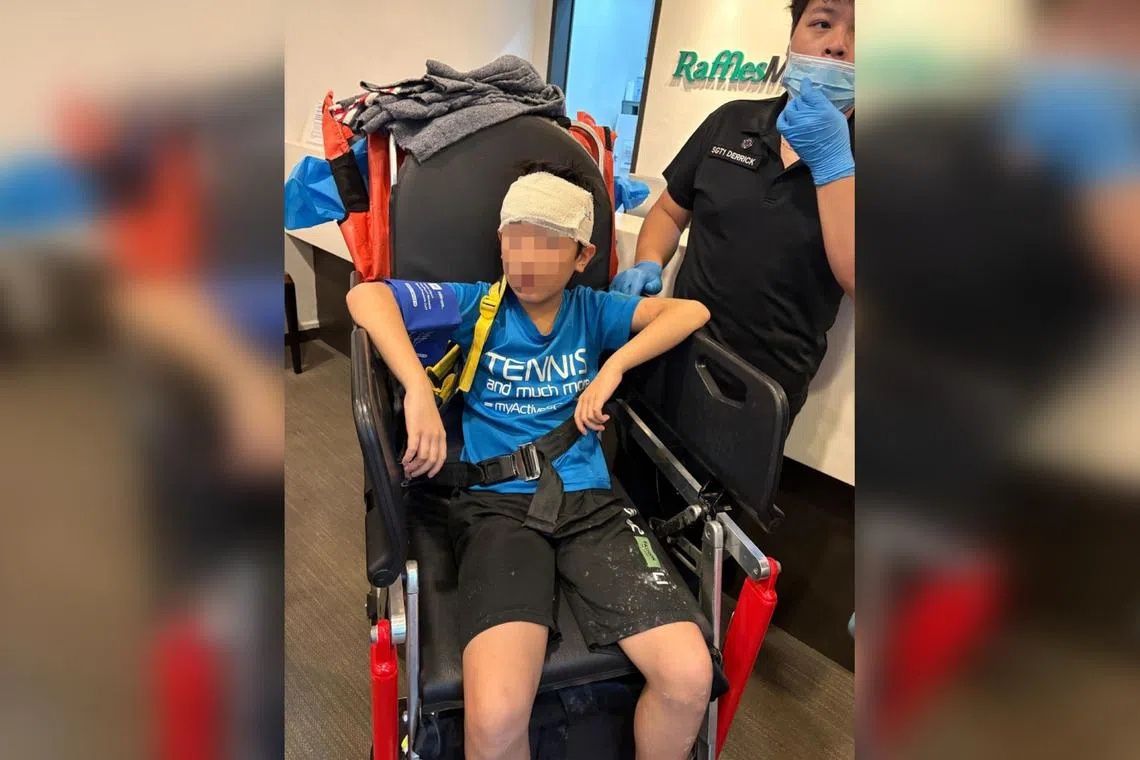
A young child was rushed to hospital after a signboard at a Food Junction foodcourt outlet gave way at Rivervale Mall in Sengkang, Singapore, on Saturday morning. The Singapore Civil Defence Force responded to an emergency call around 10.30am and transported the injured child to KK Women's and Children's Hospital for treatment and assessment. The incident, which was captured on social media footage, showed significant debris from the collapsed signboard blocking the entrance to the restaurant.
Food Junction, the restaurant operator, acknowledged the occurrence and emphasised the swift action taken by its team in managing the crisis. A company representative explained that staff members coordinated immediately with mall authorities and emergency personnel to assist the injured customer. The spokesperson indicated that after medical evaluation at the hospital, the child was allowed to leave and is now recovering at home, suggesting injuries were not severe enough to warrant extended hospitalisation.
Following the collapse, Food Junction conducted a comprehensive review and investigation aimed at identifying what caused the structural failure. The company stated that it has since implemented reinforced safety measures throughout its premises, ensuring alignment with guidelines set by relevant Singapore authorities. This proactive stance reflects the operator's commitment to preventing similar incidents in the future, though specifics regarding the nature of the safety enhancements were not disclosed.
The restaurant resumed normal operations at the foodcourt after the incident was contained and cleaned up. Management expressed regret over the mishap while emphasising that the establishment had taken all necessary corrective steps before welcoming customers back. The swift reopening suggests that damage was localised to the signboard structure rather than affecting broader foodcourt infrastructure.
Social media users documented the incident, with TikTok footage revealing the extent of the collapse. Videos showed chunks of the signboard scattered across the entrance area, with portions of the surrounding ceiling remaining partially intact. Bystanders in the recordings maintained a safe distance from the debris, demonstrating awareness of potential hazards. This documentation helped authorities and investigators piece together exactly what transpired and how the structure failed.
The incident at Rivervale Mall draws attention to the importance of regular maintenance and inspection protocols for fixtures and signage in high-traffic commercial spaces across Southeast Asia. Shopping centres and dining establishments typically host hundreds of visitors daily, making the structural integrity of overhead installations a critical safety concern. The collapse, though resulting in no reported fatalities or severe injuries, underscores vulnerabilities that can emerge if maintenance schedules are not rigorously followed.
For Malaysian readers, this incident carries relevance given similarities in foodcourt design and operations across the region. Many Malaysian shopping malls operate similar Food Junction outlets and comparable casual dining spaces, often with signage and fixtures positioned above customer areas. The Singapore case serves as a cautionary reminder for facility managers and restaurant operators to conduct regular safety audits and ensure that mounting systems for overhead displays meet current standards.
Building and construction authorities play a pivotal role in such situations. The Singapore authorities' involvement in the Rivervale Mall incident reflects how regulatory oversight helps determine whether collapses result from maintenance failures, design flaws, or manufacturing defects. Malaysian operators and building regulators can learn from how Singapore's authorities responded, particularly in terms of investigative methodology and enforcement of corrective measures.
The rapid response by Singapore's emergency services highlighted the value of well-coordinated disaster protocols. The fact that a child could be transported to a specialist hospital within minutes of the incident and treated appropriately demonstrates the efficiency of Singapore's healthcare and emergency response systems. This level of readiness is something that regional safety standards generally aspire to match.
Food Junction's transparent communication and swift remedial action set an industry benchmark for how businesses should handle such crises. By immediately cooperating with authorities, conducting thorough investigations, and implementing enhanced safety procedures before reopening, the company limited reputational damage and maintained customer confidence. For regional businesses, this approach offers a template for responsible incident management that prioritises public safety without sacrificing operational continuity.
The incident also highlights the importance of public vigilance. Social media documentation by witnesses provided valuable context that complemented official investigations. This grassroots reporting, while sometimes contentious, ensures transparency and holds establishments accountable for safety standards. For consumers across Southeast Asia, it reinforces the value of documenting hazardous conditions and reporting concerns to relevant authorities promptly.
As Southeast Asian economies continue experiencing rapid urbanisation and expansion of commercial spaces, the frequency and visibility of such incidents may increase unless safety standards evolve accordingly. Regular inspections, updated building codes, and investment in modern fixtures become essential as malls and foodcourts age. The Rivervale Mall incident serves as a data point in the broader regional conversation about infrastructure safety and the need for continuous improvement in maintenance practices.