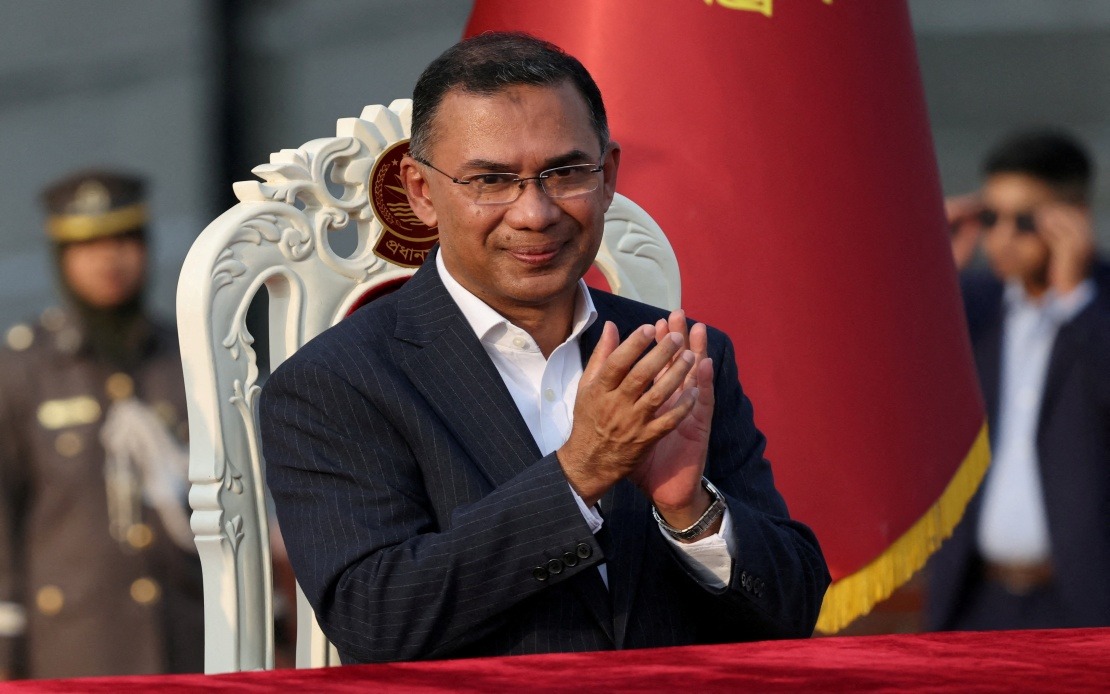
Bangladesh's newly appointed Prime Minister Tarique Rahman will arrive in Malaysia on June 22 for an official visit that carries significant diplomatic weight for both South Asian and Southeast Asian relations. Arriving at the invitation of Prime Minister Datuk Seri Anwar Ibrahim, this journey represents the first bilateral official visit Rahman has undertaken since taking office in February 2026, underscoring Malaysia's strategic importance to Bangladesh's emerging government.
The visit will commence with formal protocols befitting the occasion. Rahman will receive an official welcoming ceremony before proceeding to the Perdana Putra Complex for a bilateral meeting with Anwar. The structured nature of these proceedings reflects the ceremonial significance both nations place on the engagement, setting the stage for substantive discussions on regional cooperation and shared challenges.
During their meeting, both leaders will conduct a comprehensive review of Malaysia-Bangladesh bilateral relations, examining progress achieved in recent years while charting pathways for deepening partnership. The agenda extends across multiple sectors deemed critical for mutual prosperity. Trade and investment cooperation will feature prominently, alongside human resource development initiatives that have proven valuable for both economies. Emerging sectors including semiconductors and renewable energy will also command attention, reflecting the nations' shared interest in positioning themselves within regional and global supply chains. Additionally, agricultural collaboration and educational exchanges are expected to receive focus, areas where Malaysia's experience and Bangladesh's demographic dividend create complementary opportunities.
The substance of the visit will be anchored in formal agreements and institutional mechanisms. Significantly, the two governments will execute a memorandum of understanding focused on cultural cooperation, fostering people-to-people connections that extend beyond commercial transactions. Two exchanges of notes will simultaneously be formalised—one addressing counter-terrorism research cooperation, a matter of regional security importance, and another on investment promotion and facilitation designed to ease commercial interactions between the two nations. These frameworks provide operational structures for translating diplomatic goodwill into tangible outcomes.
The bilateral dimension of Rahman's visit emphasises his administration's prioritisation of Malaysia within its immediate foreign policy calculations. Arriving with a high-level delegation including his spouse Dr Zubaida Rahman, Foreign Minister Dr Khalilur Rahman, and senior government officials, the Prime Minister signals the significance Bangladesh accords this engagement. The presence of his foreign minister is particularly notable, suggesting that substantive negotiations on diplomatic and strategic matters will proceed alongside the bilateral meeting. The official luncheon Anwar will host adds a further ceremonial layer, providing an informal setting for relationship-building and broader policy discussions.
The economic relationship underpinning this visit reflects substantial commercial interdependence. During 2025, bilateral trade between the two nations reached RM12.18 billion, equivalent to US$2.84 billion, positioning Bangladesh as Malaysia's 28th largest global trading partner. Malaysia's export orientation is dominant, with outbound shipments valued at RM10.08 billion, or US$2.35 billion, concentrated heavily in petroleum products that satisfy Bangladesh's energy requirements. The reverse flow from Bangladesh totals RM2.10 billion (US$500 million), dominated by textiles, apparel, and footwear—sectors where Bangladesh maintains competitive advantage through labour-cost efficiency and manufacturing expertise.
Within the South Asian region, Bangladesh represents Malaysia's second most significant commercial relationship after India, underscoring the latter's economic weight in the subcontinent. As Malaysia's second-largest export destination and import source in South Asia, Bangladesh anchors Malaysia's broader regional engagement strategy. For Bangladesh, Malaysia represents an important destination for raw material exports while serving as a gateway to Southeast Asian markets and investment opportunities. This complementary trade structure—Malaysia exporting energy and importing labour-intensive manufactures—reflects the comparative advantages each economy brings to the partnership.
The timing of Rahman's visit carries implications beyond bilateral concerns. As Bangladesh's newly installed leader consolidating his administration's international positioning, his choice to prioritise Malaysia signals the country's commitment to strengthening Southeast Asian ties at a moment when regional geopolitics continue evolving. For Malaysia, engaging robustly with Bangladesh reflects Anwar Ibrahim's broader vision of deepening ties within South Asia and expanding Malaysia's diplomatic footprint beyond traditional ASEAN circles. The visit thus represents mutual recognition of expanding possibilities within the Indo-Pacific framework, where Bangladesh's geographic position linking South Asia and Southeast Asia grants it growing strategic relevance.
Looking forward, the agreements and discussions during Rahman's visit may establish precedents for institutional cooperation extending beyond the immediate visit. The counter-terrorism research mechanism addresses security challenges both nations face, contributing to the broader regional architecture for combating transnational threats. Investment promotion frameworks signal readiness to facilitate expanded business linkages, particularly important given Malaysia's capital abundance and Bangladesh's growth trajectory. Cultural cooperation agreements recognise that sustainable relationships rest on foundations beyond commerce, building constituencies within both societies invested in bilateral prosperity.
The visit ultimately represents a moment of strategic alignment between two large regional economies recognising mutual benefit in deepened partnership. For Malaysian policymakers and businesses, Bangladesh's 170 million population and growing middle class represent significant commercial opportunity. For Bangladesh, Malaysia's technological sophistication, investment capacity, and established position within ASEAN frameworks offer pathways toward accelerated development and regional integration. As both nations navigate regional economic repositioning and security challenges, the Rahman visit provides opportunity to align interests and establish mechanisms through which cooperation can flourish.