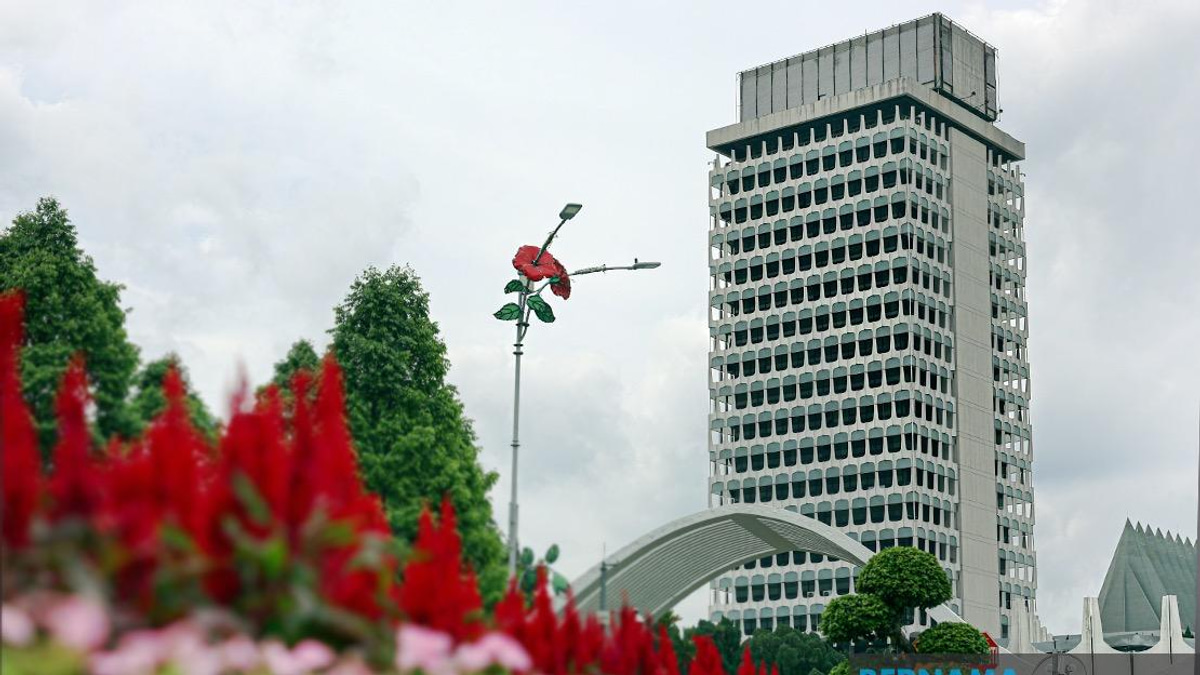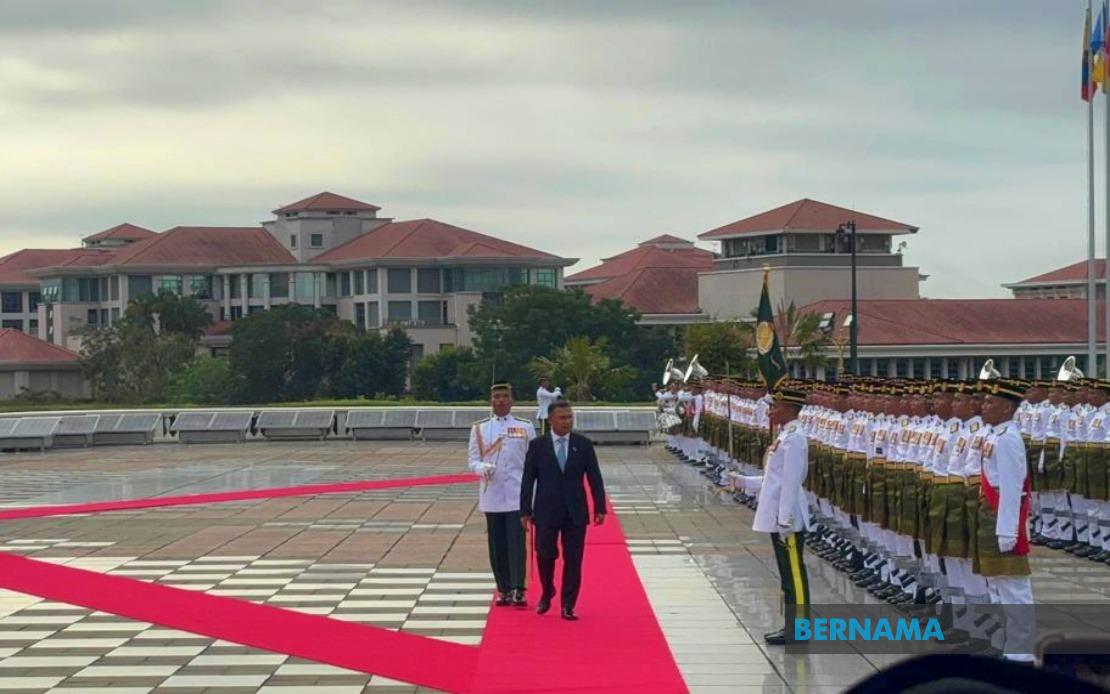
Bangladesh Prime Minister Tarique Rahman stepped onto Malaysian soil today for a two-day official visit, marked by a formal reception ceremony at the Perdana Putra Complex in Putrajaya. The visiting dignitary, who touched down at 9 am, was greeted by Prime Minister Datuk Seri Anwar Ibrahim in a display of diplomatic protocol befitting the occasion, complete with the playing of both nations' national anthems and a ceremonial guard of honour composed of three officers and 103 personnel from the First Battalion of the Royal Ranger Regiment, commanded by Major Nur Ahmad Zaim Zahari.
The high-level reception underscored Malaysia's commitment to deepening relations with Bangladesh, one of South Asia's most significant economies and a crucial partner in the region. Deputy Prime Minister Datuk Seri Dr Ahmad Zahid Hamidi, Foreign Minister Datuk Seri Mohamad Hasan, Home Minister Datuk Seri Saifuddin Nasution Ismail, Communications Minister Datuk Fahmi Fadzil, alongside other Cabinet members and senior government officials, graced the ceremony. The presence of foreign diplomats further highlighted the strategic importance of the bilateral engagement at this juncture.
Following the ceremonial formalities, Tarique signed Malaysia's guest book before engaging in a private conversation with Anwar, setting the tone for substantive negotiations to follow. A comprehensive bilateral meeting involving senior ministers and officials from both nations then convened, where the two delegations explored avenues for enhanced cooperation spanning multiple economic and strategic sectors. The discussions are anticipated to address the trajectory of Malaysia-Bangladesh bilateral relations while identifying fresh opportunities for partnership.
Key areas of focus in the talks include bolstering trade and investment linkages, human resource development initiatives, semiconductor manufacturing collaboration, energy cooperation, agricultural partnerships, and educational exchanges. Beyond economic matters, both governments plan to address regional and international developments of shared concern, demonstrating that their engagement encompasses both pragmatic commercial interests and broader geopolitical considerations that affect Southeast Asia and South Asia collectively.
The visit will culminate in the execution of significant binding documents between the two nations. Both leaders are scheduled to witness the signing of one Memorandum of Understanding focused on cultural cooperation, alongside two Exchanges of Notes covering counter-terrorism research collaboration and investment promotion frameworks. These instruments reflect a multifaceted approach to bilateral engagement that extends beyond traditional trade relationships into security and cultural domains.
Prime Minister Anwar will subsequently host an official luncheon honouring the Bangladeshi delegation, providing an informal setting for continued dialogue. Tarique arrives accompanied by his spouse Dr Zubaida Rahman, Foreign Minister Dr Khalilur Rahman, and a cohort of senior Bangladeshi officials, enabling comprehensive discussions across multiple governmental portfolios.
The economic relationship between Malaysia and Bangladesh has demonstrated robust momentum. In 2025, bilateral trade reached RM12.18 billion, equivalent to USD2.84 billion, positioning Bangladesh as Malaysia's 28th largest trading partner globally. Malaysian exports to Bangladesh commanded RM10.08 billion, with petroleum products forming the backbone of this export stream, reflecting Malaysia's role as an energy supplier to South Asian markets. Conversely, Malaysian imports from Bangladesh totalled RM2.10 billion, centred on textiles, apparel, and footwear sectors where Bangladesh has established significant manufacturing competitiveness.
Bangladesh's standing within Malaysia's trade architecture is particularly notable in the South Asian context. As Malaysia's second largest trading partner in the region after India, and second largest export destination and import source, Bangladesh occupies substantial commercial significance for Malaysian businesses. This ranking underscores the depth of commercial integration already achieved and signals considerable untapped potential for expansion across sectors ranging from energy to manufacturing.
The timing of this official visit carries geopolitical resonance for Southeast Asia. As Malaysia seeks to strengthen ties across the broader Asian region, engagement with Bangladesh reflects a strategic orientation towards South Asia and the Indian Ocean region. Bangladesh's position as a significant player in global supply chains, particularly in textiles and light manufacturing, aligns with Malaysia's diversification strategy and interest in developing complementary rather than competing economic relationships within the Indo-Pacific sphere.
The semiconductor sector represents a particularly promising area for bilateral collaboration, given Malaysia's established expertise in semiconductor design, testing, and manufacturing, and Bangladesh's growing manufacturing capabilities and youthful workforce. Similarly, energy cooperation holds considerable promise, as Bangladesh seeks to diversify energy sources while Malaysia maintains substantial hydrocarbon reserves and renewable energy ambitions.
Cultural exchanges and human resource development initiatives reflected in the MoU serve to strengthen people-to-people connections, essential for sustaining long-term diplomatic and commercial relationships. The counter-terrorism research collaboration speaks to shared security concerns in a region confronting transnational threats, demonstrating that Malaysia-Bangladesh ties extend into the critical domain of regional stability and security cooperation.
This visit represents part of a broader Malaysian diplomatic strategy to cultivate partnerships across multiple regions simultaneously. By hosting high-level visits from nations across South Asia, Southeast Asia, and beyond, Malaysia positions itself as a pivotal actor in Asian regionalism and a reliable partner for nations seeking to expand international cooperation. The substantive agenda outlined for these talks suggests that both governments view their bilateral relationship not merely as transactional commerce but as a strategic partnership capable of contributing to regional prosperity and stability.

%22%2F%3E%3C%2Fpattern%3E%3C%2Fdefs%3E%3Crect%20width%3D%22100%25%22%20height%3D%22100%25%22%20fill%3D%22url(%23ph315z3g)%22%2F%3E%3Crect%20width%3D%22100%25%22%20height%3D%22100%25%22%20fill%3D%22url(%23ph315z3p)%22%2F%3E%3Ctext%20x%3D%2250%25%22%20y%3D%2250%25%22%20text-anchor%3D%22middle%22%20dominant-baseline%3D%22central%22%20fill%3D%22rgba(255%2C255%2C255%2C0.95)%22%20font-family%3D%22Georgia%2C%20'Times%20New%20Roman'%2C%20serif%22%20font-weight%3D%22700%22%20font-size%3D%22194%22%20letter-spacing%3D%22-0.02em%22%3EBersatu%3C%2Ftext%3E%3C%2Fsvg%3E)