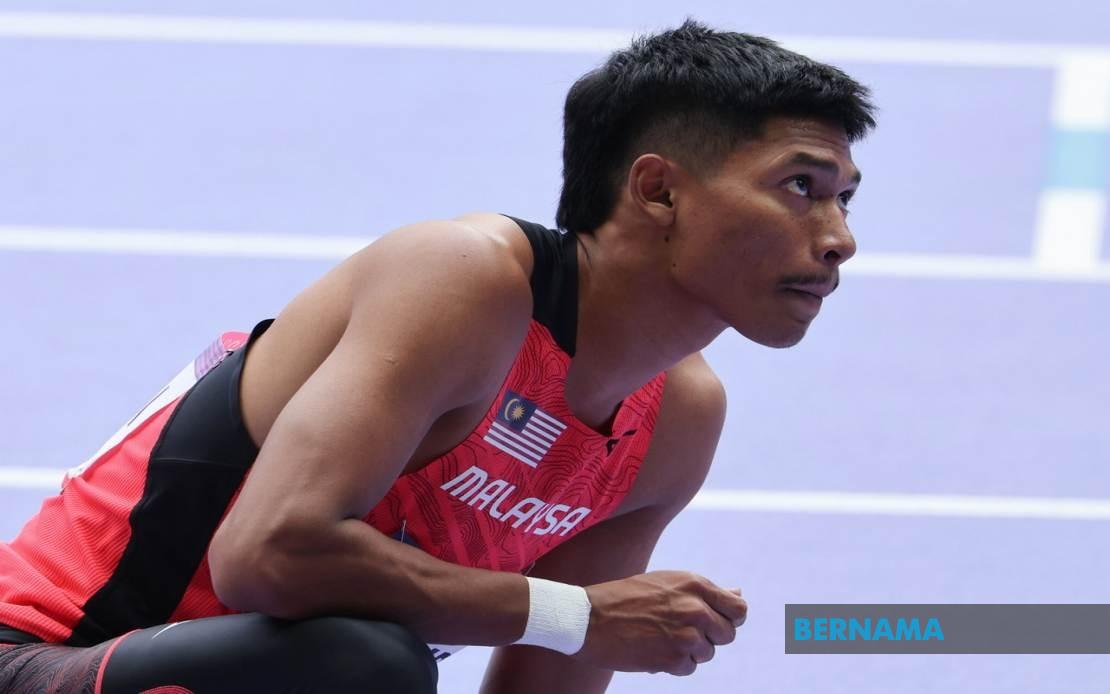
Muhammad Azeem Mohd Fahmi, Malaysia's 100-metre record holder, has announced his intention to remain in the country and pursue his athletics ambitions locally rather than relocate back to the United States. The 22-year-old national sprinter completed his studies at Auburn University and is now charting a path that keeps him rooted in Malaysia, where he believes his strongest support network resides.
Azeem's decision reflects a shift in focus towards personal relationships and family connections after four years of studying and training abroad. During a recent media interaction in Kuala Lumpur, he articulated his reasoning for choosing to stay, emphasizing that proximity to loved ones has become a priority following an extended absence from home. This choice carries particular significance in Malaysian sporting culture, where family involvement and local support systems remain central to an athlete's development and mental wellbeing.
The sprinter, who holds the national record with a time of 10.09 seconds in the 100 metres, expressed deep gratitude for the people who have supported his athletic journey thus far. His acknowledgment of coaches, family members, and friends underscores the collaborative nature of elite sports development, particularly in Southeast Asia where personal relationships often form the foundation of athletic mentorship and encouragement. Azeem recognizes that maintaining these connections in Malaysia will provide the emotional stability necessary for continued improvement and competition.
Azeem's training setup reflects a hybrid approach combining international expertise with local oversight. His American coach Ken Harnden will continue to design his training programmes remotely, ensuring that the athlete benefits from the sophisticated methodology he experienced at Auburn University. This arrangement demonstrates how Malaysian athletes can leverage international coaching knowledge whilst operating within a domestic framework, a model increasingly common among aspiring sprinters in the region.
The day-to-day supervision of Azeem's training will fall to Muhammad Amir Izwan Tan Abdullah, a local coach responsible for implementing Harnden's programmes and providing immediate guidance during daily sessions. This partnership between the American coach and Malaysian trainer creates a structure that maintains training consistency and quality whilst reducing the logistical and financial burdens associated with permanent relocation abroad. For Malaysian sports administrators, this arrangement offers a blueprint for retaining homegrown talent whilst maintaining international standards.
Azeem's commitment to athletics extends beyond his immediate competitive focus. He has expressed interest in pursuing postgraduate education, specifically mentioning plans to undertake a master's degree programme. However, he has made clear that this academic ambition will take a backseat to his sporting career for the foreseeable future, indicating a strategic prioritization of his athletic peak years during his early twenties. This decision reflects pragmatism about the window of opportunity available to elite sprinters.
The sprinter's decision to take a several-month break from formal education highlights the intensity and dedication required to compete at national and regional levels in track and field. By concentrating entirely on athletics during this period, Azeem aims to maximize his training effectiveness and competitive preparation. This focused approach, whilst potentially unconventional in academic circles, aligns with best practices in elite sports development where training loads and competition schedules demand undivided attention.
From a broader Malaysian athletics perspective, Azeem's choice to remain domestically represents a positive outcome for national sporting development. Retaining athletes of his calibre within the country strengthens the local competitive environment and creates role models for younger sprinters emerging through the development pipeline. His presence in Malaysia also enhances the prospects for regional and international competition success, as established athletes train alongside and mentor rising talent.
The arrangement Azeem has negotiated with his coaching team demonstrates the increasing sophistication of Malaysian athletics administration. Rather than forcing athletes to choose between overseas opportunities and domestic commitments, the federation and relevant stakeholders have facilitated a solution that accommodates both international coaching expertise and local athlete retention. This flexibility represents evolving attitudes towards talent management in Malaysian sports.
Azeem's family-centred motivation for remaining in Malaysia resonates with cultural values prevalent throughout Southeast Asia, where kinship obligations and filial responsibility carry substantial weight. His explicit articulation of wanting to spend quality time with parents, siblings, and extended family reflects both personal preference and cultural responsibility, demonstrating that elite athletes need not sacrifice these values in pursuit of sporting excellence.
Looking forward, Azeem faces the challenge of maintaining training intensity and competitive progression whilst based in Malaysia rather than at a major American university with comprehensive athletic facilities and elite peer competition. Auburn University provided access to world-class coaching, training infrastructure, and competitive opportunities that are relatively scarce in Malaysia. Managing this transition successfully will require discipline, motivation, and careful programme implementation.
The sprinter's trajectory will likely influence other young Malaysian athletes currently studying abroad, offering a model for balancing international education with domestic sporting careers. If Azeem achieves significant competitive success whilst training in Malaysia, it could encourage federation investment in local facilities and coaching infrastructure, creating systemic improvements that benefit multiple athletes across disciplines.
As Azeem settles into his training programme under the Harnden-Abdullah coaching partnership, his progress over the coming months will signal whether hybrid international-domestic arrangements can sustain world-class performance in sprinting. His commitment to remaining in Malaysia, coupled with access to American coaching expertise, creates conditions for an interesting experiment in contemporary athlete development, one with implications extending beyond individual achievement to broader questions about sports development in Southeast Asia.