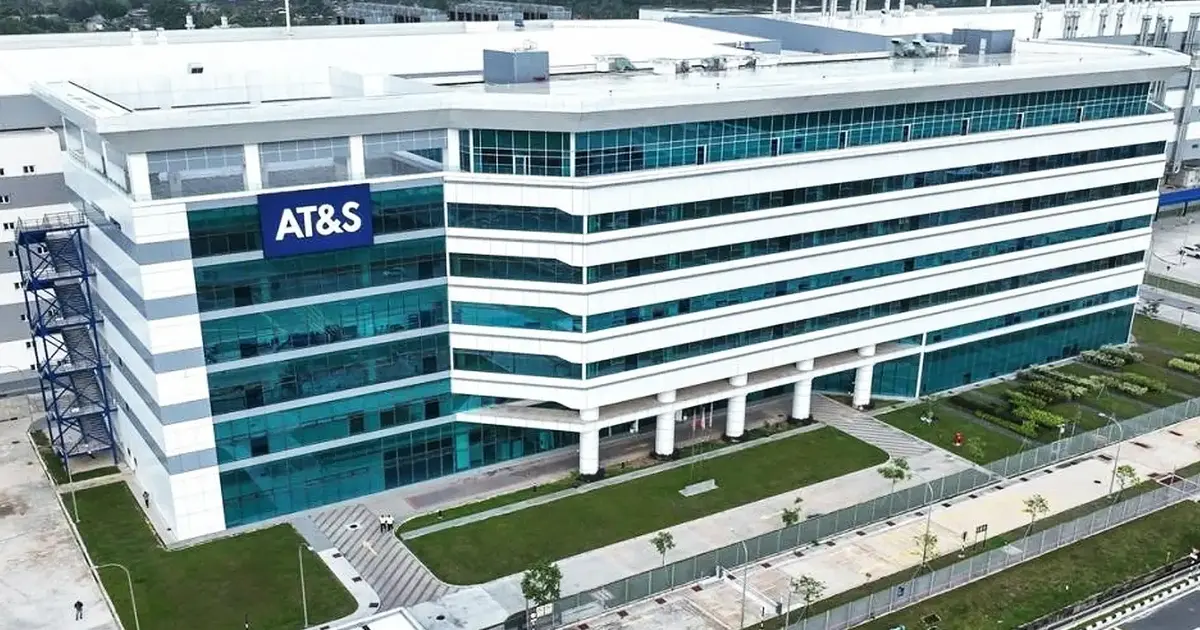
Austria-based AT&S, a leading global manufacturer of advanced printed circuit boards and embedded substrates, has committed RM9.4 billion to construct a major production facility in Kulim, Kedah. Prime Minister Anwar Ibrahim welcomed the investment as evidence of sustained international confidence in Malaysia's economic fundamentals and institutional frameworks.
The Kulim site, located in one of Malaysia's established industrial clusters, represents AT&S's strategic expansion in Southeast Asia and reflects the company's confidence in the region's manufacturing ecosystem. The facility will strengthen Malaysia's position within the electronics supply chain, particularly in components essential for semiconductor assembly and testing. This investment complements existing infrastructure and skilled workforces already established in the zone.
According to Anwar, the company's decision underscores Malaysia's improving reputation among multinational enterprises. The Prime Minister attributed the investment to stable governance and a business environment that attracts high-technology manufacturing. In recent years, Malaysia has positioned itself as an alternative manufacturing hub amid global supply chain realignment and trade tensions affecting traditional electronics production centres.
AT&S's move arrives as semiconductor and electronics manufacturers increasingly diversify production locations away from concentration in Taiwan, South Korea, and mainland China. Malaysia has historically served as a secondary hub for assembly, testing, and substrate manufacturing—roles that remain critical as global demand for chips accelerates across automotive, telecommunications, and consumer electronics sectors. The Kulim investment signals that multinational firms view Malaysia as a stable long-term partner for these functions.
The semiconductor sector carries substantial implications for Malaysia's broader economic trajectory. Electronics and related manufacturing already constitute a significant export category and employment sector. Attracting investments of this scale demonstrates that Malaysia remains competitive despite rising labour costs and emerging competitors throughout the region. The commitment also suggests confidence in Malaysia's ability to maintain technological capabilities and workforce development in advanced manufacturing.
Kulim Industrial Park, where the facility will be located, has evolved into a major electronics manufacturing hub over decades. The presence of supporting industries, logistics infrastructure, and technical expertise makes it an logical choice for international investors seeking operational efficiency. AT&S's investment will likely catalyse additional supplier investments and ancillary service development in the surrounding ecosystem.
The financial scale of the commitment—RM9.4 billion—places this among the larger foreign direct investments announced in Malaysia's semiconductor and electronics sector in recent years. The project will create manufacturing employment and demand for skilled technicians, engineers, and supporting professionals. Skills development and workforce training will become increasingly important as production complexity rises.
From a broader geopolitical perspective, the investment reflects Malaysia's successful navigation of competing interests among major economies. The country has maintained business relationships with both Western and Asian investors, avoiding the polarisation affecting some neighbouring markets. This balanced approach enhances Malaysia's attractiveness for firms seeking to reduce geopolitical risk through geographic diversification of manufacturing assets.
AT&S's decision also carries implications for downstream Malaysian industries dependent on substrates and circuit board components. Enhanced local production capacity may reduce import reliance and improve cost competitiveness for Malaysian electronics manufacturers and assemblers. This vertical integration potential strengthens the entire ecosystem from component manufacturing through final product assembly.
The timing of the announcement reflects post-pandemic supply chain recalibration and manufacturers' recognition that geographic concentration poses business risks. Malaysia's combination of established industrial infrastructure, available skilled labour, and regional connectivity positions it well to capture opportunities as companies redistribute production networks. The Kulim investment demonstrates this strategic logic in action.
Investment commitments of this magnitude typically span five to seven years from announcement through full operational capacity. During this period, construction employment, equipment procurement, and infrastructure development generate significant economic activity. Local contractors, equipment suppliers, and service providers throughout Kedah and surrounding states will benefit from the project's implementation phase.
The investment also signals confidence in Malaysia's regulatory environment and bilateral relationships with Austria and the European Union. Substrate manufacturing requires compliance with international quality standards and environmental regulations. Investors undertaking such commitments conduct extensive due diligence regarding governance stability and regulatory transparency—factors Anwar highlighted in his response.
As Malaysia competes with Vietnam, Thailand, and Indonesia for manufacturing investment, the AT&S commitment demonstrates continued investor preference for the country's institutional foundations and operational track record. Sustaining this competitive advantage requires ongoing attention to skills development, infrastructure maintenance, and regulatory consistency. The Kulim investment represents both validation of past policies and a benchmark against which Malaysia's continued attractiveness will be measured.