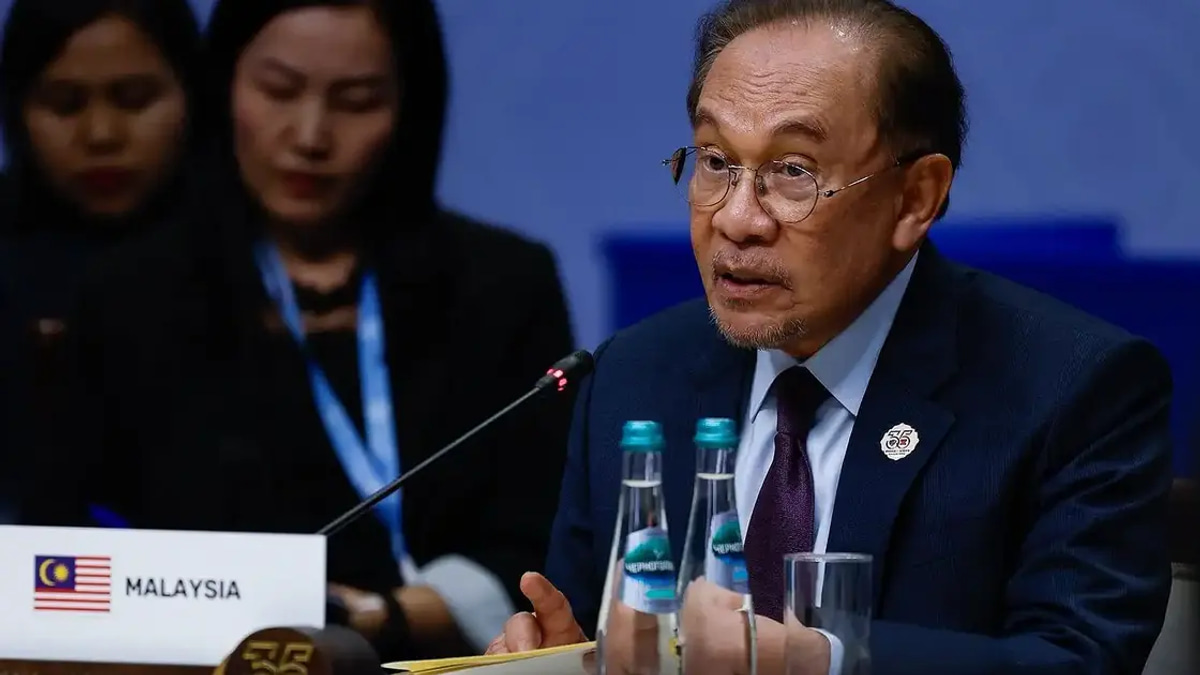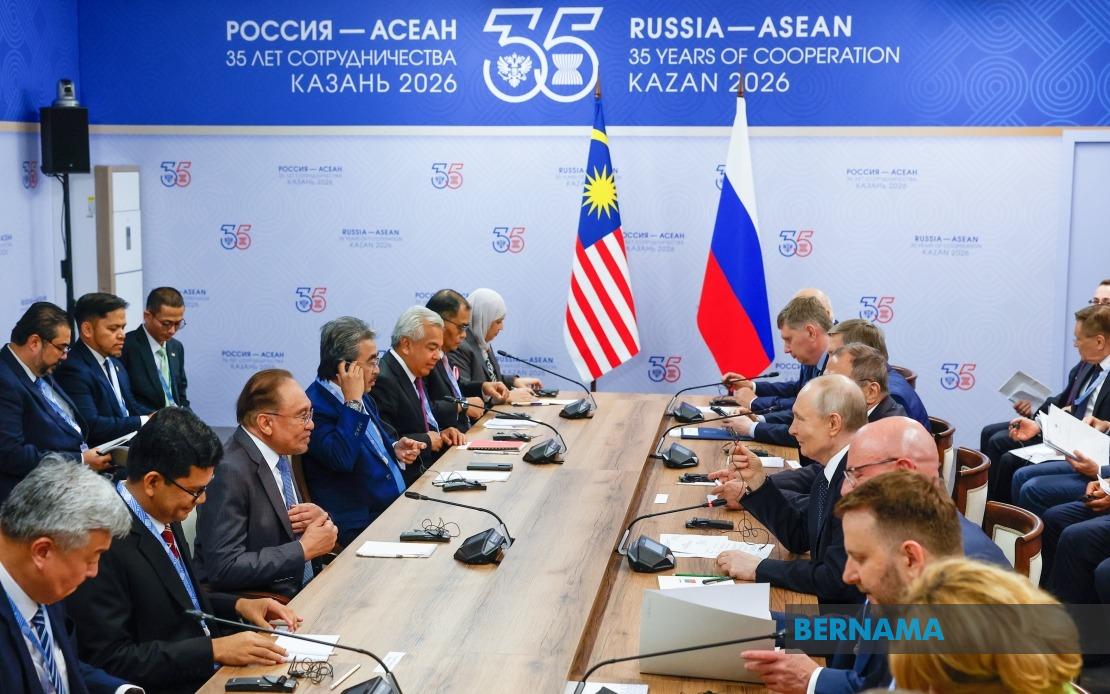
Malaysian Prime Minister Datuk Seri Anwar Ibrahim has publicly commended Russian President Vladimir Putin and Chinese President Xi Jinping for their advocacy of peace and condemnation of violence affecting populations in Gaza, Iran and Lebanon. Speaking during an exclusive interview with Russian state television network RT on the sidelines of an official visit to Kazan, Anwar articulated Malaysia's unwavering commitment to principles of regional stability independent of superpower influence, positioning his country as a vocal advocate for civilian protection and humanitarian concerns.
The prime minister's remarks come as he attended the Commemorative Summit in Kazan marking 35 years of diplomatic relations between the Association of Southeast Asian Nations and Russia. The timing underscores a broader Southeast Asian recalibration of foreign policy engagement, particularly with Moscow at a moment when Western nations have substantially isolated Russia over its Ukraine invasion. Malaysia's willingness to engage at such high-level forums reflects a calculated diplomatic posture balancing relationships across competing global blocs while maintaining independent policy positions.
Anwar emphasised that Malaysia has consistently adopted a robust stance opposing military actions by Israel, framing these positions as matters of parliamentary consensus that transcend partisan divides. He referenced earlier parliamentary decisions reflecting broad bipartisan support for Malaysia's critical stance on Middle Eastern military operations, suggesting that public opposition to Israeli actions enjoys deep roots within Malaysia's political establishment across party lines. This consensus-building underscores how Middle Eastern conflicts have become central concerns for Malaysian constituencies, with implications extending far beyond traditional foreign policy circles.
Distinguishing Malaysia's approach from mere neutrality, Anwar introduced the concept of "centrality" as the philosophical framework guiding ASEAN and Malaysia's geopolitical positioning. Under this doctrine, Malaysia refuses alignment with particular ideological camps or dominant powers, yet simultaneously maintains the prerogative to condemn specific violations of international humanitarian law and human rights standards. This framework allows for principled stances on issues like Gaza and Lebanon without compromising ASEAN's commitment to non-interference in internal affairs, a delicate balance that reflects Southeast Asian states' desire for strategic autonomy.
The prime minister articulated frustration with what he characterised as Western double standards in international responses to Middle Eastern conflicts. He highlighted perceived inconsistency whereby Western governments simultaneously champion human rights principles while providing military support to Israel, arguing that such conduct undermines global credibility on humanitarian matters. This critique resonates particularly among Malaysian audiences, where perceptions of Western hypocrisy on international law have deepened following decades of military interventions in Muslim-majority regions, from Iraq to Afghanistan.
Anwar stressed that Malaysia had engaged extensively with leaders across the Gulf region, Pakistan, Türkiye and Iran in sustained efforts to identify pathways toward equitable conflict resolution. These multi-stakeholder discussions reflect Malaysia's positioning as a bridge actor capable of maintaining communication channels across regional divides, a diplomatic role that carries particular weight given Malaysia's Muslim-majority population and diverse ethnic composition. The breadth of these engagements suggests that Malaysian leadership sees Middle Eastern stability as intimately connected to Southeast Asian security and prosperity.
Regarding Iranian responses to regional developments, Anwar acknowledged legitimate criticisms some might raise while insisting that international silence regarding aggression against Iran represents an equally troubling departure from consistent application of humanitarian principles. He argued that commentators and governments must maintain intellectual consistency when evaluating military actions and civilian suffering, regardless of which nations face targeting. This position reflects a broader Malaysian argument that international law should be applied uniformly rather than selectively based on geopolitical convenience.
The prime minister's emphasis on consistent application of international humanitarian standards carries particular significance for Southeast Asia's smaller states, which depend on robust global legal frameworks to constrain the behaviour of larger powers. Malaysia's repeated invocations of principle-based foreign policy serve partly as insurance that international norms limiting military aggression will apply universally, protecting smaller nations from potential coercion by more powerful neighbours. By anchoring Malaysian foreign policy to principles rather than power calculations, Anwar attempts to elevate Southeast Asian voices within global discussions about conflict resolution.
Anwar's comments during the Kazan summit reflect Malaysia's broader strategic recalibration, strengthening relationships with Russia and China while maintaining diplomatic channels with Western nations. This multi-vector engagement strategy allows Malaysia to access Russian perspectives on Middle Eastern affairs while continuing economic and security relationships with traditional partners. For Malaysian readers, this diplomatic flexibility suggests that Middle Eastern conflicts will increasingly influence Malaysia's foreign policy calculations and regional positioning for years ahead.
The articulation of Malaysia's independent foreign policy stance carries domestic political dimensions as well, appealing to constituencies that view Western interventionism sceptically while reassuring business communities of Malaysia's intention to maintain stable relationships globally. By framing Malaysia's positions as principled rather than anti-Western, Anwar attempts to navigate domestic political sensitivities while defending Malaysia's human rights advocacy internationally. This balancing act reflects the complex environment within which Malaysian leaders operate, where foreign policy statements carry ramifications across multiple domestic constituencies with competing interests.
Looking ahead, Malaysia's emphasis on principle-based foreign policy and ASEAN centrality will likely shape how Southeast Asian nations collectively respond to ongoing Middle Eastern crises. As Malaysia deepens engagement with Russia and China while maintaining Western relationships, other ASEAN members may follow similar trajectories, gradually reorienting the bloc's diplomatic centre of gravity. For Malaysia specifically, the consistent articulation of humanitarian principles on high-profile international platforms establishes parameters for future policy decisions while positioning the nation as a serious voice in discussions about global governance and international law implementation.