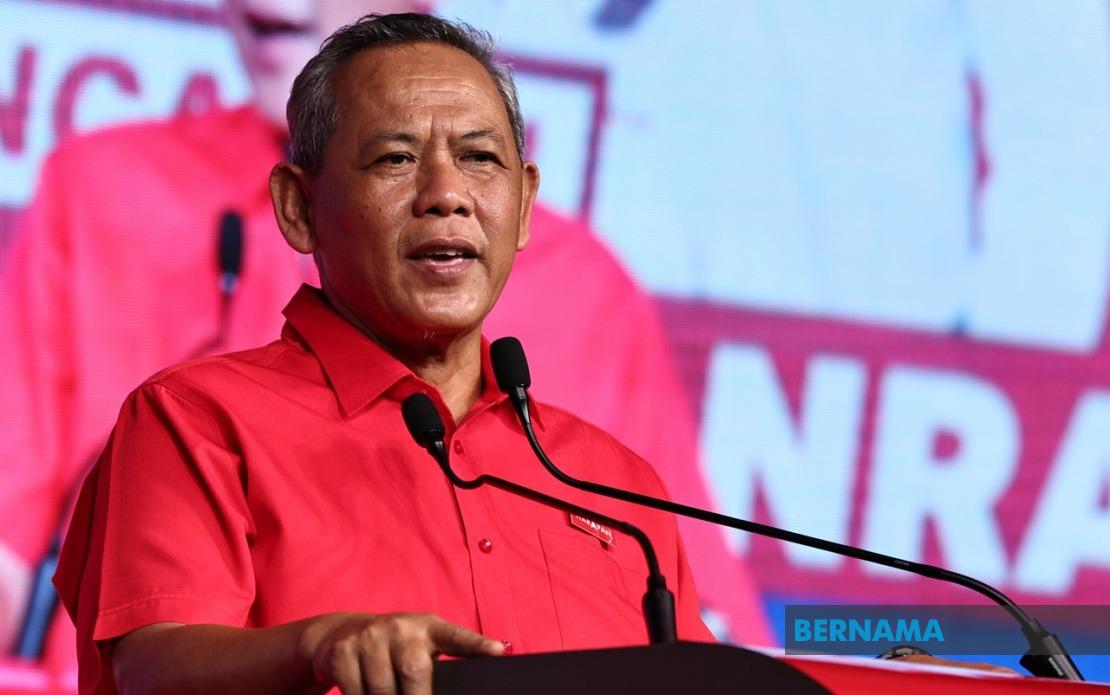
Negeri Sembilan Menteri Besar Datuk Seri Aminuddin Harun has appealed to voters in the Linggi state constituency to judge the government on its practical response to the area's recurrent flooding problem, cautioning against allowing the issue to become a political tool as the 16th state election approaches. Speaking after Friday prayers in Seremban on July 17, Aminuddin, who is seeking re-election as the Pakatan Harapan candidate for Linggi, underscored that the state administration takes the flooding challenge seriously and has moved beyond rhetoric to implement tangible solutions.
The recurring inundation of Linggi has gained traction on social media, with residents pointing to heavy downpours as the trigger for widespread flooding in the constituency. However, Aminuddin framed this not as a recent crisis but as a longstanding geographical problem that requires sustained infrastructure investment rather than opportunistic political messaging. This distinction is significant for Malaysian voters who have grown accustomed to opposition parties leveraging local grievances during election cycles, only to abandon them once polling concludes.
To address the challenge, the state government has secured approval for two dedicated flood mitigation initiatives that are now progressing through joint implementation by state and federal authorities. Aminuddin acknowledged that infrastructure projects of this magnitude cannot deliver overnight results, requiring patience and sustained commitment from both residents and policymakers. The coordination between different levels of government is noteworthy in Malaysia's federal system, where flood management often requires cooperation across administrative boundaries and competing political jurisdictions.
Aminuddin's comments reflect a broader tension in Malaysian electoral politics between short-term political gain and long-term infrastructure planning. Opposition candidates often exploit voter frustration over unresolved issues, proposing rapid solutions that frequently prove unrealistic. In contrast, the Pakatan Harapan approach emphasizes methodical planning and cross-institutional collaboration, though this messaging can appear less dramatic to frustrated voters seeking immediate relief from recurrent disasters.
The timing of Aminuddin's remarks carries weight as Negeri Sembilan prepares for its state election cycle. The Election Commission has designated July 18 as nomination day, with early voting scheduled for July 28 and the main polling day set for August 1. This compressed timeline means candidates have limited opportunity to shift voter perception, making the management of existing narratives crucial to campaign strategy. By addressing the Linggi floods proactively rather than defensively, Aminuddin appears intent on controlling the conversation rather than reacting to opposition criticism.
For Negeri Sembilan voters, particularly those in flood-prone areas, the election presents a moment to assess which political coalition has demonstrated genuine commitment to infrastructure development. The Pakatan Harapan coalition, which Aminuddin represents, is campaigning on its administrative record and proven delivery of development projects across the state. This approach contrasts sharply with opposition parties that typically focus on highlighting governance failures and promising sweeping reforms without detailing implementation mechanisms.
The broader context of climate change and increased rainfall intensity across Southeast Asia makes flood management an increasingly critical election issue. Negeri Sembilan, like other Malaysian states, faces mounting pressure from extreme weather events that existing infrastructure was not designed to accommodate. Citizens in affected constituencies are becoming more sophisticated in evaluating which political parties have realistic, science-based responses to these challenges as opposed to blame-shifting or quick-fix promises.
Aminuddin's emphasis on voters using their judgment reflects confidence in the electorate's capacity to distinguish between substantive governance and political opportunism. Rather than dismissing opposition strategies outright, he chose to emphasize the maturity and wisdom of Negeri Sembilan voters, implicitly suggesting they will see through surface-level political exploitation of genuine hardship. This approach respects voter intelligence while subtly critiquing opponents who might weaponize local suffering for electoral advantage.
The two flood mitigation projects under implementation represent concrete evidence of government action that can be evaluated independently by voters. Rather than abstract promises, residents can observe construction activities, review project timelines, and assess progress toward completion. This tangibility matters in Malaysian politics, where voters in urban and semi-urban areas increasingly demand demonstrable outcomes rather than rhetorical commitments. The joint state-federal implementation structure also suggests political maturity in setting aside partisan differences when infrastructure challenges affect entire communities.
For Malaysian voters more broadly, the Linggi floods discourse illustrates how election campaigns can productively focus on governance capacity and infrastructure delivery. As Southeast Asian democracies mature, electoral competition increasingly centers on which coalition can most effectively manage public goods delivery, manage environmental challenges, and navigate federal-state coordination. Aminuddin's campaign positioning, rooted in implementation and results rather than blame assignment, reflects this evolution in political messaging.
The election itself will provide crucial feedback on whether voters prioritize track record and ongoing development initiatives or whether opposition parties' alternative narratives gain traction. Negeri Sembilan's voting patterns in the August 1 election will signal whether Malaysian voters in this state value demonstrable governance progress or respond more strongly to political alternatives and fresh leadership. This outcome will resonate across the region as other Malaysian states prepare for their own electoral contests and grapple with similar climate-related infrastructure challenges.

