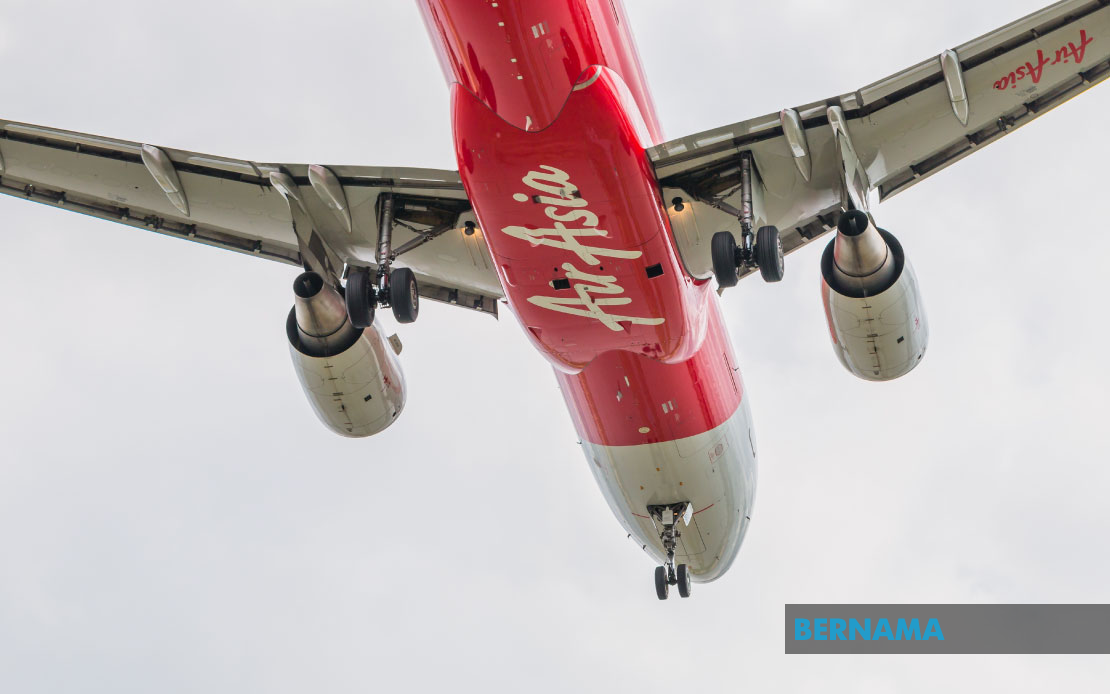
AirAsia has launched a new air service linking Jakarta directly to Kota Bharu, marking a significant expansion of connectivity between Malaysia and Indonesia. The inaugural flight on June 16 touched down at Sultan Ismail Petra Airport with 118 passengers aboard, signalling immediate demand for the route despite initial scepticism about the commercial viability of connecting the two cities. The return flight that same morning from Kota Bharu to Jakarta proved even more popular, departing with 184 passengers, suggesting the route has tapped into genuine travel appetite on both sides of the border.
Datak Kamaruddin Md Nor, chairman of Kelantan's Tourism, Culture, Arts and Heritage Committee, framed the launch as validation of the state's potential as a tourism destination and transit point for regional travel. His remarks at the airport underscored official optimism that the route represents more than just a commercial opportunity for the airline—it embodies deeper aspirations for Kelantan's economic transformation. The scale of passenger numbers on day one indicates that travellers have been awaiting such direct connectivity, and the route's early performance suggests it fills a genuine market gap rather than cannibalising existing flights.
The service operates with a modest frequency of four flights weekly, with promotional return fares beginning at RM400. This pricing strategy appears designed to build passenger volume quickly and establish the route as a habitual choice for business travellers and tourists. AirAsia's internal booking data reveals that seats for the following two weeks were already 70 per cent sold, a metric that airline industry analysts consider healthy for a new international route during its launch phase. Such early demand suggests the carrier is confident enough to maintain or expand the schedule if patronage continues at this trajectory.
For Kelantan specifically, the route addresses a longstanding connectivity challenge that has constrained tourism growth and business development. Prior to this service, travellers from Jakarta heading to Kelantan faced cumbersome alternatives involving multiple flights or lengthy ground transportation. The direct link dramatically reduces friction in the travel experience, making Kelantan more accessible not just to Indonesian tourists but also to business delegations and investors seeking to explore opportunities in the state. The gateway effect is particularly important in Southeast Asia's aviation ecosystem, where indirect routings often deter discretionary travellers.
Kelantan's state government has explicitly positioned this route as a stepping stone toward a broader ambition of transforming the state into a regional aviation hub. This aspiration reflects recognition that air connectivity drives tourism multiplier effects—each new visitor typically generates spending across accommodation, dining, retail, and attractions sectors. By attracting more direct routes to major ASEAN capitals, Kelantan aims to capture a share of regional tourism flows that historically bypass the state in favour of more established hubs like Kuala Lumpur, Penang, or Johor Bahru. Success on the Jakarta route would provide proof of concept for subsequent proposals to carriers seeking new destinations.
The bilateral dimension of this connection also merits attention. Malaysia and Indonesia share deep cultural ties and substantial two-way trade, yet air travel between secondary cities remains underdeveloped compared to the region's economic integration. Enhanced Jakarta-Kota Bharu connectivity strengthens people-to-people links and creates new channels for cultural exchange, business networking, and tourism promotion. Both governments benefit from improved transport infrastructure facilitating legitimate cross-border movement, reinforcing the ASEAN vision of seamless regional mobility.
For AirAsia, the route represents a measured expansion into underserved markets that larger carriers have overlooked. The airline's low-cost model permits profitable operation on thinner routes that traditional full-service carriers cannot sustain economically. By deploying capacity to secondary city pairs, AirAsia simultaneously builds market share in growing markets and generates data about regional travel patterns that inform future route planning. The Jakarta-Kota Bharu service exemplifies this strategy of incremental network deepening.
The promotional pricing strategy carries implications beyond immediate revenue. By offering return fares at RM400, AirAsia effectively resets consumer expectations about the cost of cross-border travel in Southeast Asia. Price reductions on new routes typically stimulate latent demand, as travellers who previously judged the total cost of alternative routings unaffordable become active market participants. The early 70 per cent booking rate suggests this pricing has successfully converted demand into reservations, positioning the route for sustainable operations.
Kelantan's tourism industry has historically concentrated on religious and cultural attractions, particularly Kota Bharu's Islamic heritage sites, traditional batik craftsmanship, and the broader appeal of Peninsular Malaysia's east coast. Improved air access strengthens competitiveness in attracting international visitors to these offerings. Indonesian tourists, in particular, represent a culturally proximate market segment with high propensity to visit Malaysia, and a direct flight from Jakarta removes a significant friction point in their decision-making process regarding domestic versus international travel.
The route also reflects evolving patterns in Southeast Asian air travel, where point-to-point connections between secondary cities increasingly complement the traditional hub-and-spoke model. As economies mature and middle-class populations expand throughout the region, demand for direct connections that save time and simplify itineraries grows correspondingly. AirAsia's Jakarta-Kota Bharu service taps into this structural shift, positioning the airline as responsive to emerging travel patterns and consumer preferences for convenience and efficiency.
Looking forward, the critical metric will be whether the route sustains the momentum established on its inaugural day. Booking patterns for the next two weeks provide encouraging preliminary signals, but the real test arrives in subsequent months as novelty subsides and recurring demand must carry the service. The Kelantan government's commitment to attracting additional routes and AirAsia's continued confidence in the market will together determine whether this connection catalyses the broader hub development the state envisions.
Ultimately, the Jakarta-Kota Bharu route exemplifies how targeted air service expansion in Southeast Asia can unlock economic potential and strengthen regional integration. For Malaysian policymakers and regional observers, the service offers a demonstration of how deliberate connectivity investments, even on routes serving secondary cities, can generate multiplier effects across tourism, trade, and cultural sectors. Success here may inspire similar initiatives between other city pairs, accelerating the region's transition toward a more deeply integrated travel and business ecosystem.