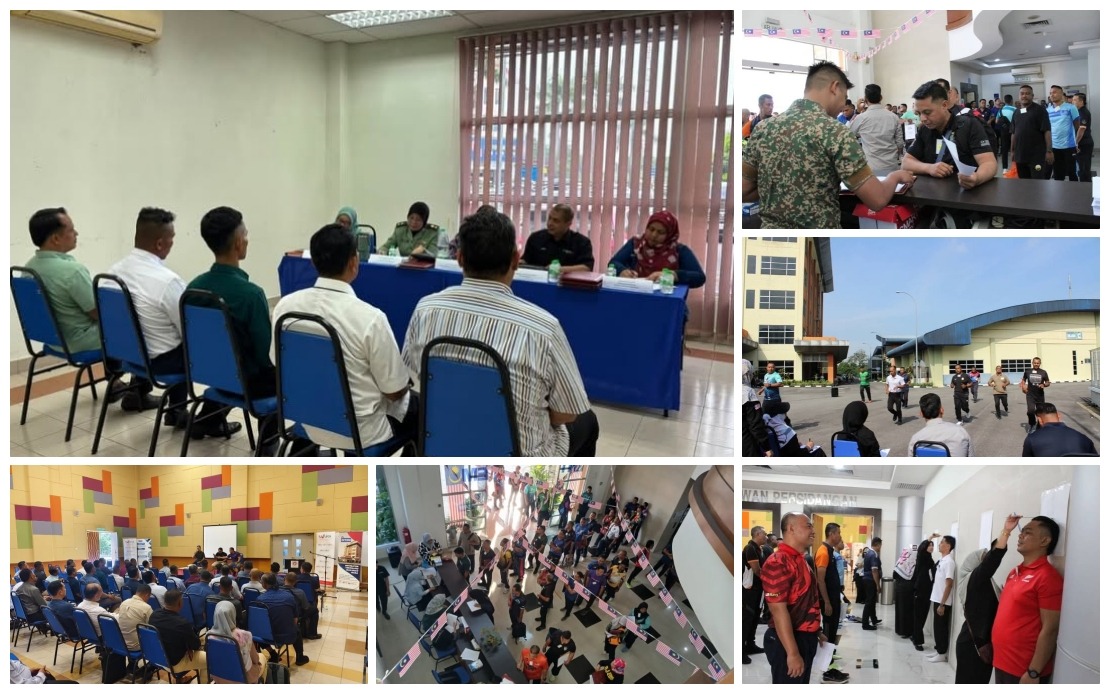
The MARA organisation has advanced its recruitment process for Full-Time External Wardens at the MARA Junior Science Colleges network, with 147 former military personnel completing a rigorous physical interview session over two consecutive days last week at the MARA Food Technology Incubator facility in Kepong. According to MARA Chairman Datuk Dr Asyraf Wajdi Dusuki, this cohort represents candidates who successfully cleared two preliminary phases of online screening before earning the opportunity to participate in the intensive in-person assessment.
The interview process itself comprised three distinct evaluation components designed to comprehensively assess each applicant's suitability for the demanding role. Candidates underwent Body Mass Index screening to ensure baseline physical fitness standards, completed the demanding Bleep Test to measure cardiovascular endurance and aerobic capacity, and participated in structured face-to-face interviews allowing assessors to evaluate interpersonal skills, communication ability, and alignment with institutional values. These multiple assessment layers reflect MARA's commitment to appointing individuals capable of meeting the multifaceted demands of residential college wardenship.
The timing of these appointments carries particular significance for Malaysia's secondary education system. The selected wardens are scheduled to commence their duties on July 1, positioning them to establish foundational relationships and institutional culture at the start of a new academic cycle. This launch window allows newly appointed wardens adequate time to familiarise themselves with college operations, student populations, and institutional protocols before the full pressures of the academic year materialise.
Datuk Dr Asyraf Wajdi's articulation of the warden role extends considerably beyond conventional discipline enforcement. He emphasised that wardens serve as educational figures and parental surrogates within the residential college environment, responsible for guiding students through formative developmental years while inculcating the philosophical foundations underlying MARA's educational mission. This conception of wardenship acknowledges the holistic developmental needs of adolescent boarders, recognising that effective residential college leadership requires emotional intelligence, mentorship capability, and deep institutional commitment alongside traditional supervisory functions.
The appointment initiative reflects institutional recognition of persistent challenges within Malaysian boarding school environments. Datuk Dr Asyraf Wajdi explicitly identified bullying, disciplinary misconduct, and broader social dysfunction as problems that strengthened warden recruitment and training can meaningfully address. By prioritising the appointment of experienced, physically capable, and psychologically suitable individuals to these positions, MARA seeks to create residential spaces characterised by safety, academic support, and social cohesion rather than institutional rigidity or punitive culture.
The selection of former military personnel represents a deliberate strategic choice by MARA leadership. Individuals with military backgrounds typically bring established frameworks of discipline, organisational orientation, hierarchical awareness, and physical resilience. These attributes may translate effectively into residential college management contexts, where wardens must maintain order while fostering supportive environments for adolescent development. However, the inclusion of rigorous interview components suggests MARA recognises that military background alone proves insufficient; selected wardens must demonstrate capacity for empathy, educational commitment, and alignment with institutional values transcending conventional command-and-control paradigms.
A complementary recruitment stream indicates the breadth of MARA's warden expansion initiative. In parallel with the male cohort undergoing interviews, approximately 162 female former military personnel were scheduled to participate in physical interview sessions the following week. This parallel recruitment trajectory suggests MARA intends to achieve gender-balanced warden representation across its collegiate institutions, recognising that female role models and caregivers provide essential developmental resources for residential students, particularly young women navigating adolescence within boarding environments.
The scale of this recruitment exercise—approaching 300 warden appointments across male and female cohorts—indicates significant institutional investment in residential college infrastructure. This magnitude of hiring implies either expansion of MARA's warden establishment across existing institutions, establishment of new residential facilities, or comprehensive replacement of existing warden cadres. Any of these scenarios reflects substantial commitment to improving student welfare and residential college functioning, areas where Malaysian secondary boarding education has historically received variable levels of institutional prioritisation.
For Malaysian parents and secondary students, this recruitment initiative carries tangible implications. Enhanced warden presence and quality directly influence the boarding school experience, affecting student safety, academic support, psychological wellbeing, and social development. MARA's willingness to invest in competitive recruitment and rigorous assessment suggests institutional seriousness about addressing longstanding concerns regarding bullying and student welfare in boarding contexts—issues that periodically generate public concern and media scrutiny.
The broader Southeast Asian context provides relevant perspective. Malaysian boarding schools, particularly selective institutions like MRSM colleges, occupy important positions within regional education networks. Many MRSM students progress to regional universities or international institutions, carrying formative experiences from their residential college years. Enhanced warden quality and residential college safety therefore possess significance extending beyond individual student experiences to influence Malaysia's positioning within the competitive regional education landscape.
The July 1 implementation date creates a natural evaluation window. Observing early outcomes of this warden cohort—including student feedback, disciplinary records, and reported safety metrics—will provide meaningful indicators regarding recruitment strategy effectiveness. Should initial assessments prove positive, this approach may establish a model replicable across other Malaysian boarding institutions facing similar welfare and discipline challenges. Conversely, any operational difficulties would generate valuable insights for refinement and adaptation across Malaysia's residential secondary education sector.