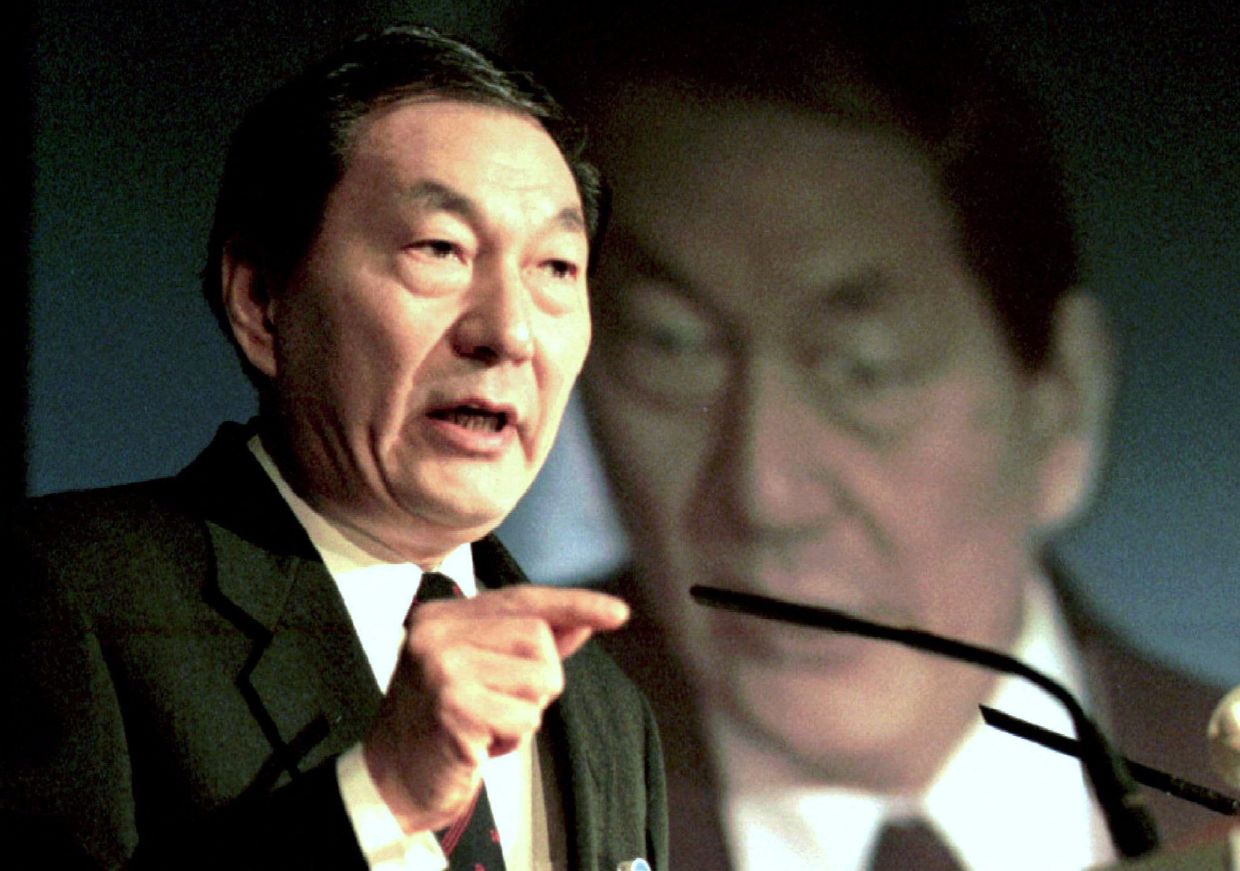
Zhu Rongji, the transformative Chinese premier who fundamentally reshaped the country's economic landscape through aggressive state enterprise reform and shepherded the nation into the World Trade Organization, died in Beijing on Wednesday, August 12, at the age of 98. The prominent statesman succumbed following medical treatment for an unspecified illness, according to the official Xinhua News Agency. His passing marks the end of an era in Chinese economic policy, closing the chapter on one of the most consequential leaders in the country's post-Mao development.
During his tenure as China's top economic planner and subsequently as premier from 1998 to 2003, Zhu implemented reforms of startling scope and social consequence. He oversaw the systematic closure and consolidation of tens of thousands of inefficient state-owned enterprises spanning telecommunications, banking, petroleum production, and other sectors deemed unable to compete in a modernizing economy. These restructurings resulted in the displacement of approximately tens of millions of workers, a transformation that reflected Zhu's willingness to absorb substantial short-term social costs in pursuit of long-term economic competitiveness and debt reduction. His strategy involved nurturing private sector growth alongside the contraction of redundant state assets, a philosophy that distinguished his approach from later administrations.
The contrast between Zhu's market-oriented methodology and contemporary policy directions underscores the ideological evolution within Chinese leadership. President Xi Jinping's administration has championed what it terms a "stronger, better, and bigger" state-controlled economy, emphasizing the strategic role of state enterprises in advancing national interests rather than pursuing privatization or efficiency-driven consolidation. This philosophical reversal highlights how Zhu's legacy represents a distinct moment in China's economic history, one increasingly viewed by current policymakers as requiring correction and recalibration toward state dominance.
Zhu's influence extended beyond domestic restructuring into the realm of international finance and statecraft. As governor of the People's Bank of China from 1993 to 1995, he pursued policies that significantly liberalized China's approach to foreign investment, introducing pilot programmes that permitted international financial institutions to establish operations within Chinese borders and orchestrating the nation's inaugural worldwide bond issuance. John Thornton, formerly co-president of Goldman Sachs Group Inc., recalled meeting Zhu during preparations for the October 1997 Hong Kong share offering of China Mobile Ltd., then called China Telecom (Hong Kong). Thornton recounted how Zhu, despite his elevated position, involved himself in granular operational details, posing questions typically expected from corporate finance officers rather than national leaders, demonstrating an engagement with technicalities that impressed foreign counterparts unaccustomed to such hands-on involvement from premier-level officials.
Zhu's management of China's banking sector during the late 1990s proved instrumental in preventing systemic financial collapse. In 1999, he orchestrated the establishment of asset-management companies tasked with acquiring approximately 1.4 trillion yuan—equivalent to roughly US$220 billion—in non-performing loans burdening China's four major state banks. This intervention prevented the cascading failure that might have resulted from continued exposure to unprofitable state enterprises and enabled these institutions to undergo the comprehensive balance-sheet rehabilitation necessary before their subsequent public listings beginning in 2005. The architectural sophistication of this solution, combining market mechanisms with state direction, typified Zhu's pragmatic approach to economic governance.
Perhaps Zhu's most consequential achievement in terms of global ramifications was his instrumental role in securing China's admission to the World Trade Organization in 2001. In 2000, he convened discussions with Pascal Lamy, then European Union Trade Commissioner, in Beijing to resolve protracted negotiations that had stalled China's accession. The subsequent breakthrough facilitated China's full integration into the global trading system, a development that unleashed transformative economic expansion. China's gross domestic product has expanded more than elevenfold in the two decades following WTO entry, establishing the nation as the world's second-largest economy. Nevertheless, this period has also witnessed mounting criticism from trading partners who contend that Beijing has systematically violated WTO principles through subsidization of domestic industries, erection of non-tariff barriers against foreign competitors, and persistent intellectual property infringement—legacies that continue generating geopolitical tension.
Beyond economic management, Zhu cultivated a reputation for administrative efficiency and anti-corruption vigilance unusual among Chinese officials. His determined efforts to streamline bureaucratic processes and reduce the approval requirements necessary for governmental actions earned him the colloquial designation "one-chop Zhu," a reference to the official seals or chops required for document authentication in Chinese administrative practice. His anti-corruption initiatives and bureaucratic rationalization represented attempts to combat the systemic inefficiency and malfeasance that had plagued Chinese governance. Deng Xiaoping, the paramount leader who initiated China's reform era, designated Zhu a "rare talent" possessing both economic comprehension and the fortitude to confront formidable challenges.
Zhu's international diplomatic skills proved equally formidable, particularly his mastery of English and deployment of strategic humor in high-stakes contexts. During a 1999 joint press conference with United States President Bill Clinton in Washington, when confronted with allegations regarding Chinese political contributions to the Democratic Party, Zhu responded with characteristic wit. He observed that if such contributions truly possessed efficacy, China's substantial foreign-exchange reserves—then standing at $146 billion—would justify allocating considerably more than the purported $300,000 for political influence, rendering the alleged amount absurdly insufficient. His quip elicited laughter and applause, demonstrating his capacity to defuse tension through humor while simultaneously making substantive points.
Zhu's personal trajectory encompassed remarkable resilience amid China's turbulent twentieth-century political upheavals. Born in October 1928 in Hunan province, he attended Tsinghua University from 1947 to 1951, pursuing electrical engineering studies while joining the Communist Party in October 1949, coinciding precisely with Chairman Mao Zedong's proclamation of the People's Republic. His career advancement appeared assured until he criticized Maoist economic policies during the Hundred Flowers Campaign, a brief interlude of permitted speech that preceded severe recriminations. Classified as a "rightist," he faced demotion and subsequently endured five arduous years during the Cultural Revolution laboring on a rural farm, engaged in agricultural production including pig-raising and rice cultivation—ordeals that tested his resilience but ultimately did not permanently impair his rehabilitation and ascent.
Following his political rehabilitation in 1978, Zhu methodically advanced through governmental hierarchies, assuming Shanghai's mayoralty in 1987 before elevation to vice premier status in 1991 and subsequent membership in the Politburo Standing Committee in 1992. His progression culminated in the premiership, the position through which his most substantial reforms were implemented. Upon relinquishing the premiership to Wen Jiabao in 2003, Zhu redirected his energies toward elevating Tsinghua University's international standing and supporting rural education initiatives financed through royalties from his published works. During a 2000 national legislature session, he articulated his aspirations with characteristic candor: "I only hope that after I leave office, the Chinese people will say that he was a clean official, not a corrupt one. If they are more generous and say that Zhu Rongji got some real things done, then I'd thank heaven and Earth." This statement encapsulated his self-conception as a leader motivated by substantive accomplishment and personal integrity rather than perpetual authority. Zhu is survived by his wife, Lao An, and two children who themselves achieved prominence in financial sectors—his son Levin Zhu led China International Capital Corp throughout the early 2000s to 2014, while his daughter Zhu Yanlai occupied senior positions at Bank of China (Hong Kong).

