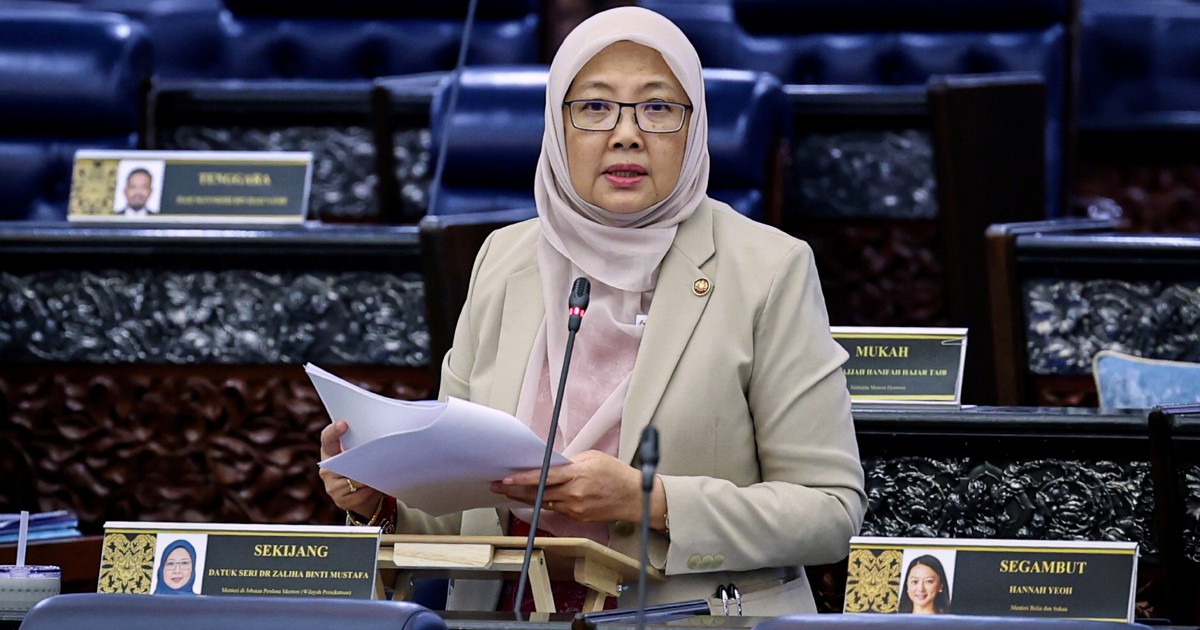
Datuk Dr Zaliha Mustafa, chairman of the Government Backbenchers Club, has drawn sharp rebuke against Perikatan Nasional MPs for abandoning a special parliamentary session focused on examining the Royal Commission of Inquiry findings regarding Lembaga Tabung Haji. The walkout during what was billed as a significant legislative moment underscores deepening tensions between the government coalition and the opposition bloc over accountability mechanisms affecting one of Malaysia's most significant Islamic financial institutions.
The Tabung Haji scandal has emerged as a central point of contention in Malaysian politics, with revelations of substantial fund mismanagement affecting hundreds of thousands of pilgrims who entrust their savings to the institution. The RCI report, which culminated after months of investigation, was intended to provide comprehensive findings on governance failures, financial irregularities, and systemic weaknesses that allowed losses to accumulate over several years. Parliament's decision to convene a special sitting underscored the gravity with which lawmakers sought to address public concerns surrounding the fund's stewardship.
The departure of opposition parliamentarians from the chamber during proceedings raises questions about legislative engagement and parliamentary accountability. By leaving the debate, PN lawmakers effectively limited opportunity for substantive cross-examination of government ministers and relevant officials responsible for overseeing Tabung Haji's operations. This tactical decision denies opposition benches a formal platform to voice constituent grievances and extract commitments for remedial action from the administration.
Zaliha's public criticism reflects frustration among government coalition members who view the walkout as obstructionist behaviour undermining legitimate parliamentary scrutiny. In Malaysian parliamentary tradition, opposition participation in such deliberations—even when contentious—serves essential functions in ensuring comprehensive debate and creating legislative record of diverse viewpoints. The absence of opposition voices fundamentally alters the character of proceedings, potentially leaving substantive issues unexamined.
The timing of the walkout carries particular significance given escalating public concern about Tabung Haji's financial stability. Millions of Malaysian Muslims, particularly from lower and middle-income groups, depend on the fund for hajj financing and retirement savings. Any institutional crisis directly threatens the welfare of vulnerable populations who have accumulated deposits expecting prudent stewardship. Parliamentary debate on the RCI findings represents a critical juncture for establishing transparent accountability and outlining government recovery strategies.
Perikatan Nasional's boycott strategy likely reflects tactical calculations about political benefit from portraying the RCI process as insufficiently independent or government-controlled. The opposition coalition has consistently questioned whether the inquiry adequately examined ministerial responsibility and systemic governance failures. However, choosing parliamentary absence rather than participation diminishes opposition credibility in demanding transparency, as observers may question whether principle or political expediency motivated the decision.
For Malaysian citizens observing these proceedings, the legislative dynamics illustrate broader challenges in maintaining constructive parliamentary opposition. Effective scrutiny requires both government willingness to face legitimate questioning and opposition commitment to engage substantively in institutional mechanisms. When either side opts out, parliamentary democracy loses functionality as a mechanism for popular representation and governmental accountability.
The Tabung Haji controversy also highlights vulnerabilities in how Malaysia's Islamic financial institutions operate under government oversight. The RCI findings presumably identified regulatory gaps, inadequate audit mechanisms, or governance structures insufficient to prevent substantial losses. Parliamentary discussion of these systemic issues transcends partisan politics, as institutional reform protects all future pilgrims regardless of political affiliation. Opposition participation strengthens rather than weakens recommendations emerging from such deliberations.
Moreover, Tabung Haji's predicament resonates across Southeast Asia, where Islamic pilgrimage financing remains culturally significant and economically important for Muslim populations throughout the region. Malaysia's experience provides lessons—both cautionary and constructive—for other nations developing similar institutions. How Malaysian lawmakers address governance failures and restoration efforts may influence approaches adopted elsewhere in Southeast Asia and the broader Islamic world.
Moving forward, resolving Tabung Haji's financial challenges requires cross-partisan commitment to transparent investigation and systematic reform. Whether PN's parliamentary absence reflects genuine principled opposition to the RCI process or tactical political positioning, sustained institutional rebuilding demands engagement from all major political players. The pilgrims whose livelihoods depend on the fund deserve assurance that policymakers across the political spectrum prioritise institutional recovery and preventive measures against future mismanagement over partisan advantage.

