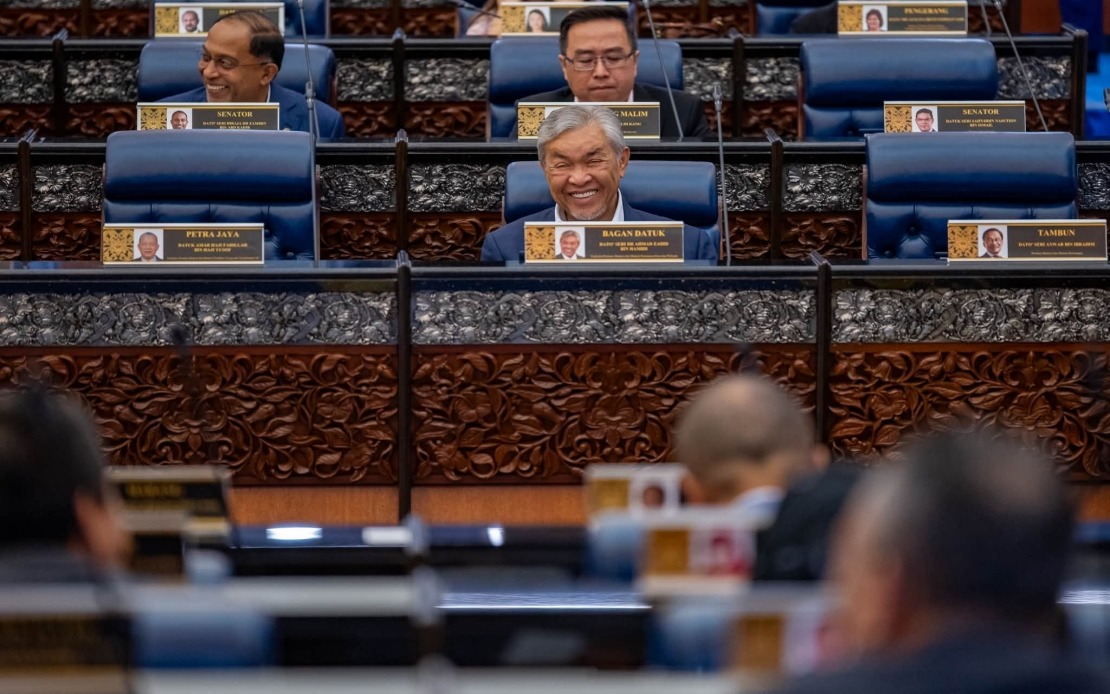
Deputy Prime Minister Datuk Seri Dr Ahmad Zahid Hamidi has underscored the importance of translating constructive feedback about Lembaga Tabung Haji (TH) into tangible remedial measures, emphasising that the respected Islamic institution must maintain its standing and public confidence without becoming mired in extended controversy.
Addressing the matter after a special Dewan Rakyat sitting dedicated to examining findings from the Royal Commission of Inquiry (RCI) into TH's operations, Ahmad Zahid, who also holds the portfolio of Rural and Regional Development Minister, highlighted that lawmakers had been afforded an appropriate forum to debate, seek clarifications, and systematically work through the full range of concerns surrounding the institution. The parliamentary session provided a structured opportunity for elected representatives to engage comprehensively with the inquiry's conclusions and recommendations in a setting designed for thorough discussion.
The Deputy Prime Minister expressed hope that following this legislative examination, stakeholders would refrain from levelling unsubstantiated charges or fostering misleading narratives that lack factual grounding. His remarks signal an expectation that the parliamentary discourse would raise the standard of public conversation, moving away from allegations made without rigorous evidence or proper foundation.
The public release of the RCI report on July 29 represented a significant transparency initiative by the government, enabling all MPs to scrutinise the inquiry's findings and the 25 recommendations it had formulated. By opening the document to legislative review, authorities sought to demonstrate commitment to accountability while allowing elected representatives to represent their constituents' interests in understanding what had transpired within the institution.
The commission's investigation, which examined TH's stewardship between 2014 and 2020, identified numerous operational and administrative shortcomings that had accumulated during this six-year period. These weaknesses ranged across various facets of the institution's management, suggesting systemic issues that required addressing through institutional reform. The identification of specific vulnerabilities provided concrete starting points for improvement rather than vague accusations of mismanagement.
Remarkably, TH had already begun implementing the recommendations, with 75 per cent of the 25 proposed measures adopted by the time the report became public on July 30. This swift institutional response indicated that leadership had taken the inquiry's findings seriously and was moving expeditiously to address the identified deficiencies. The proactive implementation suggested TH was not waiting for political pressure but was itself committed to strengthening operations.
Ahmad Zahid's emphasis on linking criticism to responsible action reflects a broader governance principle: that identifying problems without proposing or executing solutions represents incomplete stewardship. In the Malaysian context, where major Islamic institutions carry symbolic importance beyond their operational functions, maintaining institutional credibility among the Muslim community requires demonstrable commitment to addressing identified weaknesses through concrete institutional reforms.
For Malaysian pilgrims and Tabung Haji contributors, the parliamentary scrutiny carries practical significance. The fund manages considerable financial assets on behalf of millions of Malaysians preparing for the Hajj pilgrimage, one of Islam's five pillars. Any deterioration in institutional governance directly affects the retirement savings and pilgrimage savings of ordinary Malaysians, making this more than merely a governance issue—it touches upon matters of personal religious practice and financial security.
The Deputy Prime Minister's invocation of divine blessing and wisdom for all parties involved reflects the sensitive nature of addressing institutional shortcomings within religious organisations. Religious institutions in Malaysia operate within a unique social context where criticisms can quickly become politicised or inflame communal sensitivities if not handled with appropriate care and respect. Ahmad Zahid's framing attempts to elevate the discourse above partisan advantage to focus on institutional integrity and community benefit.
The timing of this parliamentary session and the subsequent commentary also occurs within a broader context of institutional accountability across Malaysian public bodies. As the government faces persistent questions about governance standards across various agencies and statutory bodies, the handling of TH's issues sends signals about how seriously the administration takes internal institutional weaknesses and public scrutiny. The transparent release of the RCI report and parliamentary debate represent departures from historical patterns of administrative secrecy.
Moving forward, the substantive challenge lies in executing the remaining 25 per cent of unimplemented recommendations while ensuring that the reforms address root causes rather than merely surface symptoms. The parliamentary discussion serves as a public checkpoint, creating accountability mechanisms whereby legislators can monitor implementation progress and constituents can track whether announced improvements materialise into improved institutional performance.
The Deputy Prime Minister's intervention also implicitly acknowledges that Malaysia's major institutions require ongoing vigilance and course correction. The acknowledgment that TH required a Royal Commission of Inquiry and subsequently needed parliamentary oversight represents maturation in institutional accountability, even if it comes after difficulties had already accumulated. For Southeast Asian observers monitoring governance trends, the Malaysian approach to addressing institutional weakness through inquiry, public disclosure, and parliamentary review offers a model that balances transparency with institutional respect.

