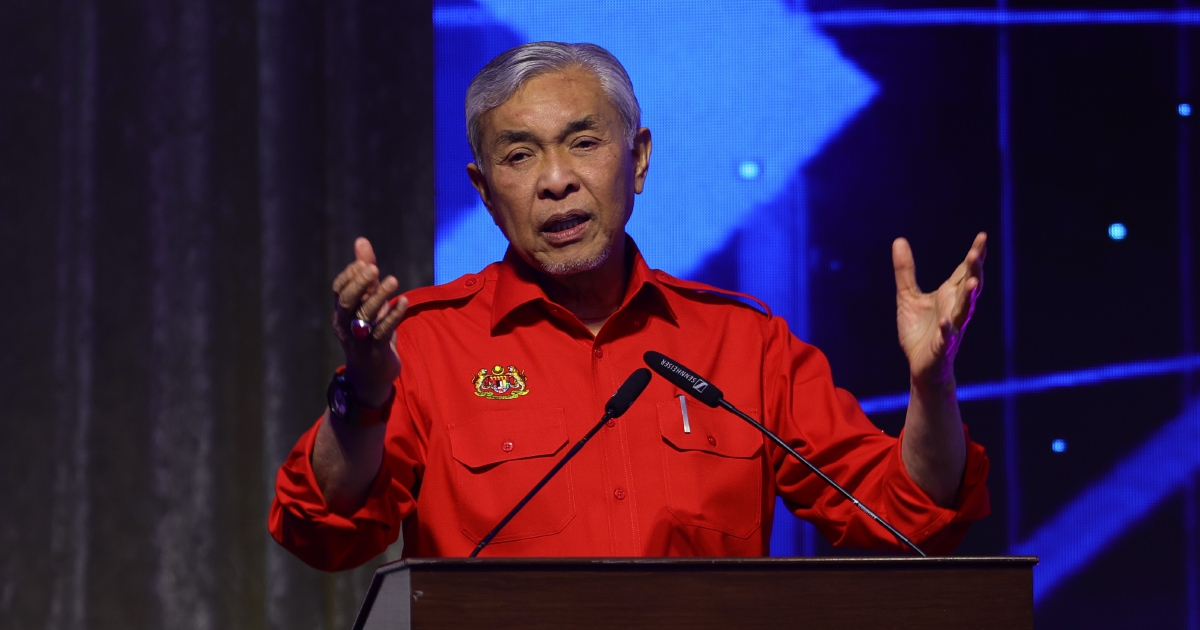
Barisan Nasional chairman Datuk Seri Dr Ahmad Zahid Hamidi has signalled that Prime Minister Datuk Seri Anwar Ibrahim holds the prerogative to dismiss ministers drawn from the coalition ranks should their performance fall short of expectations. The statement, made in Seremban, reflects the nuanced power dynamics within Malaysia's governing coalition and underscores the premier's ultimate authority over the cabinet composition.
Zahid's comments come at a time when the government's performance is under intense scrutiny from both the electorate and opposition parties. The BN chairman's acknowledgement of the PM's dismissal powers suggests a willingness by the coalition leadership to defer to the sitting premier on matters of ministerial accountability. This represents an implicit acceptance that individuals appointed from BN ranks, while representing their parent organisation, ultimately serve at the pleasure of the head of government.
The statement carries particular significance given Malaysia's history of coalition politics and the occasional tensions that arise when multiple parties govern together. The capacity to remove ministers has traditionally been a critical tool for maintaining cabinet cohesion and ensuring that government objectives are pursued with adequate competence. By publicly affirming the PM's authority in this regard, Zahid appears to be reinforcing the principle that performance standards supersede factional considerations.
Prime Minister Anwar Ibrahim's leadership of a complex multiparty coalition has required constant navigation between different political interests and constituencies. The PM must balance the demands of various coalition partners whilst maintaining effective governance and public confidence. Zahid's remarks effectively gift the premier greater flexibility in managing personnel decisions without facing institutional resistance from the BN machinery itself.
For Malaysian voters and observers of governance, this development illustrates how cabinet discipline and merit-based performance remain theoretically paramount within the current administration. However, the real-world application of such principles often proves more complicated, as political considerations and interparty relationships frequently influence decisions about ministerial tenure. The public acknowledgement of such power, though, establishes an expectation that underperformance will carry consequences.
The statement also reflects evolving standards of ministerial accountability in Southeast Asia more broadly. Regional governments increasingly face demands from civil society, media organisations, and informed citizens for greater transparency and meritocratic governance. Zahid's comments, whilst not introducing new powers, do signal that the BN coalition and its leadership recognize these changing expectations and the importance of projecting an image of performance-driven administration.
Within the BN framework itself, the chairman's position as custodian of the coalition's interests places him in a delicate role. While representing multiple member parties including UMNO, MCA, and MIC, Zahid must balance their individual interests against the coalition's collective goal of remaining in government. His willingness to publicly accept the PM's dismissal prerogative suggests confidence that the premier will exercise such powers judiciously and not weaponise them against any particular coalition member.
The practical implications of Zahid's statement extend to how ministers from BN backgrounds will conduct themselves in their portfolios. Knowledge that substandard performance could result in removal, regardless of party affiliation, creates an incentive structure encouraging vigilance and effort. This particularly matters in Malaysia's federal system, where ministerial performance significantly impacts service delivery and public perception across both urban and rural constituencies.
Looking forward, the statement may also influence how the coalition approaches future cabinet reshuffles or responses to ministerial controversies. Rather than automatically defending one of their own, BN leadership can now point to the chairman's public acknowledgement that merit governs tenure. This provides political cover for difficult decisions and reduces the appearance of either arbitrary removals or nepotistic protection.
For the opposition, Zahid's comments underline the real governance authority wielded by the PM, even within a coalition setting. This reinforces that responsibility for government performance ultimately rests with Anwar Ibrahim and his executive decision-making, a factor opposition parties will likely emphasise should the government face difficulties in specific policy areas or public satisfaction metrics.
The statement also reflects the broader maturation of Malaysian democratic discourse, where senior political figures can openly discuss institutional power dynamics and acceptance of accountability mechanisms. This contrasts with periods when coalition governance operated more opaquely, with power arrangements negotiated behind closed doors rather than articulated publicly.
Looking at the medium term, Zahid's affirmation of the PM's authority may strengthen the government's resilience by clarifying power structures and accountability lines. Clear hierarchies within governing coalitions typically function more effectively than ambiguous arrangements, as they reduce the scope for disputes about decision-making authority when difficult personnel choices become necessary. For Malaysia's continuing democratic development and the effectiveness of coalition governance, such clarity serves the national interest.

