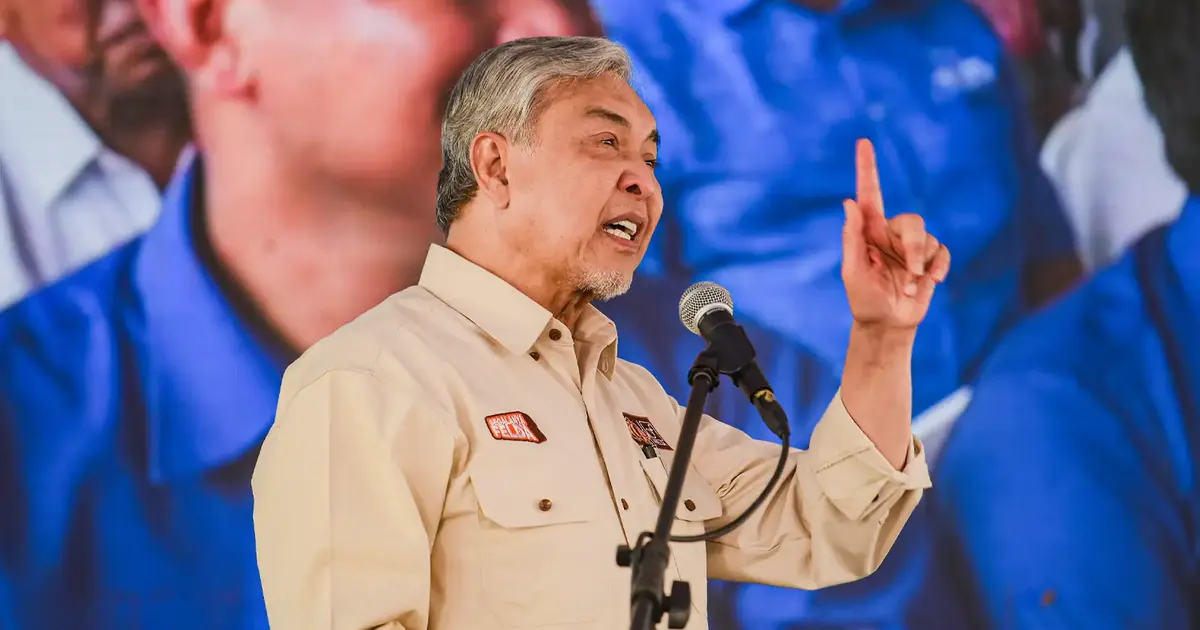
The Barisan Nasional coalition stands at a crossroads, with its partnership trajectory contingent on how effectively the alliance performs in the forthcoming Negeri Sembilan state election, according to coalition chairman Datuk Seri Zahid Hamidi. This assessment underscores the weight both major coalitions place on state-level contests as testing grounds for their respective electoral viability and capacity to govern.
Zahid's framing of the Negeri Sembilan poll as a determinant for future alliance mechanics reflects the fluid political landscape that Malaysia has navigated since the 2022 general election. The "electoral understanding" to which he refers represents an attempt to consolidate anti-PH sentiment among conservative and Malay-Muslim-focused voter constituencies. Whether this cooperation extends strategically to the Melaka state election and ultimately influences calculations for the sixteenth general election hinges on demonstrable results in Negeri Sembilan, suggesting that seat performance and vote share will be parsed meticulously by both parties' leadership.
The stakes for BN are particularly acute. The coalition has sought to rebuild its dominance through careful cultivation of working relationships with Perikatan Nasional, which drew significant support from disaffected UMNO members and rural constituencies in 2022. Negeri Sembilan presents a proving ground where this alliance can either demonstrate complementary strength or expose friction points that would argue against closer coordination in future contests. The state has historically been a BN stronghold, making any underperformance particularly consequential for coalition morale and bargaining power.
For PN, the Negeri Sembilan election offers a chance to validate whether it has transitioned from the opposition spoiler role into a credible coalition partner capable of delivering victories. The party's trajectory since 2022 has involved gradual rehabilitation of its image in mainstream political circles, and tangible electoral gains in a BN-leaning state would strengthen the case for deeper, more formal integration with BN structures. Conversely, weak performance might accelerate questions about whether the alliance is merely a marriages of convenience born from mutual opposition to Pakatan Harapan rather than substantive political alignment.
The reference to Melaka as a secondary testing ground reflects the typical pattern in Malaysian politics whereby state elections serve as dry runs for national narratives. The peninsula's southern state has been volatile in recent years, with rapid shifts between coalitions. A successful Negeri Sembilan showing could provide momentum and validated messaging that carries into Melaka's polls, demonstrating to both voters and party members that the BN-PN combination generates electoral traction. Melaka's outcome would then calibrate expectations and strategy heading into the sixteenth general election, Malaysia's next national contest.
The sixteenth general election remains the ultimate focal point for all coalition calculations. Parliamentary strength determines access to federal ministries, policy influence, and resource allocation across the country. Both BN and PN understand that their prospects for maximising representation depend on coordinated nomination strategies and unified campaign positioning. Negeri Sembilan's results will provide crucial intelligence about voter receptiveness to joint messaging, demographic shifts within key constituencies, and whether the "electoral understanding" resonates with the grassroots or appears imposed from above.
Zahid's conditional framing also reflects internal pressures within both coalitions. UMNO, which anchors BN, contains factions with varying comfort levels regarding closer PN ties, particularly given historical tensions and competition for the same voter base. Similarly, PN comprises multiple parties with differing ideological priorities and regional power bases. Results that validate the partnership help senior leaders justify accommodation to restive party members, while disappointing outcomes invite reopening of debates about coalition architecture.
The Malaysian electorate's demonstrated sophistication in recent cycles means that voters treat state and federal contests as distinct choices. Some constituencies may support a BN-PN lineup at state level while preferring different coalition mechanics nationally, or vice versa. This complexity means that even strong Negeri Sembilan performance might not guarantee straightforward extrapolation to subsequent contests. Zahid's linkage of these elections implies recognition that cumulative momentum matters, even if each contest ultimately turns on localised considerations.
Regionally, Malaysia's coalition dynamics carry implications beyond its borders. Southeast Asia's established democracies watch Malaysian electoral patterns for lessons in multi-ethnic coalition management and the durability of ideological versus pragmatic political partnerships. A BN-PN alliance that delivers consistent results would suggest that conservative and Islamist-oriented parties can sustain formal cooperation, whereas breakdown would reinforce narratives about the difficulty of bridging Thailand-style royalist conservatism with populist religiosity.
The timeframe for Negeri Sembilan's election has not been officially announced, but it must occur by June 2025, creating a compressed campaign season where both coalitions test organisational capacity and media messaging. The months immediately following will prove critical for interpreting results and determining whether Zahid's conditional optimism regarding the alliance's longevity proves well-founded or whether the partnership begins fragmenting along predictable factional lines before Melaka's turn arrives.

