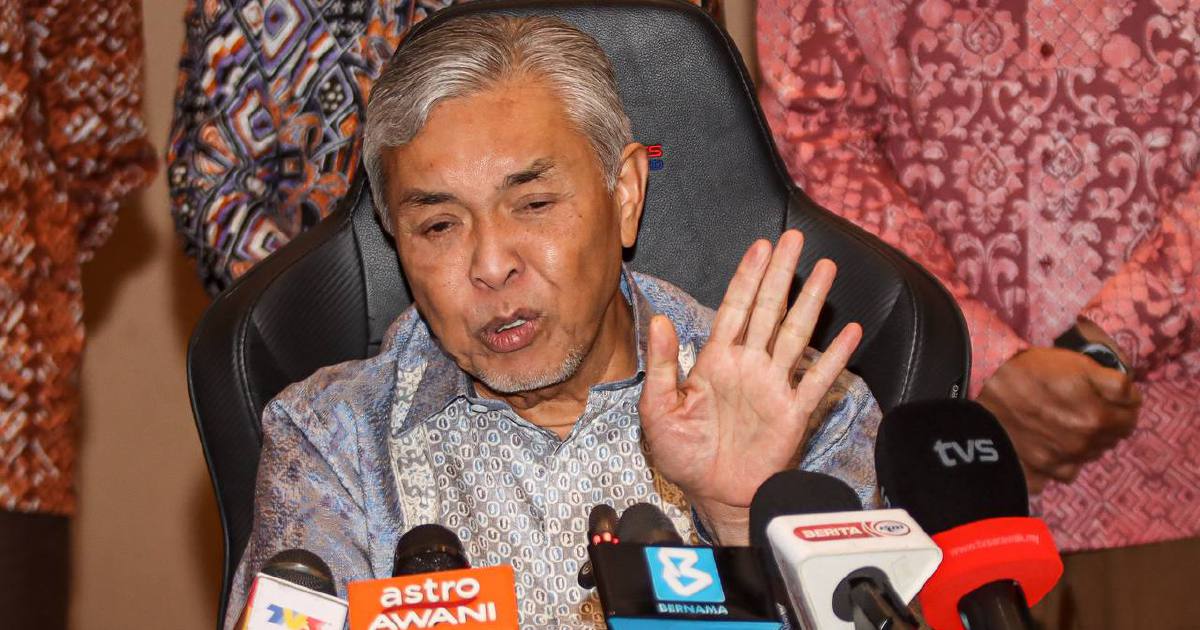
In a decisive statement from George Town, Barisan Nasional chairman Datuk Seri Dr Ahmad Zahid Hamidi has categorically rejected persistent whispers about moves to destabilise Prime Minister Datuk Seri Anwar Ibrahim's administration, cementing the coalition's commitment to sustaining the current unity government for the remainder of the 15th Parliament's tenure.
Zahid's remarks come amid a political landscape in Malaysia characterised by intermittent speculation about the stability of the Pakatan Harapan-Barisan Nasional partnership. Since the unity government's formation following the 2022 general election, observers have periodically questioned the durability of an alliance between historically opposing coalitions brought together by pragmatic necessity rather than ideological alignment. The fact that Zahid felt compelled to publicly dismiss such talk underscores how integral reassurance has become to maintaining confidence in Malaysia's governing arrangements.
The UMNO president's statement carries particular weight given BN's role as a crucial pillar of Anwar's government. With the ruling coalition dependent on the support of multiple parties holding diverse interests, the withdrawal or destabilisation of any significant faction could theoretically jeopardise the administration's parliamentary majority. Zahid's explicit reaffirmation therefore serves as a stabilising signal to markets, international observers, and domestic constituencies that remain concerned about Malaysia's political predictability.
For Malaysian readers monitoring the country's governance trajectory, Zahid's position reflects a calculated political judgment. UMNO's leadership has evidently concluded that participation within the unity framework, despite its constraints and compromises, remains preferable to alternatives that might emerge from attempting to overturn the incumbent administration. This pragmatic calculus differs markedly from the combative opposition stance UMNO adopted during the previous administration, suggesting a shift in how Malaysia's largest Malay-Muslim party envisions its political role.
The timing of Zahid's dismissal of such speculation is noteworthy. Political gossip in Malaysia frequently intensifies during periods of policy disagreement or when coalition parties pursue competing agendas. By publicly and firmly denying any intent to challenge Anwar's position, Zahid attempts to depoliticise such rumours and prevent them from gaining traction among grassroots supporters who might otherwise view coalition participation as weakness or surrender of principle.
From a Southeast Asian perspective, Malaysia's political stability carries implications beyond its borders. The region's investors and diplomatic observers monitor the stability of major ASEAN economies closely, as sudden shifts in government can affect foreign policy, trade relationships, and regional cooperation frameworks. A coalition government that functions predictably, despite its internal tensions, provides greater assurance than one perpetually threatened by collapse.
However, the necessity of repeatedly affirming coalitional commitment also hints at underlying fragility. If the unity government were truly cemented by unshakeable conviction and mutual interest, such reassurances might prove unnecessary. The fact that Zahid felt obliged to address speculation suggests awareness that perceptions of instability, if left unchecked, can become self-fulfilling as parties respond to fears of abandonment by exploring alternative arrangements.
The unity government model that Malaysia has adopted represents an unusual experiment in Southeast Asian politics. Unlike stable two-coalition systems familiar to Western democracies, Malaysia's arrangement requires constant negotiation and mutual forbearance among parties with fundamentally different worldviews. This arrangement generates both stability through distributed power and fragility through competing interests. Zahid's statement should be read as an effort to emphasise the former while minimising awareness of the latter.
Looking toward the remainder of the 15th Parliament, which will extend until 2027 or 2028 depending on when elections are called, Zahid's reaffirmation sets expectations for BN's behaviour during this period. Malaysian political actors and international observers can reasonably interpret his words as signalling that UMNO does not envision unilaterally withdrawing from government or mounting internal challenges to Anwar's leadership before the next general election cycle begins in earnest.
For the broader political ecosystem, including opposition parties and civil society actors, Zahid's statement establishes a baseline expectation of governmental continuity that enables planning and policy advocacy within predictable parameters. Rather than speculating about imminent coalitional collapse, critics and supporters alike can focus on evaluating the government's performance on substantive policy matters affecting Malaysians' daily lives.
The statement also carries implications for intra-BN dynamics. By publicly committing to the unity government, Zahid potentially constrains the room for other BN component parties to manoeuvre independently or position themselves as potential kingmakers in parliamentary reconfiguration scenarios. This centralisation of BN's political positioning under Zahid's authority reinforces his control over Malaysia's largest coalition partner and clarifies the terms within which smaller BN members must operate.

