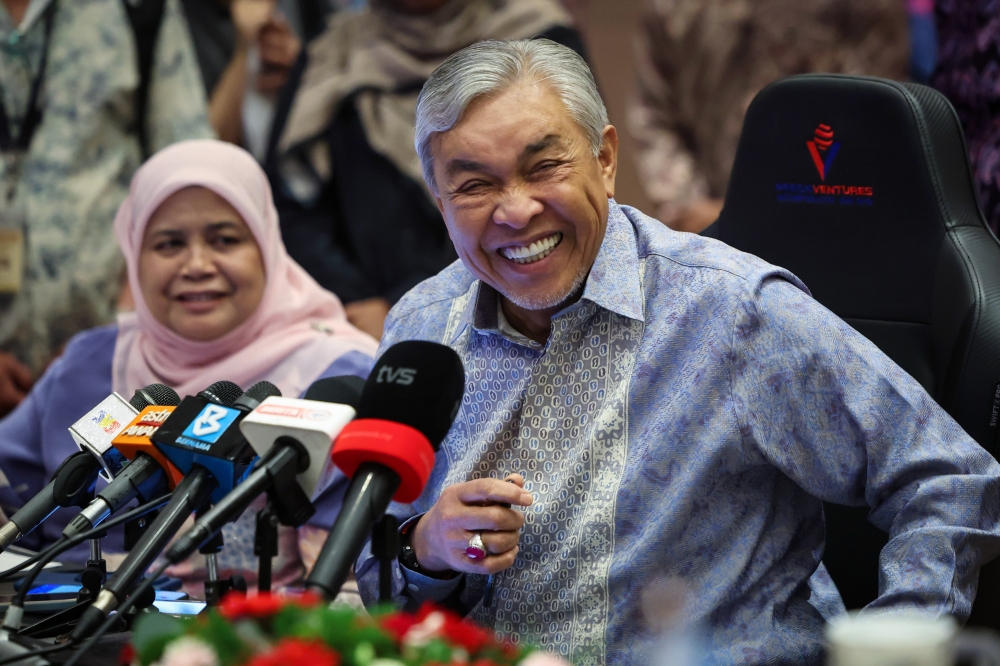
Umno president Zahid Hamidi has pushed back forcefully against persistent speculation that Barisan Nasional might exit the Unity Government arrangement, declaring the coalition's intention to remain a stability anchor until Parliament's current term expires. Speaking in George Town, Zahid underscored the political coalition's commitment by rejecting suggestions of unilateral withdrawals or backroom negotiations that might destabilise Malaysia's current governance structure.
The assertion comes amid ongoing political chatter in Malaysian circles concerning the durability of the three-year-old Unity Government formed following the 2022 general election. That pact brought together the previously rival coalitions of BN and Pakatan Harapan, along with several other parties, creating an unusual political arrangement designed to prevent political instability and ensure a functioning parliamentary majority. The cooperation has survived multiple tests but continues to attract speculation from political observers and rival factions seeking to exploit potential fractures.
Zahid's emphatic language—employing colloquial references to reject scenarios he characterised as manufactured drama—signals BN's determination to maintain credibility as a responsible governing partner. By explicitly dismissing scenarios involving sudden policy shifts or clandestine manoeuvres, the Umno chief sought to provide assurance to other coalition members and international observers concerned about Malaysia's political predictability. Such reassurances carry significance given the region's vulnerability to political instability, which investors and neighbouring governments monitor closely.
The timing of Zahid's comments reflects the broader dynamic within Malaysian politics where smaller parties and ambitious politicians constantly probe coalition weakness. Since BN comprises multiple parties with distinct interests, including Umno, MCA, and MIC, maintaining unified positions requires persistent internal negotiation. Public reaffirmations of commitment help prevent individual components from breaking away to pursue alternative arrangements that might prove more advantageous in their respective constituencies.
The Unity Government structure itself emerged from Malaysia's fractious 2022 election results, which produced no clear parliamentary majority for any single coalition. Rather than risk government collapse or disputed legitimacy, major political players accepted an unprecedented power-sharing arrangement. This solution, while unconventional by Malaysian standards, prevented the kind of political deadlock that could have triggered constitutional crises or necessitated another election.
Zahid's statement carries particular weight because Umno remains the largest component within BN and holds the prime minister's position. When the party president commits to the status quo, he essentially commits the entire coalition while also constraining Umno's own flexibility. This represents both a political strength and a constraint—a clear signal of stability that nonetheless limits tactical options should circumstances change dramatically.
The broader regional context matters here as well. Southeast Asian governments face investor concerns about predictability, and Malaysia's political volatility in preceding years had created perception problems internationally. The Unity Government, despite its unusual nature, has provided the perception of stability necessary for confidence in Malaysia's governance framework. Any BN withdrawal would likely trigger investor nervousness and regional diplomatic complications.
Opposition movements and political activists have long sought to identify fractures within the Unity Government through various public campaigns and negotiation attempts. Some have dangled offers of stronger parliamentary positions or ministerial portfolios to entice coalition members to defect. By explicitly rejecting such overtures before they are formally made, Zahid attempts to inoculate BN against temptation and prevent rivals from creating false impressions of vulnerability.
The internal cohesion of BN itself remains imperfect, however. MCA and MIC, the coalition's smaller Chinese and Indian partners respectively, sometimes chafe at decision-making processes dominated by Umno. These parties occasionally signal independent positions on sensitive issues to maintain credibility with their respective communities. Managing these tensions while maintaining the broader coalition requires constant communication and strategic concessions.
Future elections represent the ultimate stress test for any coalition arrangement. When the 15th Parliament term expires, Malaysia will hold new general elections, and parties will pursue advantage based on their individual strengths and market positions. Until that point, however, Zahid's firm language attempts to establish that BN views coalition continuity not as temporary expediency but as a principled commitment to stable governance.
Malaysian political observers note that such public declarations, while important for signalling resolve, ultimately depend on whether coalition partners perceive mutual benefit in continued cooperation. The moment individual parties believe they can achieve better outcomes by switching alignments, such pledges face serious pressure. Zahid's statement thus serves multiple audiences simultaneously: reassuring coalition partners of stability, discouraging opposition recruitment efforts, and calming international observers about Malaysia's political trajectory.
The durability of the Unity Government remains an open question that will likely persist until electoral calculations change dramatically. Zahid's emphatic language represents the current positioning, but Malaysian politics has demonstrated its capacity to shift rapidly when circumstances warrant. Nevertheless, his rejection of hypothetical exit scenarios underscores that any major coalition realignment would require deliberate decision-making rather than occurring through circumstantial drift.

