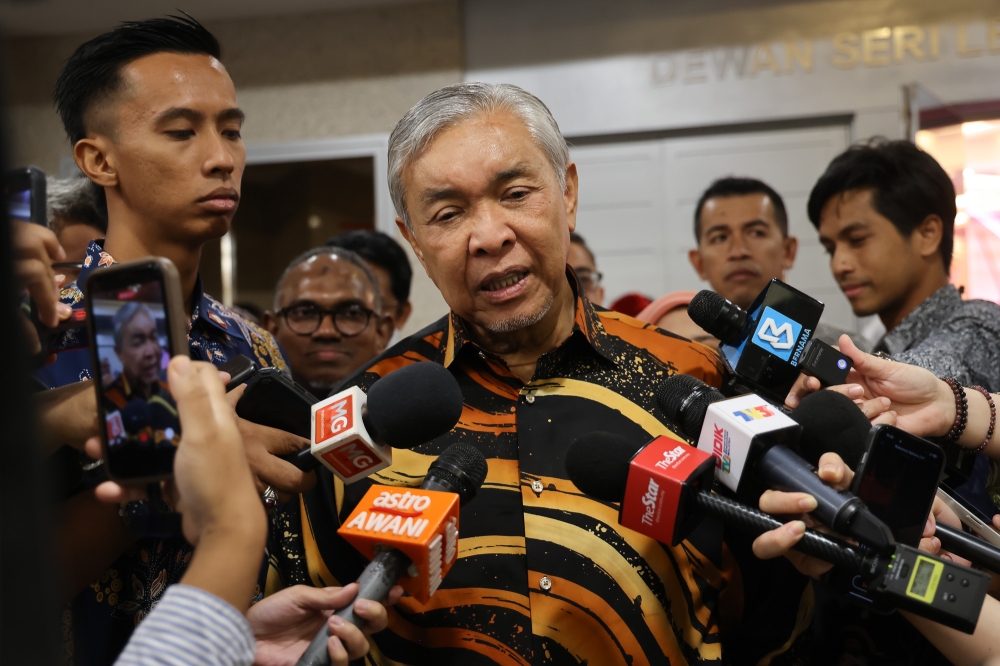
Deputy Prime Minister Ahmad Zahid Hamidi has issued a stern warning that individuals implicated in the Tabung Haji mismanagement controversy must be held legally responsible, reflecting growing pressure within the Barisan Nasional coalition to demonstrate decisive action on a matter that has eroded public confidence in Malaysia's largest Islamic financial institution. Speaking in Putrajaya, Zahid asserted that the Umno-led government and its broader coalition partners will not countenance any violation of public trust or misappropriation of funds entrusted to the pilgrimage savings institution, which manages contributions from millions of Malaysian Muslims planning their hajj journeys.
The statement represents a notable hardening of rhetoric from the government regarding the Tabung Haji situation, which has exposed significant governance lapses and financial irregularities at the fund over several years. Zahid's public commitment to pursuing consequences signals that senior leadership recognises the political cost of appearing lenient towards wrongdoing, particularly given widespread disappointment among depositors and the broader Muslim community who view the institution as a sacred trust. The deputy premier's framing of the issue as one fundamentally about breach of trust rather than merely administrative failure underscores the moral dimension that has animated public anger.
Tabung Haji has faced mounting scrutiny following revelations about how the fund's reserves were deployed, with particular concern focused on real estate ventures and investment decisions that critics argue prioritised institutional expansion over safeguarding depositors' savings. The scale of accumulated concerns suggested systematic problems rather than isolated incidents, lending weight to calls for comprehensive investigations and, importantly, prosecutorial action against those deemed culpable. For a government still rebuilding legitimacy after years of political turbulence, demonstrating resolve in holding institutions and individuals accountable has become essential to its credibility narrative.
The Malaysian public's experience with the Tabung Haji controversy exists within a broader regional context of religious trust institutions facing scrutiny across Southeast Asia. What distinguishes this case is both the institution's cultural significance within Malaysian Islam and its position as a direct interface between government financial management and ordinary Malaysians' most sacred financial obligations. When such institutions falter, the reputational damage extends beyond mere economics into fundamental questions about whether government can be trusted with matters of profound religious importance.
Zahid's statement also reflects internal coalition dynamics, with coalition partners watching how the government responds to institutional failures. The Barisan Nasional's ability to present itself as capable of orderly governance and institutional accountability has become crucial to its political viability, particularly as it competes with opposition narratives of systemic corruption and mismanagement. By publicly insisting on consequences, Zahid positions the coalition as committed to reform and accountability rather than defensive protection of institutional interests.
Investigative pathways remain unclear, however, raising questions about how swiftly culpability might be established and prosecutions pursued. Malaysia's legal and institutional frameworks for investigating financial institutions are well-developed in formal terms, yet past cases have revealed delays and complexities that frustrate public expectations for rapid justice. The challenge for the government will be demonstrating that its accountability rhetoric translates into tangible outcomes that depositors and the wider public can observe and measure.
For Malaysians planning hajj or possessing savings in Tabung Haji, Zahid's pronouncement offers rhetorical reassurance but necessarily raises immediate concerns about fund security and performance. The institution must navigate the difficult path of restoring operational confidence while maintaining scrutiny and undergoing potential reforms, a balancing act that will test management capabilities over coming months. Any perception that the government is slow to act or reluctant to pursue powerful individuals implicated in wrongdoing could deepen existing erosion of public trust.
The deputy premier's emphasis on Umno and Barisan Nasional's intolerance for misconduct also carries implicit warning to party members and coalition figures themselves. In the Malaysian political context, where patronage networks and institutional interests often intertwine, such statements serve partly as internal communication to party and government machinery about where boundaries lie. Whether this translates into actual behaviour modification remains an ongoing test of the government's sincerity.
Regionally, Malaysia's handling of the Tabung Haji situation may influence how other Southeast Asian governments approach oversight of religious institutions and pilgrim-related financial mechanisms. Countries across the region manage similar frameworks for Islamic savings and pilgrimage financing, and Malaysia's approach—whether perceived as rigorous or inadequate—will inevitably shape expectations and standards. The case thus carries implications beyond Malaysia's borders for how trust in religious financial institutions is maintained across Muslim-majority societies.
Moving forward, the government faces pressure to establish clear investigation timelines, transparent criteria for determining culpability, and credible prosecutorial processes that command public confidence. Zahid's statement has raised stakes by making accountability a matter of explicit government commitment, creating expectations that the Barisan Nasional coalition must now work urgently to satisfy through concrete institutional action and visible legal consequences.

